Lessons of Moral Psychology for Anticorruption Strategy

Most countries attempt to fight public corruption through policies that increase the magnitude and the probability of punishment, on the logic that rational individuals will be deterred from engaging in corrupt acts if the expected costs exceed the expected benefits. This approach is certainly valuable, but it is incomplete, and anticorruption strategies based exclusively on a view of potentially corrupt public officials as “rational actors” are unlikely to be fully effective. This is because human beings are not (only) rational animals, they are also moral animals: As already discussed on this blog (see here and here), the decision-making process of a potentially corrupt public official is influenced not only by her calculation of expected (material) costs and benefits, but also by her moral values and self-image.

In fact, when people act in accordance with their own moral standards, their brain-reward centers are activated, which may explain why individuals value honesty and desire to live ethically at their own eyes. Notwithstanding, even otherwise morally upright subjects can engage in corruption. What do individuals take into account when choosing whether to engage in profitable dishonesty or to maintain their positive self-image by adhering to their moral standards?

A growing stream of research on moral psychology and neuroscience has shown that individuals employ certain psychological mechanisms, such as rationalization, that enable them to cheat at a certain level without considering themselves as “cheaters”; this, in turn, allows them to benefit from the dishonest behavior while not damaging their positive self-image. But when it becomes more difficult for people to justify their unethical behavior to themselves, the likelihood that they will engage in dishonest behavior will decrease. The tendency to engage in dishonest behavior is also affected by individuals’ ability to exercise self-control when facing temptation — that is, by their capacity to subdue their desire to attain short-term benefits in order to achieve long-term goals.

Greater attention to these insights would make possible the design of anticorruption policies tailored both to inhibit the use of rationalizations and to encourage the exertion of self-control when individuals face the opportunity to act dishonestly. For example, public agencies (especially those in corruption-prone sectors like public procurement) could take the following steps:  Continue reading

When, If Ever, Does a Favorable Legal or Regulatory Decision Count as an “Emolument”?

Last week, I posted about the amended complaint that the Citizens for Responsibility and Ethics in Washington (CREW) filed in its lawsuit against President Trump for alleged unconstitutional acceptance of “emoluments” from various sources. My post last week, like much of the immediate commentary on the amended complaint, focused on the new plaintiffs who had joined the suit, and the extent to which their addition mitigated concerns about whether the court would have jurisdiction to hear the case. But the amended complaint was notable for other reasons. In particular, it fleshed out more details about President Trump’s alleged violations of the Foreign Emoluments Clause, and also added a new set of allegations focused on separate violations of the Domestic Emoluments Clause.

What was most striking to me about the allegations detailed in the amended complaint is that in several cases, the alleged “emolument” is not a monetary payment or a market transaction, but rather a legal or regulatory decision by a government (U.S. or foreign) that favors businesses owned by President Trump. Consider the following examples:

  • Donald Trump had long sought—and had long been denied—Chinese trademark protection for his “Trump” brand in China. Shortly after his inauguration, President Trump made statements suggesting that he might reconsider the U.S. commitment not to recognize the government of Taiwan (the so-called “One China” policy). On February 9, President Trump met with Chinese President Xi Jinping. Following the meeting, President Trump reaffirmed the U.S. commitment to the One China policy. Five days later, China granted the Trump Organization its trademarks. According to CREW, the decision to grant the trademarks was an emolument, from the government of China to President Trump.
  • The Trump Organization has several ongoing real estate development projects in Indonesia, which require permits from the government. According to the CREW complaint, if and when the government of Indonesia grants these permits, this will constitute an emolument from the government of Indonesia to President Trump.
  • Prior to the election, a company owned by President Trump signed a lease with the U.S. General Services Administration (GSA) to open what is now the Trump International Hotel at a property owned by the U.S. government. The lease agreement stated that “no … elected official of the Government of the United States … shall be admitted to any share or part of this Lease, or to any benefit that may arise therefrom.” Prior to President Trump’s inauguration, a GSA official indicated that the GSA thought that Trump would be in violation of the lease unless he fully divests from the hotel. Shortly after the inauguration, President Trump appointed a new GSA Administrator. On March 23, the GSA issued a letter taking the position that President Trump is not in violation of the lease, principally because President Trump would not receive any earnings from the hotel until he leaves office. Many ethics experts derided the GSA’s letter as unpersuasive. The CREW amended complaint goes further, arguing that the GSA’s letter is itself an “emolument” from the U.S. government to President Trump.
  • Prior to the election, the Trump company that owns the D.C. hotel applied for a “Historical Rehabilitation Tax Credit,” which, if approved, could be worth up to $32 million. The application has cleared the first two phases of the three-stage approval process—the first step before the election, the second step after the election (but before inauguration). The National Park Service must provide the third and final approval. If the Service were to grant that approval, according to the CREW complaint, this would be an unconstitutional domestic emolument to the President.

All of these alleged “emoluments” are regulatory or legal decisions by government agencies. Can such decisions count as emoluments? When or under what conditions?

These turn out to be hard legal questions, and to the best of my knowledge there’s very little existing case law or scholarly commentary. I’ll throw out some preliminary thoughts here, but this issue likely deserves more sustained and careful analysis from genuine experts (which I am not). Continue reading

Culture Matters: How Indonesia Should Account Culture to Eradicate Corruption

Corruption in Indonesia is endemic, permeating all levels of society. As I argued in my last post, Indonesia’s culture of corruption is a result of the corruption of culture: Far too many people see corruption as unsolvable and even “normal,” even though they clearly realize its wrongfulness.

To date, Indonesia’s independent anticorruption agency, the KPK, has pursued a main strategy of prosecuting the “big fish”—the high-ranking officials (including numerous parliament members and powerful politicians) whose corrupt behavior has caused massive damage to the country. Laudable though the KPK’s bold enforcement efforts have been, eradicating corruption requires more than prosecutions. Rather, the KPK needs to complement its aggressive law enforcement with preventive measures designed to change Indonesia’s “culture of corruption” to a “culture of anticorruption.” There are several strategies the KPK could pursue to foster such cultural change:

Continue reading

A Tale of Two Regions: Anticorruption Trends in Southeast Asia and Latin America

OK, “best of times” and “worst of times” would be a gross exaggeration. But still, when I consider recent developments in the fight against corruption in Latin American and Southeast Asia, it seems that these two regions are moving in quite different directions. And the directions are a bit surprising, at least to me.

If you’d asked me two years ago (say, in the summer of 2014) which of these two regions provoked more optimism, I would have said Southeast Asia. After all, Southeast Asia was home to two jurisdictions with “model” anticorruption agencies (ACAs)—Singapore and Hong Kong—and other countries in the regions, including Malaysia and especially Indonesia, had established their own ACAs, which had developed good reputations for independence and effectiveness. Thailand and the Philippines were more of a mixed bag, with revelations of severe high-level corruption scandals (the rice pledging fiasco in Thailand and the pork barrel scam in the Philippines), but there were signs of progress in both of those countries too. More controversially, in Thailand the 2014 military coup was welcomed by many in the anticorruption community, who thought that the military would clean up the systemic corruption associated with the populist administrations of Thaksin Shinawatra and his successor (and sister) Yingluck Shinawatra—and then turn power back over to the civilian government, as the military had done in the past. And in the Philippines, public outrage at the brazenness of the pork barrel scam, stoked by social media, and public support for the Philippines’ increasingly aggressive ACA (the Office of the Ombudsman), was cause for hope that public opinion was finally turning more decisively against the pervasive mix of patronage and corruption that had long afflicted Philippine democracy. True, the region was still home to some of the countries were corruption remained pervasive and signs of progress were scant (such as Vietnam, Laos, Cambodia, and Myanmar), but overall, the region-wide story seemed fairly positive—especially compared to Latin America where, aside from the usual bright spots (Chile, Uruguay, and to a somewhat lesser extent Costa Rica), there seemed to be precious little for anticorruption advocates to celebrate.

But now, in the summer of 2016, things look quite a bit different. In Southeast Asia, the optimism I felt two years ago has turned to worry bordering on despair, while in Latin America, things are actually starting to look up, at least in some countries. I don’t want to over-generalize: Every country’s situation is unique, and too complicated to reduce to a simple better/worse assessment. I’m also well aware that “regional trends” are often artificial constructs with limited usefulness for serious analysis. But still, I thought it might be worthwhile to step back and compare these two regions, and explain why I’m so depressed about Southeast Asia and so cautiously optimistic about Latin America at the moment.

I’ll start with the sources of my Southeast Asian pessimism, highlighting the jurisdictions that have me most worried: Continue reading

The Culture of Corruption and the Corruption of Culture in Indonesia

With over 300 ethnic groups scattered across more than 17,000 of its islands, Indonesia is justly proud of its extremely diverse cultural heritage. But Indonesia is certainly not proud of a different aspect of its culture: a ”culture of corruption” so pervasive that it is not merely associated with grand corruption in the central government, but also infects the daily lives of the citizens through petty corruption, as well as daily harassment by local officials and governmental departments.

When trying to diagnose the root cause of such pervasive corruption, a common knee-jerk response is to focus on the legal system and law enforcement institutions. Yet Indonesia seems to do fairly well on these dimensions: A well-regarded independent anticorruption agency, the KPK, in cooperation with the police and prosecution spearheads enforcement of a comprehensive Anticorruption Law that both considers domestic needs and incorporates principles enshrined in international materials such as the United Nations Convention Against Corruption. Still, corruption persists. Why?

To answer this question, one must look at not only the legal system, but also the society—the people whose conduct the laws are supposed to regulate. Such observation reveals that the “culture of corruption”— society’s permissive, tolerant, and even accepting attitude toward corruption – is perhaps the main culprit responsible for Indonesia’s incurable corruption.

Continue reading

When Should We Put Anticorruption Agencies in the Constitution?

To fight corruption more effectively, many countries have created specialized government institutions that focus primarily on corruption issues. Most common are specialized anticorruption agencies (ACAs) with investigative and/or prosecutorial functions, although some countries have also created specialized anticorruption courts, special coordinating bodies, or other entities. This trend has generated a great deal of debate, both about whether to create such specialized bodies at all and about how they should be designed (for example, whether ACAs should combine prosecutorial and investigative power). Absent from much of this debate, however, is a discussion of the means countries should use to create these specialized bodies—in particular, whether these specialized anticorruption bodies should be enshrined in the nation’s constitution, or should be created by ordinary law.

Anticorruption bodies vary quite a bit on the extent to which they are constitutionalized. Most existing ACAs and other anticorruption institutions—including many considered highly successful—are not mandated by the constitution. For example, Indonesia’s anticorruption agency (the KPK) and its anticorruption courts (the Tipikor courts) were created by ordinary legislation, as was Belgium’s anticorruption investigation body and Spain’s anticorruption prosecutor’s office. However, in other countries specialized anticorruption bodies are explicitly established (or required) by the constitution. For example, the Philippines’ anticorruption court, the Sandiganbayan, is enshrined in that country’s 1987 constitution. Indeed, the trend (if one can be discerned) seems to be in the direction of constitutionalization. Tunisia’s new constitution, adopted in 2014, includes a specialized anticorruption investigation body. Egypt’s 2014 constitution similarly includes a specialized anticorruption prosecutor. Mexico’s 2015 amendments constitutionalized three types of anticorruption agencies (investigative, prosecutorial, and judicial), as well as a coordinating body.

But should these agencies be constitutionalized? And if so, when? Continue reading

New Case Studies on Specialized Anticorruption Courts in Indonesia, the Philippines, Slovakia, and Uganda

As is well-known, many countries around the world–especially developing and transition countries–have established specialized anticorruption institutions with prosecutorial and/or investigative functions. These agencies have attracted a great deal of attention and analysis (including on the blog–see, for example, here, here, here, and here). Many countries have gone further, and established specialized courts (or special divisions of existing courts) to focus exclusively or substantially on corruption cases. These specialized anticorruption courts have gotten relatively less attention, but as proposals for such courts have become increasingly prominent in many countries, there is a growing need for close analysis of these institutions.

To meet this need, the U4 Anticorruption Resource Centre has a new project, under the direction of Senior Advisor Sofie Arjon Schutte, on specialized anticorruption courts (a project in which I have been fortunate enough to participate). The first set of publications to result from this project are a series of short case studies on four of the existing special courts, in a diverse set of countries: Indonesia, the Philippines, Slovakia and Uganda. Readers who are interested in this topic might want to click on the links. Also, in addition to these four country briefs, there’s a longer U4 paper in the pipeline (coauthored by Sofie and myself) that discusses and compares a larger set of special courts around the world. I’ll do a post announcing that as well, as soon as it’s ready. And if anyone out there has information and insights about any special courts in other countries, please feel free to send it!

TNI’s Gold Mine: Corruption and Military-Owned Businesses in Indonesia

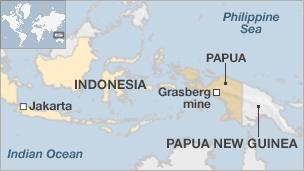
The Grasberg Mine, located close to the highest mountain in West Papua, Indonesia, is the world’s largest gold mine and third-largest copper mine. The mine, owned by the corporation Freeport-McMoRan Copper & Gold, has been the site of strings of grave human rights abuses, linked to Indonesia’s own National Armed Forces (Tentara National Indonesia/TNI). TNI’s presence in the territory is ostensibly to protect the mine, and Freeport’s Indonesian subsidiary acknowledges having made payments of as much as US$4.7 million in 2001 and US$5.6 million in 2002 for such government-provided security. A report by Global Witness, however, revealed numerous other payments ranging from US$200 to US$60,000 that Freeport Indonesia allegedly made to individual military officers.

The TNI’s sale of security services to companies like Freeport is only one of the many business ventures conducted by the TNI and its officers. As Human Rights Watch has reported, the Indonesian military has been supplementing its income through both its formally established companies, and through informal and often illicit businesses such as black market dealing. Moreover, the military’s business activities (both lawful and unlawful) are largely shielded from public scrutiny: budgeting for military purposes is generally kept secret, and TNI members generally refuse to answer questions about institutional spending.

Military-owned business in Indonesia are problematic, not only because this private-sector activity impedes military professionalism and distorts the function of the military, but also because it also contributes to crime, human rights abuses, and especially corruption. This problem is greatly compounded by the fact that TNI officers generally enjoy immunity from corruption charges brought by civilian institutions. In fact, the Transparency International’s Defense and Security Program has deemed Indonesia one of the countries most prone to corruption in its defense and security institutions. It is therefore appalling that this issue has not been addressed more seriously by the Indonesian government. Although a 2004 law mandated the transfer of control over TNI businesses to the civilian government within five years, the law did not clearly specify which types of business activities were covered, and this legal loophole enabled the TNI to preserve many of its moneymaking ventures, including TNI’s infamous security services—to say nothing of already-illegal criminal enterprises and illicit corporations. Moreover, despite the five-year timetable in the law, the government has been notably reluctant to enforce the transfer of ownership, making repeated excuses alluding vaguely to the need for the TNI to compensate for the lack of budgeting for security purposes. As a result, despite some efforts to reform the way the TNI is allowed to handle its businesses, military-owned businesses in Indonesia continues to flourish, with the Indonesian people of Indonesia having to pay the price.

The government’s weak response towards the military’s non-compliance with the 2004 law is merely one of the many indicators of how impervious the TNI’s power and seeming impunity. There are factors that contribute to this impunity, along with the corresponding corruption and abuse of power in the operations of military-owned businesses: Continue reading

Chill Out: Fine-Tuning Anticorruption Initiatives to Decrease Their Chilling Effect

Who is “harmed” by aggressive anticorruption crackdowns? The most obvious answer is corrupt bureaucrats, shady contractors, and those who benefit from illicit flows of money. And while there are concerns about political bias and other forms of discrimination in the selection of targets, in general most of us rightly shed few tears for corrupt public officials and those who benefit from their illicit acts. But aggressive anticorruption crackdowns may have an important indirect cost: they may have a chilling effect on legitimate, socially beneficial behavior, such as public and private investment in economically productive activities. Although chilling effects are often discussed in other areas, such as with First Amendment rights in the United States, there is little discussion of it in the anticorruption context. That should change.

For example, in Indonesia, recent efforts to crack down on corruption appear to have stunted simultaneous measures to grow the economy through fiscal stimulus. As this Reuters article relates, “Indonesian bureaucrats are holding off spending billions of dollars on everything from schools and clinics to garbage trucks and parking meters, fearful that any major expenditure could come under the scanner of fervent anti-corruption fighters.” Nor is Indonesia the only example. In April 2014, Bank of America estimated that China’s corruption crackdown would cost the Chinese economy approximately $100 billion that year. One can challenge that estimate (as Matthew has discussed with respect to other figures used in reports on the cost of China’s anticorruption drive), but the more general notion that aggressive anticorruption enforcement can have a chilling effect on both public and private investment, which in turn can have negative macroeconomic impacts, is harder to rebut.

Taking this chilling effect seriously does not imply the view that corruption is an “efficient grease” or otherwise economically beneficial. The point, rather, is that although corruption is bad, aggressive measures to punish corruption may deter not only corrupt activities (which we want to deter) but also legitimate activities that might entail corruption risks, or be misconstrued as corruption. So, if we think that corruption is bad but that anticorruption enforcement might have an undesirable chilling effect, what should we do? Continue reading

London Anticorruption Summit–Country Commitment Scorecard, Part 1

Well, between the ICIJ release of the searchable Panama Papers/Offshore Leaks database, the impeachment of President Rousseff in Brazil, and the London Anticorruption Summit, last week was quite a busy week in the world of anticorruption. There’s far too much to write about, and I’ve barely had time to process it all, but let me try to start off by focusing a bit more on the London Summit. I know a lot of our readers have been following it closely (and many participated), but quickly: The Summit was an initiative by David Cameron’s government, which brought together leaders and senior government representatives from over 40 countries to discuss how to move forward in the fight against global corruption. Some had very high hopes for the Summit, others dismissed it as a feel-good political symbolism, and others were somewhere in between.

Prime Minister Cameron stirred things up a bit right before the Summit started by referring to two of the countries in attendance – Afghanistan and Nigeria – as “fantastically corrupt,” but the kerfuffle surrounding that alleged gaffe has already received more than its fair share of media attention, so I won’t say more about it here, except that it calls to mind the American political commentator Michael Kinsley’s old chestnut about how the definition of a “gaffe” is when a politician accidentally tells the truth.) I’m going to instead focus on the main documents coming out of the Summit: The joint Communique issued by the Summit participants, and the individual country statements. There’s already been a lot of early reaction to the Communique—some fairly upbeat, some quite critical (see, for example, here, here, here, and here). A lot of the Communique employs fairly general language, and a lot of it focuses on things like strengthening enforcement of existing laws, improving international cooperation and information exchange, supporting existing institutions and conventions, and exploring the creation of new mechanisms. All that is fine, and some of it might actually turn out to be consequential, but to my mind the most interesting parts of the Communique are those that explicitly announce that intention of the participating governments to take pro-transparency measures in four specific areas:

  1. Gathering more information on the true beneficial owners of companies (and possibly other legal entities, like trusts), perhaps through a central public registry—which might be available only to law enforcement, or which might be made available to the general public (see Communique paragraph 4).
  2. Increasing transparency in public contracting, including making public procurement open by default, and providing usable and timely open data on public contracting activities (see Communique paragraph 9). (There’s actually a bit of an ambiguity here. When the Communique calls for public procurement to be “open by default,” it could be referring to greater transparency, or it could be calling for the use of open bidding processes to increase competition. Given the surrounding context, it appears that the former meaning was intended. The thrust of the recommendation seems to be increasing procurement transparency rather than increasing procurement competition.)
  3. Increasing budget transparency through the strengthening of genuinely independent supreme audit institutions, and the publication of these institutions’ findings (see Communique paragraph 10).
  4. Strengthening protections for whistleblowers and doing more to ensure that credible whistleblower reports prompt follow-up action from law enforcement (see Communique paragraph 13).

Again, that’s far from all that’s included in the Communique. But these four action areas struck me as (a) consequential, and (b) among the parts of the Communique that called for relatively concrete new substantive action at the domestic level. So, I thought it might be a useful (if somewhat tedious) exercise to go through each of the 41 country statements to see what each of the Summit participants had to say in each of these four areas. This is certainly not a complete “report card,” despite the title of this post, but perhaps it might be a helpful start for others out there who are interested in doing an assessment of the extent of actual country commitments on some of the main action items laid out in the Communique. So, here goes: a country-by-country, topic-by-topic, quick-and-dirty summary of what the Summit participants declared or promised with respect to each of these issues. (Because this is so long, I’m going to break the post into two parts. Today I’ll give the info for Afghanistan–Malta, and Thursday’s post will give the info for Mexico–United States). Continue reading