Trump’s New Executive Order on the Civil Service Poses a Grave Corruption Threat

Last week, President Trump issued a new Executive Order that, if implemented, could dramatically change the U.S. federal civil service—and in so doing threatens to subvert one of the most important bulwarks against corruption in all of U.S. law.

First, a quick synopsis of what the order does: Federal civil service laws are complex, but simplifying a bit, the bulk of U.S. civil service positions fall under something called the “competitive service” (also known as the “merit system”), in which hiring is based on competitive examinations administered by the Office of Personnel Management. Furthermore, those holding competitive service positions can only be removed for good cause (that is, they can’t be fired at will), and removals of such officials are reviewable by an independent commission called the Merit Systems Protection Board. Also importantly, those in the competitive service are entitled to union representation. Not all federal positions have these protections; the most senior civil servants are part of a different system (the “Senior Executive Service”), and there are a number of other relatively narrowly drawn exemptions for particular classes of jobs, typically those for which hiring by competitive examination is not practical (the “excepted service”). President Trump’s new Executive Order would shift from the competitive service to the excepted service any position that has “a confidential, policy-determining, policy-making, or policy-advocating character.” If that sounds very broad, it’s because it is. The Executive Order, if implemented, could shift tens of thousands, or possibly hundreds of thousands, of federal civil service positions out of the competitive service, thus giving the President the authority to fire the holders of those positions at will, as well as the authority to replace them with political appointees.

It’s not entirely clear whether the new order is legal. The relevant statute does contain a provision that allows the President to create “necessary exceptions” from the merit system insofar as “conditions of good government warrant.” Past presidents have exercised this authority, though to the best of my (limited) knowledge, President Trump’s Executive Order is unprecedented in both the breadth of its coverage and the thinness of its proffered justifications. That might matter, because there are a handful of prior court opinions (though none at the Supreme Court level) that suggest that the President’s authority to exempt positions from the merit system is not unlimited. It’s also not certain whether the Executive Order will ever go into effect. If Joe Biden wins next week’s election, he could reverse the order as soon as he’s inaugurated, and it’s unclear whether the Trump Administration will be able effect any actual reclassifications under the order prior to inauguration day. (The order itself calls on all agencies to prepare a preliminary list of affected positions by inauguration day, but it’s possible that agencies might move faster and reclassify some positions before then.)

For purposes of the present post, I want to put those issues aside. I also will put aside, for now, broader questions of whether the Executive Order would worsen the politicization of federal agencies or undermine their overall quality (themes I’ve explored in other work). Instead, my objective here is to elaborate on why this Executive Order, if implemented, poses such a significant corruption threat. To do that, let’s consider three forms of corruption (or corruption-facilitating practices) that the civil service merit system is meant to constrain, and the impact that this Executive Order would have on each: Continue reading

Corruption and the COVID-19 Vaccine: The Looming Problem of Distribution

From the earliest days of the COVID-19 pandemic, activists and analysts have called attention to the significant corruption risks associated with the response to both the public health crisis itself and the economic disruption it has caused. Anticorruption advocates have highlighted, for example, the corruption risks associated with the distribution of relief funds and personal protective equipment, and have emphasized the need for reforms like enhancing transparency, requiring audits, and ensuring protections for whistleblowers. (For samples of the discussion of the need for anticorruption measures in coronavirus response, see here, here, here, and here.) Yet there has been surprisingly little sustained discussion or planning concerning a specific issue which, while still prospective, is of pressing global importance: the inevitable corruption risks that will be associated with the distribution of a COVID-19 vaccine, if and when such a vaccine becomes available.

This is not to say that there has been no exploration of the subject. Commentators have discussed the difficulties of ensuring that a vaccine is distributed equitably, as opposed to simply being given to the most affluent, and have called attention to the problems of black markets and price gouging that are likely to emerge once vaccines are available. There has also been some general, abstract discussion of the fact that the distribution of a COVID-19 vaccine, once one exists, has significant potential for both grand and petty corruption. Absent from the discussion, though, has been the development of concrete plans for incorporating anticorruption measures in vaccine distribution—plans that take into account the inherent logistical challenges. The World Health Organization (WHO), to its credit, has released a seventeen-page plan for fair allocation of a COVID vaccine, which discusses detailed measures to ensure that vaccines are distributed fairly. However, the WHO plan devotes little more than a page to promises of “strong accountability mechanisms” in the governing bodies to “ensure protection against undue influence.” The WHO does note that the primary role of its own Independent Allocation Validation Group is to ensure that proposals from the vaccine Allocation Taskforce remain “transparent and free from conflicts of interest,” but while this sort of internal monitoring is laudable, the WHO plan conspicuously lacks any further guidance or recommendations on appropriate anticorruption measures once the vaccines are handed over to their allocated countries.

Although the timeline for a vaccine remains uncertain—and there’s no guarantee that a vaccine will be available any time soon—it would make sense for both international organizations and national governments to identify the most likely corruption risks associated with vaccine distribution and to begin developing safeguards to mitigate those risks. While there are many possible corruption risks associated with vaccine distribution, the two most significant are diversion of vaccines and extortion. Let’s examine each in turn:

Continue reading

FACTI Background Paper: Analysis of the Different Peer Review Mechanisms for Ensuring Compliance with Anticorruption and Financial Integrity Norms

For two decades governments have been signing agreements where they promise to curb corruption and halt the international flow of illicit funds. A promise, however, is only as good as the method for enforcing it, and in the case of international conventions and treaties the only method available is the peer review.  Experts from neighboring or similarly situated nations review how well the government is keeping its promises, recommending ways it can do better and sometimes chastising it for breaking its promises. The theory is that threat of a bad review will put pressure on a government to live up to its commitments.

Peer reviews come in various shapes and sizes, and experience with ones has shown that some are more effective than others.  At the request of High-Level Panel on International Financial Accountability, Transparency and Integrity for Achieving the 2030 Agenda Financing for Sustainable Development (FACTI), Valentina Carraro, Lecturer in International Relations at the University of Groningen, and Hortense Jongen, Assistant Professor in International Relations at the Vrije Universiteit Amsterdam, reviewed the effectiveness of the peer review mechanisms of six of the most important anticorruption and financial integrity agreements:

  • the Implementation Review Mechanism of the United Nations Convention against Corruption,
  • the Follow-Up Mechanism for the Implementation of the Inter-American Convention against Corruption (MESICIC),
  • the Organization for Economic Co-Operation and Development Working Group on Bribery (OECD Antibribery Convention),
  • the Global Forum on Transparency and Exchange of Information for Tax Purposes,
  • the Inclusive Framework on Base Erosion and Profit Shifting,
  • the Financial Action Task Force and the Financial Action Task Force-Style Regional Bodies.

Their summary of their findings and recommendations is below. and their paper here.  (Background on the FACTI and a link to its interim report recommending changes in international and domestic laws to combat corruption and stem  illicit financial flows is here.)

Continue reading

New Podcast Episode, Featuring James Wasserstrom (Part 2)

A new episode of KickBack: The Global Anticorruption Podcast is now available. In this week’s episode, James Wasserstrom, with whom I did a podcast episode last month, returns for a second interview. In our first conversation, Mr. Wasserstrom and I talked about his experience as a whistleblower exposing corruption at the UN Mission in Kosovo (UNMIK) in 2007, and the aftermath. In this week’s episode, Mr. Wasserstrom discusses his work as a special advisor on anticorruption issues at the U.S. Embassy in Afghanistan, where he served from 2009 to 2014. He talks about the importance of anticorruption work in ensuring stability and security, the challenges he faced in convincing senior military and diplomatic officials of the need to take corruption seriously, and why it’s important, in situations like Afghanistan, to adopt a “zero tolerance” approach to corruption and to use strict conditionalities on aid to compel governments to adopt meaningful improvements in transparency, accountability, and integrity. He also compares his experiences in Afghanistan with his prior work in Kosovo, as well as work he’s done since on promoting anticorruption and good governance in Ukraine.

You can also find both this episode and an archive of prior episodes at the following locations:

KickBack is a collaborative effort between GAB and the ICRN. If you like it, please subscribe/follow, and tell all your friends! And if you have suggestions for voices you’d like to hear on the podcast, just send me a message and let me know.

Anticorruption Bibliography–October 2020 Update

An updated version of my anticorruption bibliography is available from my faculty webpage. A direct link to the pdf of the full bibliography is here, and a list of the new sources added in this update is here. As always, I welcome suggestions for other sources that are not yet included, including any papers GAB readers have written.

FACTI Background Paper: Beneficial Ownership

The United Nations High-Level Panel on International Financial Accountability, Transparency and Integrity for Achieving the 2030 Agenda Financing for Sustainable Development (FACTI) is developing reforms to tax and anticorruption laws, asset recovery rules, beneficial ownership disclosure requirements, and other international norms to staunch the outflow of illicit funds from developing nations and speed the return of corrupt monies held abroad (preliminary report here).

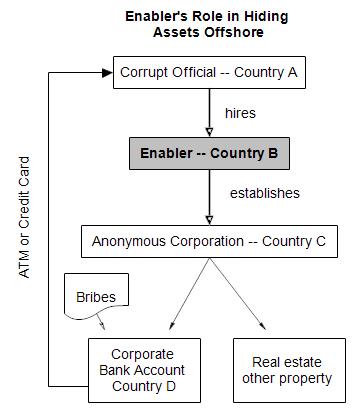
A critical issue the panel will address is the reforms necessary to ensure corrupt officials cannot use a corporation, trust, or other legally created entity – a “legal person” in lawyer-speak — to hide their wrongdoing.  Those investigating corruption, money laundering, tax evasion, and other financial crimes must be able to identify the real, natural person – the beneficial owner – behind a legal person if we are to curb the massive theft of assets from poor nations. In his background paper for the panel, Andres Knobel of the Tax Justice Network explains how criminals use legal persons to shield their wrongdoing and the measures required to end these abuses.  Most importantly, his condemnation of the injustice of the current laws governing legal persons serves as a powerful prod to action. His summary of the paper is below and the full text here.

Beneficial ownership: more than transparency, it’s about justice

The Panama Papers revealed the involvement of many public figures in offshore legal vehicles causing turmoil all over the world. But the real scandal wasn’t the data that was revealed. Rather, the scandal was the fact that we needed a leak to obtain data that should have been available in the first place.

Continue reading

Interview on the History of Corruption in the U.S. (and Corruption in the Trump Administration)

As regular readers likely know, a little while back I did a post on a new working paper of mine, jointly authored with Mariano-Florentino Cuellar, on corruption and anticorruption in U.S. history. A few weeks ago, Harvard Law Today (the alumni magazine put out by my employer and alma mater) published a short interview I did about what we learned from this research project. In addition to discussing the history, the interviewer also asked some questions regarding the current situation in the U.S. with respect to corruption, especially in connection with the evidence this blog has been collecting of the Trump Administration’s conflicts of interest and efforts to monetize the presidency for personal financial gain. It’s a brief interview, and there may not be much in here that will be news to those who read the working paper or follow these issues closely, but I figured I’d share the interview in case some folks out there might find it of interest. The interview also includes a link to a lecture I delivered a year ago on broad themes related to corruption and anticorruption.

Reforming the US AML System: Some Proposals Inspired by the FinCEN Files

Last week, I did a post with some preliminary (and under-baked) reflections on the so-called “FinCEN Files” reports by BuzzFeed News and the Independent Consortium of Investigative Journalists (ICIJ). These stories relied in substantial part on a couple thousand Suspicious Activity Reports (SARs) that had been filed with the U.S. Treasury Department’s Financial Crimes Enforcement Network (FinCEN), and leaked to a BuzzFeed journalist in 2018. The documents, and the reporting based on them, highlight the extent to which major Western banks assist suspected kleptocrats, terrorists, and other criminal actors move (and launder) staggering amounts of money all over the world, and highlight the deficiencies of the existing anti-money laundering (AML) system.

What can we do to rectify this depressing state of affairs? Much of the commentary I’ve seen so far (both in the FinCEN Files stories themselves, and commentary on the reporting from other sources) emphasizes the need for more individual criminal liability—putting bankers in jail, not just fining banks. Even when banks are threatened or hit with penalties, the argument goes, this doesn’t really have much of a deterrent effect, partly because even what seem like very large monetary sanctions are dwarfed by the profits banks stand to make from assisting shady clients with shady transactions, and partly because the costs of monetary sanctions are mostly passed on to the bank’s shareholders, and don’t really hurt the individuals responsible (or the managers who tolerate, or turn a blind eye to, misconduct).

I’m quite sympathetic to both of these arguments, though with a couple of important caveats. Caveat number one: The absence of individual prosecutions of bankers is sometimes attributed to the fecklessness—or, worse, the “soft” corruption—of federal prosecutors, but as I noted in my last post, I tend to think that the more significant obstacle is the fact that it is very difficult in most cases to prove beyond a reasonable doubt that the that bankers or other intermediaries had the requisite level of knowledge to support a criminal money laundering conviction. Caveat number two: I don’t think we should be too quick to dismiss the idea that levying significant monetary penalties on banks can affect their behavior. After all, these institutions are motivated overwhelmingly by money, so hitting them in the pocketbook is hitting them where it hurts. The problem may be less that monetary sanctions are inherently ineffectual in this context, but rather that they are too low and too uncertain to have a sufficient impact on incentives and behavior.

In that vein, I want to suggest a few legal reforms that might make the U.S. AML system function more effectively. I acknowledge that these are “inside the box” ideas, insofar as they seek to make the existing framework more effective rather than to drastically transform that system. That may make these proposals feel unsatisfying to some, though I suspect the proposals will seem radical, even outlandish, to others. I should also acknowledge that I am not at all an AML expert, so it’s quite possible that the discussion below will contain errors or misunderstandings of the law or the system. But, in the spirit of trying to stimulate further discussion by those who really understand this field, let me throw out a few ideas. Continue reading

FACTI Background Paper: Current Trends in Foreign Bribery Investigation and Prosecution

The United Nations High-Level Panel on International Financial Accountability, Transparency and Integrity for Achieving the 2030 Agenda Financing for Sustainable Development (FACTI) will recommend reforms to tax and anticorruption laws, asset recovery rules, beneficial ownership disclosure requirements, and other international norms to staunch the outflow of illicit funds from developing nations and speed the return of corrupt monies held abroad. A link to the panel’s interim report and instructions for submitting comments is here

As explained in an earlier post, the panel’s recommendations will draw on background papers commissioned by the United Nations Department of Economic and Social Affairs, the panel’s Secretariat.  A link to the papers is here

Dr. Abiola Makinwa of the Hague University of Applied Sciences authored a very fine one analyzing trends In the investigation and prosecution of foreign bribery cases (here).  Her summary of the paper is below.

Current Trends in Foreign Bribery Investigation and Prosecution

My paper examines systemic issues, such as lack of political will, profound information asymmetries, and the overarching general insufficiency of traditional criminal punishment as a response to the ‘true costs’ of corruption. I draw attention to Article 39 of the UN Convention against Corruption which calls for cooperation between national authorities and private sector entities as an integral aspect of anti-corruption enforcement. In practice, such cooperation between alleged offenders and prosecuting authorities may result in an agreement or resolution that reduces eventual sanction or penalty. These agreements are variously referred to as non-trial resolutions (NTRs), negotiated settlements, or structured settlements.

I show in the paper how the use of NTRs in foreign bribery cases is spreading across jurisdictions and is dramatically changing the face of anti-corruption enforcement.  While NTRs may be a pragmatic, new mechanism to overcome the limitations of traditional criminal prosecution of foreign bribery, they must not be seen as a get-out-of-jail card or lead to the decriminalization of the grievous crime of foreign bribery. Nonetheless, it is clear that NTRs provide a development-friendly response to foreign bribery enforcement by overcoming historic impunity and lack of enforcement. The most important “development dividend” of NTRs, is, in my opinion, the fact that NTRs shift the focus of anti-foreign bribery enforcement to corruption prevention.

There are 4 KEY arguments that support countries buying into NTR regimes for anti-foreign bribery enforcement.

Continue reading

New Podcast Episode, Featuring Frederik Obermaier

A new episode of KickBack: The Global Anticorruption Podcast is now available. In this week’s episode, my collaborators Nils Köbis and Christopher Starke welcome back to the podcast Pulitzer Prize-winning investigative journalist Frederik Obermaier of the German publication Süddeutsche Zeitung, who is also affiliated with the International Consortium of Investigative Journalists. A year and a half ago, I had the opportunity to interview Mr. Obermaier on the podcast about his work breaking the Panama Papers story, which shed unusual light on how corrupt officials and other criminals use anonymous companies to launder the proceeds of their illegal activity. In the new episode, Mr. Obermaier discusses the so-called FinCEN Files (which I blogged about last week): the leak of over two thousand suspicious activity reports (SARs) filed with the U.S. Treasury’s Financial Crimes Enforcement Network (FinCEN). Mr. Obermaier explains why and how the FinCEN Files reveal how badly broken the international anti-money laundering (AML) system is, the likely reasons for the ineffectiveness of the system, how the ICIJ and its journalistic collaborators handled such a sensitive story, and the possible political implications of the stories based on the FinCEN Files reporting.

You can find this episode here. You can also find both this episode and an archive of prior episodes at the following locations:

KickBack is a collaborative effort between GAB and the ICRN. If you like it, please subscribe/follow, and tell all your friends! And if you have suggestions for voices you’d like to hear on the podcast, just send me a message and let me know.