Day Six of the Trial of Teodorin Obiang

GAB is pleased to publish this account and analysis of the 6th day of the trial of Equatorial Guinean Vice President Teodorin Nguema Obiang by Shirley Pouget and Ken Hurwitz of the Open Society Justice.

On day six of his trial for actions arising from theft of public monies, Teodorin’s lawyers offered several legal defenses.  The most bizarre, and the one most strenuously advanced, was that in Equatorial Guinea theft of public funds is not a crime if the thief is a senior government official.  Teodorin was a government minister at the time he stole the money, and according to his lawyers, there was no law in Equatorial Guinea that made it a crime for a minister to steal public funds.

The defense also tried to lob a procedural bombshell into the proceedings.  It claimed that the way French courts have interpretred bribery as a predicate offense for money laundering is unconstitutional.  This constitutional objection, a Question Prioritaire de Constitutionalite, could have been lodged early in the proceeding.  Raising it so late in the case, would, if the court accepted the defense request, postpone the trial proceedings for many months. 

Continue reading →

Guest Post: Using Open Data To Combat Corruption—Moving Beyond the Hype

Robert Palmer, the Director of Partnerships and Communication at the Open Data Charter, contributes today’s guest post:

In order to tackle corruption effectively, one first needs to understand the networks that link government officials, businesses, and professional intermediaries, and then work to either dismantle these networks or at least ensure that these webs of connections are not exploited to enrich individuals and undermine good government. Fortunately, these clandestine networks often leave traces in government-held databases, such as company registers, land title deeds, asset disclosures, and other official records. That’s where open data can be helpful. When the government provides easily accessible public information, it makes it easier for government officials, journalists, and citizens to follow financial flows, understand who’s providing government services, and to spot suspect behavior. And that’s why there has been so much enthusiasm about the open data in the anticorruption community. In 2015, for example, the G20 anticorruption working group announced a common approach saying that “Open Data can help prevent, detect, investigate and reduce corruption.”

Yet what’s happening on the ground isn’t living up to this hype. Part of the reason is that, as the Web Foundation and Transparency International found in a recent study of five G20 countries, many countries have made only limited progress toward meeting international commitments on open data. But even where open data is available, relatively few organizations are actually using open data to expose and combat corruption. There are, of course, exceptions, including Global Witness, the data journalists at Organised Crime and Corruption Reporting project, and accountability groups such as BudgIT. Yet the potential for open data to help fight corruption remains largely unrealized.

To help address this shortcoming, the Open Data Charter has spent the last year pulling together a guide for how to use open data to combat corruption. The guide lists 30 types of datasets that could help expose and combat corruption if they are released in the right way, as well as key data standards to ensure consistency and quality between different countries. Of course, the underlying assumptions here are that the types of data listed in the guide can be collected and released by governments in the ways the guide advises, and that there are anticorruption actors who can process this data in ways that are helpful in exposing or preventing corruption. In order to probe these assumptions, the Open Data Charter has teamed up with the Government of Mexico to “road-test” the guide. This will include working out which of the 30 datasets in our guide the government already publishes, which further ones can be released, and how to engage potential users. We’re interested in understanding how if data is released in the right way, users such as journalists, law enforcement, and civil society can process the data and then use it to have an impact on corruption.

Our approach to this piece of work is guided by a real desire to learn what works: what’s helpful to the government and what’s helpful to external stakeholders who want to tackle corruption. We hope to be able to report on our initial findings over August. If you’re interested in learning more, please get in touch with me: robert [at] opendatacharter.org. In the spirit of transparency and collaboration, the guide itself is open to comment here.
Day Four of the Trial of Teodorin Obiang, Part II

GAB is pleased to publish this account of the second part of the 4th day of the trial of Equatorial Guinean Vice President Teodorin Nguema Obiang by Shirley Pouget of the Open Society Justice Initiative.

As detailed in an earlier post, five witnesses testified June 26, 2017, in support of the corruption charges laid against Equatorial Vice President Teodorin Nguema Obiang.  Teodorin called but a single witness in his defense: Simon Mann, an assistant to Teodoro Obiang Nguema Mbasogo, who has been President of Equatorial Guinea for the past 38 years and also happens to be Teodorin’s father.

Mann came into President Obiang’s employ by a strange route.  Hired by a Lebanese businessman to overthrow Obiang, he was captured and jailed.  Mann explained that Obiang later pardoned him and then hired him as an advisor.  When the court asked if he was still employed by Obiang he replied:

“They pay my expenses as well as a per diem.”

He denied, however, that he was being paid to testify. Continue reading →

Day Four of the Trial of Teodorin Obiang

GAB is pleased to publish this account of the 4th day of the trial of Equatorial Guinean Vice President Teodorin Nguema Obiang by Shirley Pouget of the Open Society Justice Initiative.

Monday, June 26, was the fourth day of trial of Equatorial Guinean Vice President Teodorin Obiang on charges amounting to kleptocracy.  After three days of skirmishing about procedural issues, the court finally heard testimony in support of the charges.

court room *Roberto Berardi, who had been in business with Teodorin, told the court that after confronting Teodorin about allegations of corruption leveled by the U.S. Department of Justice he was jailed and held in solitary confinement for almost three years.  The reason, he believes, was to prevent him from talking to U.S. authorities.

*Delfin Mocache Massoko, whose on-line news site Diaro Rombe chronicles the Obiang family’s business dealings, told the court that he and many of his sources had been told “they will pay” for exposing the Obiang’s corruption to the world.

* Tutu Alicante León, an Equatorial Guinean exile who runs EG Justice, detailed the brutality and repression Equatorial Guineans face and deprivation and extremen poverty they live in thanks to the Obiangs’ crimes.  At the court’s request he explained how any assets the court ordered seized from Teodorin could be returned to the country in ways that would benefit its citizens.

* Pedro German Tomo, another Equatorial Guinean exile, testified that when Teodorin was Minister of Agriculture and Forestry he forced logging companies to pay 10,000 francs per square meter of board logged to a company Teodorin controlled and later, when Teodorin took responsibility for infrastructure, any company winning a construction contract had to pay a 10 percent commission to the same company.

* Daniel Lebegue of Transparency International France explained to the court why his organization felt it had no choice but to bring this case against Teodorin.  He said TI-France had consulted extensively with TI chapters in Senegal, Mali, Niger, Nigeria, Namibia, Kenya and Tanzania before lodging the complaint: “we wanted to go hand in hand with our colleagues from the African Chapters and be sure that our action was right.”

What follows is an account of each witness’ testimony.  No recording or transcript of the proceedings was made.  To GAB’s knowledge, Mme. Pouget’s account of the witnesses’ testimony will therefore serve as the only record.  Anyone who believes there is an error, or who wishes to provide additional context, is urged to post a comment below.    Continue reading →

Guest Post: Paris Court Rules That a US FCPA Guilty Plea Precludes Subsequent Prosecution in France

GAB is pleased to welcome back Frederick Davis, a lawyer in the Paris office of Debevoise & Plimpton, who contributes the following guest post:

Overseas bribery and similar crimes can often be investigated by prosecutors in more than one country. But does (or should) the resolution of a criminal investigation in one country—say, through a negotiated resolution—bar subsequent prosecutions in other countries for the same underlying conduct? In earlier posts, I have explored some recent rulings that address aspects of this debate over so-called “international double jeopardy” (see here, here and here). A recent decision of the Paris Court of Appeals added an interesting new element to this debate. Faced with a classic situation of parallel prosecutions, the Paris Court held that an individual who had pleaded guilty in the United States for violations of the U.S. Foreign Corrupt Practices Act (FCPA) could not be prosecuted under French anti-bribery law—not because of the standard international double jeopardy principle, but rather because, according to the Paris Court, the US proceedings deprived the defendant of the right to defend himself protected by the European Convention on Human Rights (ECHR).

The facts of the case are simple: an individual entered into a written plea agreement with the U.S. Department of Justice (DOJ), in which the defendant agreed to plead guilty in a US court to FCPA charges, on which he was subsequently sentenced. He was separately bound over for trial in France under French anti-bribery laws, apparently for the same underlying conduct.  In affirming the dismissal of the French prosecution, the Paris Appellate Court’s reasoning proceeded in two steps: Continue reading →

Day Three of the Trial of Teodorin Obiang

GAB is pleased to publish this account of the 3rd day of the trial of Equatorial Guinean Vice President Teodorin Nguema Obiang by Shirley Pouget and Ken Hurwitz of the Open Society Justice Initiative.

court room

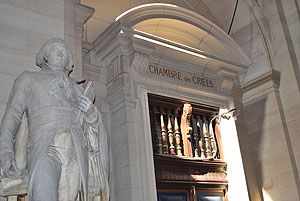
Much of the third day of Teodorin’s trial was taken up with a lengthy, and highly misleading, “explanation” by defense counsel of United States of America v. One White Crystal-Covered “Bad Tour” Glove And Other Michael Jackson Memorabilia, a civil forfeiture action the US Department of Justice filed and later settled that involved property Teodorin owned in California.  The Paris hearing began at 1:30 pm, Wednesday, June 22, with the three judges filing into the august Chambre des Crieés of the Tribunal Correctionnel of Paris.  The Presiding Judge asked the civil parties and the defense counsel to comment on the background to the case she had reviewed the preceding day.  While the civil parties’ counsel had little to say, the defense had much to say — little of which was accurate. Continue reading →

Guest Post: Timor-Leste Needs a New National Anticorruption Strategy

Jonas Guterres, who previously served as an Advisor to the Anti-Corruption Commission of Timor-Leste, contributes today’s guest post:

Corruption in Timor-Leste is a chronic disease that can infiltrate almost all aspects of human life and all sectors of society. A number of mechanisms have been put in place within the nation’s legal framework since its restoration of independence, culminating in the establishment of the Anti-Corruption Commission (the Comissão Anti-Corrupção, or CAC) in 2010. However, the prevalence of corruption remains high. There are a number of factors which explain why the anticorruption efforts to date remain far from ideal. Continue reading →

The Trial of Suspected Kleptocrat Teodorin Obiang: Report on Day One

GAB is pleased to publish this account of the first day of the Obiang trial by Shirley Pouget, a French lawyer observing the proceedings on behalf of the Open Society Justice Initiative

The worldwide fight against grand corruption took a giant stride forward Monday June 19 with First Vice President of Equatorial Guinea Teodoro Nguema Obiang Mangue standing trial for corruptly diverting millions from the national treasury.  Known to cronies as Teodorin, the case appears to be the first ever where a high-level official, while in office, is called to account for grand corruption before a foreign court. The precedent setting case, the culmination of a decade of determined struggle by French and Equatorial Guinean civil society, is being heard before the Tribunal Correctionnel in Paris.

As the trial opened, the courtroom overflowed with journalists, civil society representatives, and Equatorial Guineans in exile: we were all there to see if indeed a powerful politician whose corrupt activities have left his nation in penury would be held to account.  The three judges hearing the case, all women, took their seats at 1:30. The presiding judge opened by recalling that the accused was before the court on charges of misappropriation of public funds, complicity in the misappropriation of public funds, misuse of corporate assets, complicity in the misuse of corporate assets, and the concealment of each of these offences.  She explained that the court had jurisdiction because each offense, or an element of each, was committed in France.  She then expressed concern that defense counsel had only provided answers to the charges a few days before the trial began.

The defense launched into a series of objections to the commencement of the trial that consumed the entire afternoon hearing.  Teodorin’s high-priced lawyers argued that 1) the case should be stayed pending a final decision by the International Court of Justice in a case between France and Equatorial Guinea, 2) the magistrates’ decision to refer the accused for trial was illegal, and 3) a coalition of Equatorial Guineans should not be permitted to participate in the case as a civil party.  They also raised an unexpected claim based on a highly technical reading of the charging document.    Continue reading →

Guest Post: The IOC Is Lagging Behind In Fighting Corruption in Sports Mega Events

Professor Thomas Kruessman, of the Johan Skytte Institute of Political Studies at the University of Tartu in Estonia, contributes today’s guest post:

Recently Jimmy McEntee criticized the anticorruption provisions that the International Olympic Committee (IOC) had added into its standard Host Country Contract (HCC), arguing that the revised HCC language fails to represent genuine progress in fighting Olympic corruption. I might quibble with a few of his arguments, but McEntee’s larger point is essentially correct. For example, while I think McEntee erred as a technical legal matter in asserting that the HCC contains no legal enforcement mechanism, he’s right that as a practical matter, the IOC may not be able to credibly threaten to enforce the anticorruption provisions against a host city, or host National Olympic Committee (NOC) that violates them. Although the IOC is entitled to terminate the HCC and to withdraw the Games from the Host City if there is a violation of or failure to perform “any material obligation pursuant to the HCC or under any applicable law,” this threat is not very credible, given the high stakes involved for the IOC, the demanding timeline on which Olympic Games are prepared, and the fact that termination may invite burdensome and uncertain litigation over what counts as a “material obligation.” For similar reasons, the less extreme remedy of retaining or withholding funds from the host city or NOC or Host National Olympic Committee (NOC) is also not very appealing, and therefore not very credible, in light of the IOC’s strong interest in making the Olympic Games a success and the fact that withholding funds which would weaken the local hosts.

But perhaps McEntee’s most important point—and the one I want to explore further here—is his argument that the HCC’s anticorruption languate is excessively vague. He argues that “a meaningful anticorruption provision – one consistent with best practices for such provisions – would need to include language that requires the host city to ensure that its agents, contractors, suppliers, and consultants do not participate in any corrupt practice” (emphasis in the original). It is here, especially with respect to the failure to deal clearly and adequately with third-party corruption, where the revised HCC lags behind most, and where comparison with another international sporting association’s approach to the same issue—the Union of European Football Associations (UEFA) Tournament Requirements for the EURO 2024 tournament—is most enlightening. Continue reading →

Guest Post: Turning Big Data Into a Useful Anticorruption Tool in Africa

GAB is delighted to welcome back Dr. Elizabeth Dávid-Barrett of the University of Sussex, who contributes today’s guest post:

Many anticorruption advocates are excited about the prospects that “big data” will help detect and deter graft and other forms of malfeasance. As part of a project in this vein, titled Curbing Corruption in Development Aid-Funded Procurement, Mihály Fazekas, Olli Hellmann, and I have collected contract-level data on how aid money from three major donors is spent through national procurement systems; our dataset comprises more than half a million contracts and stretching back almost 20 years. But good data alone isn’t enough. To be useful, there must be a group of interested and informed users, who have both the tools and the skills to analyse the data to uncover misconduct, and then lobby governments and donors to listen to and act on the findings. The analysis of big datasets to find evidence of corruption – for example, the method developed by Mihály Fazekas to identify “red flags” of corruption risks in procurement contract data—requires statistical skills and software, both of which are in short supply in many parts of the developing world, such as sub-Saharan Africa.

Yet some ambitious recent initiatives are trying to address this problem. Lately I’ve had the privilege to be involved in one such initiative, led by Oxford mathematician Balázs Szendrői, that helps empower a group of young African mathematicians to analyse “big data” on public corruption. Continue reading →