Guest Post: The Long, Long Road from Talking Transparency to Curbing Corruption in Mauritania

GAB is delighted to welcome back Till Bruckner, an international development expert who recently spent six months living Mauritania, and contributes the following guest post based on his experience there:

What do fish and iron have in common? Answer: Mauritania, a largely desert country of less than four million people in north-western Africa, is immensely rich in both. At the same time, most Mauritanians are poor. And one of the biggest reasons is corruption and misgovernance.

Consider first fishing. Although Mauritania has some of the world’s richest fishing grounds, its marine wealth is carried away by foreign ships whose owners often bribe senior government figures to obtain fishing permits and take their catch straight to Europe or Asia. As a result, the country has failed to develop a significant fishing industry, or domestic fish processing industry, of its own, and a fishing industry that boasts an annual catch of half a million tons generates a mere 40,000 jobs inside Mauritania. Yet to the south, Senegal translates a catch of similar size into at least 130,000 jobs, while to the north, Morocco has turned its million-ton-a-year catch into a massive export industry whose turnover is projected to reach two billion dollars by the end of this decade.

Inland, deep in the Sahara, some mountains contain more metal than rock, consisting of up to 75% iron, one of the highest concentrations in the world. Mauritania nationalized its iron mines in 1974, creating the state-owned monopoly company SNIM. Its workers blast the slopes to rubble, and conveyor belts transport the rubble into waiting railway waggons. The longest train in the world then chugs its way across 700 kilometres of desert, loads its cargo onto giant foreign freighters—and neither the ore nor most of the money paid for it are ever seen again. The looting dynamics in Mauritania’s mining sector are illustrated by the stark contrast between Zouerate, the town in the Sahara where the iron is mined—which looks like a dystopian hellhole straight out of a Mad Max film—and the rich suburbs of the capital city of Nouakchott (which produces virtually nothing), where giant villas rise out of the sand, and oversized SUVs cruise the streets. And in Nouakchott itself, in the poor suburbs, families living five to a windowless room have to pay for their drinking water by the barrel.

The preferred prescription in a situation like this (from the usual suspects: development professionals, anticorruption activists, etc.) is a combination of transparency, accountability, and civil society monitoring. But Mauritania is actually doing well on those dimensions. Continue reading

A Global Stocktaking on This First International Right to Know Day

GAB is pleased to welcome this guest post by the Centre for Law and Democracy:

Today marks the first of what will be an annual recognition and celebration of citizens’ right to access information held by their governments.  Making September 28 International Day for Universal Access to Information will, as the UNESCO resolution establishing it explains, help make governments and citizens alike aware that an “open and transparent government is a fundamental component of a democratic and developed state,” that all natural and legal persons have a “right to seek, access and receive information from public bodies and private bodies performing a public function,” and that it is “the duty of the state to prove such information.”

For the past five years the Centre for Law and Democracy and Access Info Europe have been tracking nations’ efforts in fulfilling this duty, and we are pleased to note that substantial progress has been made.  There are now 112 countries with some form of right to information or freedom of information legislation on the books with six nations enacting a new law this year alone.  Not all RTI laws meet the minimum criteria for granting citizens the right to information, and even those laws that do are not always enforced effectively.  To keep watch over developments, our two organizations annually produce an RTI Rating reporting legal changes and assessing their compliance with international norms.  This year’s report has a number of surprising findings.    Continue reading

Guest Post: Is Sunlight Really the Best Disinfectant? Evidence on Procurement Transparency from Europe

GAB is delighted to welcome back Mihály Fazekas, of the University of Cambridge and the Government Transparency Institute, who contributes the following guest post:

Public procurement, which accounts for roughly one-third of government spending in OECD countries and up to 50% in developing economies, is well-known as an area associated with high corruption risk. Hence, it is hardly a surprise that a range of policy recommendations from international organizations (such as the OECD), civil society networks (such as the Open Contracting Data Standard), and research projects (e.g. Digiwhist) have emerged to promote anticorruption in public procurement. And one of the most popular prescriptions for achieving this goal is increased transparency. Transparency, of course, can mean different things. For purposes of the discussion here, we will follow the OECD and World Bank in defining “public procurement transparency” as entailing the timely, free, and accurate publication of public procurement documents in a central e-procurement portal in a machine-readable format, with this publication requirement applying to every major step of the contracting process, and disclosing all key characteristics of the tender and contract. (For a comprehensive data template see here).

Research suggests that this sort of transparency does make a difference in terms of bidder numbers and composition. Yet it remains an open question whether public procurement transparency is necessary or sufficient for controlling corruption in public procurement. Indeed, if one looks at a sample of European countries’ public procurement transparency and their suspected corruption risks, one finds a surprising result: the best governed countries in Europe have the lowest levels of transparency in public procurement. Continue reading

Artful Transactions: Corruption in the Market for Fine Arts and Antiques

The fascination surrounding art theft and forgery has long been the subject of much exploration. Only more recently, however, has the art market come under increased scrutiny regarding its connection to money laundering and corruption. It’s not just that stolen artworks often end up in the hands of criminals: even the market for non-stolen art is especially vulnerable to money laundering and corruption. With more banks cracking down on illicit activities, art has become an “efficient instrument for hiding cash.” As an article in the New York Times observed, no business seems “more custom-made for money laundering, with million-dollar sales conducted in secrecy and with virtually no oversight.”

Considering the attention paid by anticorruption and anti-money laundering activists to the role of the real estate market and the market for other luxury goods to facilitate money laundering and bribery, it is perhaps a bit surprising that there hasn’t been more attention to the art market—which is perhaps even more deserving of scrutiny. Continue reading

Watching the Watchmen: Should the Public Have Access to Monitorship Reports in FCPA Settlements?

When the Department of Justice (DOJ) settles Foreign Corrupt Practices Act (FCPA) cases with corporate defendants, the settlement sometimes stipulates that the firm must retain a “corporate monitor” for some period of time as a condition of the DOJ’s decision not to pursue further action against the firm. The monitor, paid for by the firm, reports to the government on whether the firm is effectively cleaning up its act and improving its compliance system. While lacking direct decision-making power, the corporate monitor has broad access to internal firm information and engages directly with top-level management on issues related to the firm’s compliance. The monitor’s reports to the DOJ are (or at least are supposed to be) critically important to the government’s determination whether the firm has complied with the terms of the settlement agreement.

Recent initiatives by transparency advocates and other civil society groups have raised a question that had not previously attracted much attention: Should the public have access to these monitor reports? Consider the efforts of 100Reporters, a news organization focused on corruption issues, to obtain monitorship documents related to the 2008 FCPA settlement between Siemens and the DOJ. Back in 2008, Siemens pleaded guilty to bribery charges and agreed to pay large fines to the DOJ and SEC. As a condition of the settlement, Siemens agreed to install a corporate monitor, Dr. Theo Waigel, for four years. That monitorship ended in 2012, and the DOJ determined Siemens satisfied its obligations under the plea agreement. Shortly afterwards, 100Reporters filed a Freedom of Information Act (FOIA) request with the DOJ, seeking access to the compliance monitoring documents, including four of Dr. Waigel’s annual reports. After the DOJ denied the FOIA request, on the grounds that the documents were exempt from FOIA because they comprised part of law enforcement deliberations, 100Reporters sued.

The legal questions at issue in this and similar cases are somewhat complicated; they can involve, for example, the question whether monitoring reports are “judicial records”—a question that has caused some disagreement among U.S. courts. For this post, I will put the more technical legal issues to one side and focus on the broader policy issue: Should monitor reports be available to interested members of the public, or should the government be able to keep them confidential? The case for disclosure is straightforward: as 100Reporters argues, there is a public interest in ensuring that settlements appropriately ensure future compliance, as well as a public interest in monitoring how effectively the DOJ and SEC oversee these settlement agreements. But in resisting 100Reporters’ FOIA request, the DOJ (and Siemens and Dr. Waigel) have argued that ordering public disclosure of these documents will hurt, not help, FCPA enforcement, for two reasons:  Continue reading

TNI’s Gold Mine: Corruption and Military-Owned Businesses in Indonesia

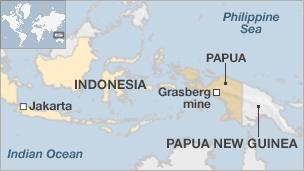
The Grasberg Mine, located close to the highest mountain in West Papua, Indonesia, is the world’s largest gold mine and third-largest copper mine. The mine, owned by the corporation Freeport-McMoRan Copper & Gold, has been the site of strings of grave human rights abuses, linked to Indonesia’s own National Armed Forces (Tentara National Indonesia/TNI). TNI’s presence in the territory is ostensibly to protect the mine, and Freeport’s Indonesian subsidiary acknowledges having made payments of as much as US$4.7 million in 2001 and US$5.6 million in 2002 for such government-provided security. A report by Global Witness, however, revealed numerous other payments ranging from US$200 to US$60,000 that Freeport Indonesia allegedly made to individual military officers.

The TNI’s sale of security services to companies like Freeport is only one of the many business ventures conducted by the TNI and its officers. As Human Rights Watch has reported, the Indonesian military has been supplementing its income through both its formally established companies, and through informal and often illicit businesses such as black market dealing. Moreover, the military’s business activities (both lawful and unlawful) are largely shielded from public scrutiny: budgeting for military purposes is generally kept secret, and TNI members generally refuse to answer questions about institutional spending.

Military-owned business in Indonesia are problematic, not only because this private-sector activity impedes military professionalism and distorts the function of the military, but also because it also contributes to crime, human rights abuses, and especially corruption. This problem is greatly compounded by the fact that TNI officers generally enjoy immunity from corruption charges brought by civilian institutions. In fact, the Transparency International’s Defense and Security Program has deemed Indonesia one of the countries most prone to corruption in its defense and security institutions. It is therefore appalling that this issue has not been addressed more seriously by the Indonesian government. Although a 2004 law mandated the transfer of control over TNI businesses to the civilian government within five years, the law did not clearly specify which types of business activities were covered, and this legal loophole enabled the TNI to preserve many of its moneymaking ventures, including TNI’s infamous security services—to say nothing of already-illegal criminal enterprises and illicit corporations. Moreover, despite the five-year timetable in the law, the government has been notably reluctant to enforce the transfer of ownership, making repeated excuses alluding vaguely to the need for the TNI to compensate for the lack of budgeting for security purposes. As a result, despite some efforts to reform the way the TNI is allowed to handle its businesses, military-owned businesses in Indonesia continues to flourish, with the Indonesian people of Indonesia having to pay the price.

The government’s weak response towards the military’s non-compliance with the 2004 law is merely one of the many indicators of how impervious the TNI’s power and seeming impunity. There are factors that contribute to this impunity, along with the corresponding corruption and abuse of power in the operations of military-owned businesses: Continue reading

Chill Out: Fine-Tuning Anticorruption Initiatives to Decrease Their Chilling Effect

Who is “harmed” by aggressive anticorruption crackdowns? The most obvious answer is corrupt bureaucrats, shady contractors, and those who benefit from illicit flows of money. And while there are concerns about political bias and other forms of discrimination in the selection of targets, in general most of us rightly shed few tears for corrupt public officials and those who benefit from their illicit acts. But aggressive anticorruption crackdowns may have an important indirect cost: they may have a chilling effect on legitimate, socially beneficial behavior, such as public and private investment in economically productive activities. Although chilling effects are often discussed in other areas, such as with First Amendment rights in the United States, there is little discussion of it in the anticorruption context. That should change.

For example, in Indonesia, recent efforts to crack down on corruption appear to have stunted simultaneous measures to grow the economy through fiscal stimulus. As this Reuters article relates, “Indonesian bureaucrats are holding off spending billions of dollars on everything from schools and clinics to garbage trucks and parking meters, fearful that any major expenditure could come under the scanner of fervent anti-corruption fighters.” Nor is Indonesia the only example. In April 2014, Bank of America estimated that China’s corruption crackdown would cost the Chinese economy approximately $100 billion that year. One can challenge that estimate (as Matthew has discussed with respect to other figures used in reports on the cost of China’s anticorruption drive), but the more general notion that aggressive anticorruption enforcement can have a chilling effect on both public and private investment, which in turn can have negative macroeconomic impacts, is harder to rebut.

Taking this chilling effect seriously does not imply the view that corruption is an “efficient grease” or otherwise economically beneficial. The point, rather, is that although corruption is bad, aggressive measures to punish corruption may deter not only corrupt activities (which we want to deter) but also legitimate activities that might entail corruption risks, or be misconstrued as corruption. So, if we think that corruption is bad but that anticorruption enforcement might have an undesirable chilling effect, what should we do? Continue reading

NGOs, Like Ceasar’s Wife, Should Be Above Suspicion: Why Indian Nonprofits Need To Take Transparency More Seriously

Soon after India’s new government assumed power in May 2014 under the leadership of Prime Minister Narendra Modi, the Central Bureau of Investigation (CBI) sought permission for arrest and custodial interrogation of journalist and human rights activist Teesta Setalvad for alleged mismanagement of $576,000 by her organization. In October 2014, the Ministry of Home Affairs (MHA) issued show-cause notices to 10,343 non-profits for not furnishing annual returns, and subsequently cancelled FCRA registrations for around 9,000 of these non-profits, citing “non-response within the stipulated time period.” India’s Foreign Contribution Regulation Act (FCRA) regulates the inflow of foreign contributions to charitable organizations and is expanding its tentacles and grip under each successive government (see here and here). In April 2015, Ford Foundation, the philanthropic organization whose work in India dates back to 1952, was put on a national security watch list and removed from the prior-permission list in January 2016, constraining its funding capacity. Ford is being targeted primarily for channeling funds to Ms. Setalvad’s NGO that was apparently ineligible to receive funds under FCRA.

As many in the Indian media have pointed out, the government’s aggressive actions against non-profits seems selective—more like a political vendetta than a principled stand against misappropriation of funds. It’s hard to ignore the fact that Ms. Setalvad had sought the conviction of Narendra Modi for alleged human rights abuses during his tenure as the Chief Minister of Gujarat, or that the case against Ford is linked to its funding for her non-profit. Moreover, in the same month that MHA canceled the FCRA licenses of 9,000 non-profits, an access-to-information query revealed that 401 of the 545 Members of the Parliament’s Upper House had not declared their assets and liabilities – including the Minister of Home Affairs himself. And the government’s tenacious pursuit of non-profits contrasts awkwardly with the practical impunity of those accused of perpetrating India’s three biggest scams (the $27.8 billion coal scam of 2012, the $26.3 billion 2G spectrum scam of 2013, and multi-million Vyapam scam of 2015).

So, when nonprofits, activists, and their supporters accuse the government of applying a double standard, they have a point. Yet, even as we rightly protest the government’s politically motivated vendetta against civil society, it is equally important for India’s non-profits to take a good hard look in the mirror. India has witnessed an unprecedented civil society mobilization against corruption in 2011 and non-profits have spearheaded numerous successful anticorruption initiatives, such as social audits, citizen report cards, and crowdsourcing platforms like I-Paid-a-Bribe.com. Yet the members of India’s vibrant non-profit sector must be sure that they are applying to themselves the same high standards of transparency and accountability that they advocate in the public sphere. Too often, they fall short. Indeed, the accountability practices within India’s non-profits are alarmingly sketchy. Continue reading

Is Sunlight Really a Good Disinfectant? The Equivocal Evidence on Freedom of Information Laws and Corruption

Government transparency is widely considered to be one of the most important means for combating public corruption, a sentiment nicely captured by U.S. Supreme Court Justice Louis Brandeis’s famous observation (in a somewhat different context) that “sunlight is said to be the best of disinfectants.” For this reason, many anticorruption activists lobby for the adoption of strong freedom of information (FOI) laws—laws that not only obligate the government to regularly publish certain types of information, but also to respond promptly to citizen requests for a wide range of government records and documents. The thinking is that government corruption is easier to detect when citizens, civil society organizations, and the media can scrutinize information about government operations.

I count myself firmly in the camp of those who tend to believe that FOI laws are useful anticorruption tools, especially given the strong evidence that citizen and media access to government information can indeed help reduce corruption and hold officials accountable (see, for example, here, here, and here). And because of this, I would expect the evidence to indicate that when a country (or sub-national jurisdiction) adopts a stronger FOI law, corruption should decrease afterwards. But I’ve been looking into the research on this recently, and most of the results don’t fit well with my expectations. Long story short, the (admittedly limited) quantitative empirical evidence does not find a strong correlation between the adoption of a strong FOI law and a subsequent decrease in corruption; if anything, the evidence actually seems to suggest that the adoption of a strong FOI law may be followed by an increase in (perceived or detected) corruption.

Does this mean that FOI laws are ineffective or even counterproductive? I don’t think so, for reasons I’ll lay out in a moment. But I do think it’s worthwhile—especially for those of us who are inclined to support broad FOI laws—to consider the evidence carefully and reflect a bit on what it might mean. Continue reading

More Phony Numbers–This Time on the Anticorruption Impact of Open Data

OK, I know I’m beating a dead horse. Within the last month I’ve already posted several times (see here, here, and here) about bogus anticorruption statistics, as has Rick. And I promise that after this post, I’ll move on to other topics. But I can’t help commenting on this latest release from Transparency International, criticizing the recent World Economic Forum (WEF) meeting for not explicitly addressing corruption. As its lead example, TI faults the WEF for not addressing issues like open data (and openness more generally). I’m sympathetic to TI’s policy position, but in making the case, TI asserts, “One study suggests that open data could reduce the costs of corruption by about 10 percent.”

I was curious (and, admittedly, skeptical) about yet another seemingly precise estimate of something that’s inherently hard to measure. So I clicked on the link to the “one study” that “suggests” that open data technologies would reduce the costs of corruption by 10%. This “study” is actually a report (really, an advocacy document) from an Australian consulting firm (Lateral Economics), commissioned by a philanthropic fund (the Omidyar Network) that invests in open data initiatives. How does this “study” reach its conclusion that open data could reduce the costs of corruption by 10%? I will now quote in full the entirety of the evidence and analysis supporting that conclusion: Continue reading