TI’s “Declaration Against Corruption” — A Plug and a Question

Last week, I got an email alert from Transparency International asking me to sign (and publicize) TI’s new “Declaration Against Corruption.” The declaration is short and sweet:

I will not pay bribes
I will not seek bribes
I will work with others to campaign against corruption
I will speak out against corruption and report on abuse
I will only support candidates for public office who say no to corruption and demonstrate transparency, integrity and accountability

On reading the declaration, I had two thoughts. The first thought was, “Yes, of course I agree with all that, I’m happy to add my name to the list” (which I did). I’m also happy to use this blog post in part to help publicize the declaration in case some of you out there haven’t already heard about this and would like to sign on as well.

My second thought, though, was along the lines of “What’s the point?”

I ask that question with all due respect to TI. I want to pose this as a substantive, serious question about anticorruption campaign strategy: What is a “Declaration Against Corruption” like this supposed to accomplish? It certainly doesn’t do any harm, but what good do TI and other anticorruption campaigners think will come of this?

I have a few hypotheses about why one might think that calling on as many people as possible to sign onto a Declaration Against Corruption might be a useful and meaningful (as opposed to symbolic but ultimately trivial) element of an anticorruption campaign: Continue reading

Guest Post: 43 Government Reps Walked Into a Summit…. What Next?

Maggie Murphy, Senior Global Advocacy Manager for Transparency International, contributes the following guest post:

International summits come and go, and all too often the promises made at these summits are quickly forgotten, lost in an online catacomb or otherwise hard to track. We at Transparency International are determined that the commitments made by government representatives at last May’s London Anticorruption Summit (648 total commitments by 41 of the 43 participating governments) must not slide into oblivion in this way. That’s why, as Matthew announced in a post earlier this month, we’ve gone through every single country statement and compiled all commitments into one central database, sortable by country, theme, and region. Our goal is for this database to be used by anticorruption advocates and activists to monitor what their countries have committed to, and whether and where they are making progress.

We’ve done our own preliminary analysis of the commitments, assessing the extent to which each commitment is (1) “concrete” (i.e measurable), (2) “new” (i.e., generated by the Summit), and (3) “ambitious” (according to country partners). We found that more than half of the commitments were concrete, about a third were brand new, and about a third seen to be ambitious by our country partners. That’s encouraging, and certainly better than I would have expected.

We’ve put together a more formal analysis here, including a description of how we came to our conclusions. Let me highlight some of the most interesting ones: Continue reading

TI’s Database of London Anticorruption Summit Commitments

Last May’s London Anticorruption Summit seems a long time ago now, given everything that’s happened in the intervening months (especially Brexit and the resulting downfall of David Cameron, who convened the Summit in the first place). But many in the anticorruption community are still hopeful that the London summit, and perhaps future events like it, can help spur more serious international progress on the fight against corruption. As regular GAB readers might recall, shortly after the summit I went through each of the individual country statements to try to figure out what sorts of promises or announcements each of the summit participants had made with respect to several issue areas–those blog posts are here and here.

As I acknowledged in the posts, my efforts were quick & dirty & preliminary. I’m happy to report that Transparency International undertook a much more thorough and systematic effort to go through each of the country statements, identify each separate commitment in each statement, and give each one a 1-3 score on each of three dimensions: (1) whether the commitment is new; (2) whether the commitment is ambitious; and (3) whether the commitment is concrete. TI’s analysis also categorizes the country commitments into 20 different categories: anticorruption environment; anti-money laundering; asset recovery; beneficial ownership; bribery; defense & security; denial of entry; innovation; international anticorruption architecture; law enforcement; natural resources; OECD; open data; private sector; public procurement; public sector integrity; sports; tax; training & assistance; whistleblower/civil society space protection. (Several of the categories are further subdivided into “focus themes.”) The database also includes the full text of each commitment.

I may do a more substantive follow-up post later on, with my reactions to TI’s report and/or my take on the information contained in the database, but for now I just wanted to say kudos to TI for doing this, and to alert those GAB readers who weren’t already aware of this that they can check out the report and the database here.

Guest Post: Catalyzing Anticorruption Efforts in the Pharmaceutical Sector–Collaboration Is Key

Michael Petkov, Programme Officer for Transparency International’s Pharmaceuticals & Healthcare Programme, contributes the following guest post:

It will come as no surprise to readers of this blog that the pharmaceutical sector has extensive corruption risks: the sector is extremely complex, with multiple actors, high-value products, large-volume contracts, and a high degree of information asymmetry. But despite these well-known risk factors many actors in the pharma sector are failing to produce and enforce adequate anticorruption policies. Key decision-makers in the pharma sector frequently do not perceive corruption as an important issue and often do not display a genuine commitment to anticorruption efforts.

A recent paper published by Transparency International and the Leslie Dan Faculty of Pharmacy at the University of Toronto identifies several overarching challenges that are hampering efforts to minimize corruption in the pharma sector, and posits key areas for action including the importance of harnessing technology to minimize corruption vulnerabilities and of increasing the monitoring, enforcement, and sanctions of actors. Because of the complexity of the sector, collaboration is essential to making progress on all of these fronts. After all, a key difficulty for tackling corruption in the pharmaceutical sector is the fact that the medicine chain stretches across national borders. It is encouraging that governments came together at the London Anti-Corruption Summit and recognized the need for national institutions to share relevant information with their peers in other countries. Similarly, multi-stakeholder initiatives such as the European Healthcare Fraud and Corruption Network are excellent opportunities for all types of actors to come together, share information, and collaborate with others to take action.

There are two other ways in which greater collaboration is critical for making progress on the fight against corruption in the pharma sector: Continue reading

Guest Post: How Tendering Practices By Anticorruption Research Funders Undermine Research Quality and Credibility

Cheyanne Scharbatke-Church and Diana Chigas, of the Fletcher School of Law & Diplomacy at Tufts University, contribute the following guest post:

Early last week, the Transparency International (TI) Secretariat in Berlin circulated an Invitation to Tender with a title that grabbed our attention. Framed as part of a commitment to “the highest standards of accountability, organizational effectiveness and learning,” this tender described a “Research Review and Evaluation of Anti-Corruption Work Assumptions: Grievance as a key determinant of people’s anti-corruption behavior.” The email that accompanied the tender suggested an exciting and needed inquiry into assumptions that drive anticorruption programs funded by the international community—on a topic that is closely related to some of our research team’s work on corruption in fragile states  (see here and here). That TI was interested in funding a project of this sort was encouraging: Testing core assumptions, after all, is central to learning and should be a fundamental element of effective programming. We were also heartened by the fact that TI sought comparative analysis, and would give preference to counterfactual analysis over experimental designs—suggesting an interest in the type of qualitative inquiry that is necessary to penetrate the dynamics of corruption as a complex system.

Our initial enthusiasm turned to dismay, however, by the time we finished reading the Tender. The reason may seem prosaic, even banal: The time-frame for submitting proposals and for the work itself. To our knowledge the Tender was circulated the first week of July, applications are due August 5th, work is to start August 29th and be finished by October 31—with a budget for 30-35 working days. At first, that may not seem like such a big deal—and we recognize that it might seem like we are merely griping about our team’s inability to meet the application and project deadlines for this tender. But this is not about any one tender or any one research team. Rather, the practices embodied in—but by no means limited to—this particular tender are in fact representative of larger problems in the world of anticorruption and development evaluation research, one that we suspect may be familiar to other researchers. In particular, two problems in particular stand out. Continue reading

TNI’s Gold Mine: Corruption and Military-Owned Businesses in Indonesia

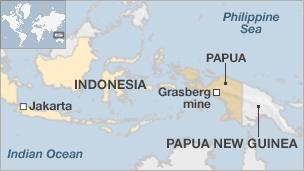
The Grasberg Mine, located close to the highest mountain in West Papua, Indonesia, is the world’s largest gold mine and third-largest copper mine. The mine, owned by the corporation Freeport-McMoRan Copper & Gold, has been the site of strings of grave human rights abuses, linked to Indonesia’s own National Armed Forces (Tentara National Indonesia/TNI). TNI’s presence in the territory is ostensibly to protect the mine, and Freeport’s Indonesian subsidiary acknowledges having made payments of as much as US$4.7 million in 2001 and US$5.6 million in 2002 for such government-provided security. A report by Global Witness, however, revealed numerous other payments ranging from US$200 to US$60,000 that Freeport Indonesia allegedly made to individual military officers.

The TNI’s sale of security services to companies like Freeport is only one of the many business ventures conducted by the TNI and its officers. As Human Rights Watch has reported, the Indonesian military has been supplementing its income through both its formally established companies, and through informal and often illicit businesses such as black market dealing. Moreover, the military’s business activities (both lawful and unlawful) are largely shielded from public scrutiny: budgeting for military purposes is generally kept secret, and TNI members generally refuse to answer questions about institutional spending.

Military-owned business in Indonesia are problematic, not only because this private-sector activity impedes military professionalism and distorts the function of the military, but also because it also contributes to crime, human rights abuses, and especially corruption. This problem is greatly compounded by the fact that TNI officers generally enjoy immunity from corruption charges brought by civilian institutions. In fact, the Transparency International’s Defense and Security Program has deemed Indonesia one of the countries most prone to corruption in its defense and security institutions. It is therefore appalling that this issue has not been addressed more seriously by the Indonesian government. Although a 2004 law mandated the transfer of control over TNI businesses to the civilian government within five years, the law did not clearly specify which types of business activities were covered, and this legal loophole enabled the TNI to preserve many of its moneymaking ventures, including TNI’s infamous security services—to say nothing of already-illegal criminal enterprises and illicit corporations. Moreover, despite the five-year timetable in the law, the government has been notably reluctant to enforce the transfer of ownership, making repeated excuses alluding vaguely to the need for the TNI to compensate for the lack of budgeting for security purposes. As a result, despite some efforts to reform the way the TNI is allowed to handle its businesses, military-owned businesses in Indonesia continues to flourish, with the Indonesian people of Indonesia having to pay the price.

The government’s weak response towards the military’s non-compliance with the 2004 law is merely one of the many indicators of how impervious the TNI’s power and seeming impunity. There are factors that contribute to this impunity, along with the corresponding corruption and abuse of power in the operations of military-owned businesses: Continue reading

To Fight Corruption, the Green Climate Fund Should Improve the Anticorruption Mechanisms in its Accreditation Process

The Green Climate Fund (GCF), which the UN created in 2010, seeks to marshal pledges of $100 billion per year by 2020 from wealthy nations (which have been disproportionately and primarily responsible for the world’s carbon emissions), as well as other private and public sources, to finance climate change mitigation and adaptation projects in developing nations, which bear the greater share of adverse effects from those emissions. Last March, the United States delivered $500 million to the GCF, the first installment of the $3 billion pledge the United States made as part of the COP 21 UN Climate Summit last December. Climate and development advocates hope that the GCF will support development that is both “low-emission” and “climate-resilient,” helping countries limit greenhouse gas emissions and adapt to impacts of climate change. The GCF operates principally through so-called “accredited entities”—private and public sector subnational, national, regional, and international entities, which will implement climate change programs using GCF funds. These entities are selected through an accreditation process (hence the name), which assesses their ability to manage resources against the GCF’s fiduciary principles, environmental and social safeguards, and gender policy. Specific projects are assessed against investment criteria, including impact potential, sustainable development potential, responsiveness to recipients’ needs, promotion of country ownership, and efficiency.

As with many humanitarian or development aid efforts, the GCF is not without corruption risks. Recognizing this, the GCF Board approved an Initial Monitoring & Accountability Framework for the accredited entities that manage and implement GCF projects. Yet the GCF should do more to ensure that its basic accreditation mechanisms themselves rigorously evaluate entities for their capacities not only to disburse climate funds but also to monitor and address corruption. This up front assessment would complement efforts to ensure that entities, once accredited, remain faithful to the Fund’s fiduciary principles. The following aspects of the GCF accreditation process raise potential corruption risks, and the GCF should take steps to address them: Continue reading

Laissez-nous Faire: France is Forgoing an Opportunity to Fight Corruption, But Maybe It is the Wrong One

In an ongoing exchange on this blog, Susan Hawley and Matthew Stephenson have debated the desirability and practicality of global standards for the settlement of foreign bribery cases (see here, here, here, and here). A key country at issue in this discussion is France, which has bucked the trend among its peer nations – including the U.S., the U.K., the Netherlands, Switzerland, and Germany – toward resolving foreign corruption cases through negotiated resolution. In fact, France has increasingly come under fire from organizations like the OECD, the EU, and Transparency International for its failure to hold corrupt companies accountable at all – over the past 16 years, the French government has not secured a single corporate conviction for overseas bribery. As Sarah convincingly argued on this blog, the reason is not that French companies are less corrupt or that French authorities are less capable, but rather that procedural barriers prevent productive investigation and resolution of cases. Primarily, the French civil law system lacks a settlement mechanism by which companies can negotiate lighter penalties in exchange for fines and cooperation. France is thus an important target for legal and policy reform affecting out-of-court settlement procedures.

Until very recently, the French government was poised to undertake such reform. Late last year, French Minister of Finance Michel Sapin developed legislation aimed at strengthening the fight against corruption. The draft version of Loi Sapin II, as it is known, contained provisions that put in place a new national anticorruption agency with investigative and oversight powers, enhanced compliance requirements, greater protections for whistleblowers, and stricter disclosure protocols for public officials. The most powerful and controversial element of Loi Sapin II, however, was the “convention de compensation d’intérêt public” (CCIP). Also known as a transaction pénale, the CCIP is a settlement mechanism modeled on the American deferred prosecution agreement (DPA). This tool would have allowed agreements between companies and the government, by which an accused corporation would institute compliance measures and pay fines (capped at 30% of average revenue over the preceding three years) in lieu of facing prosecution.

Just before the text of the law was formally presented, however, the Conseil d’État – the government body that must review draft legislation sponsored by non-parliamentarians before it can be introduced in Parliament – issued a negative opinion on the CCIP. When the text was submitted to the government on March 30, it did not include the transaction pénale. Procedurally speaking, the provision isn’t yet dead – it may still be reintroduced by members of Parliament. Nevertheless, the opinion of the Conseil d’État says a lot about France’s approach to anticorruption, trends in global enforcement, and the prospects for universal settlement standards in a world where legal cultures differ substantially.

Continue reading

The Case for Including Sextortion Measures in TI’s CPI

In a recent post, I called for the creation of an international index of sexual corruption. While I believe that such an index will have an effect standing alone, I also believe that such an index, once created, should be included as one of the sources used to construct composite indexes such as Transparency International’s Corruption Perceptions Index (CPI). As most GAB readers are likely aware, the CPI is does not reflect TI’s own independent assessment of corruption perception, but rather aggregates corruption perception measures from a range of other sources. These other sources, however, all measure perceptions of monetary corruption, such as bribery and embezzlement. But, as TI itself acknowledges, sexual corruption may not correlate well with other forms of corruption, meaning that an index like the CPI may give us an incomplete and misleading picture.

The exclusion of sexual corruption is not TI’s fault; there are currently no global comparative measures of perceptions of sexual corruption for TI to incorporate. Indeed, this gap is precisely why I advocate the creation of an international sexual corruption perceptions index. Of course, even if such an index is created, it would be a separate question whether the results ought to be included in the CPI. I believe it should be.

Continue reading

Measurement Brings Action: The Need for a Global Sexual Corruption Index

Sexual corruption is a scourge, to varying degrees, in almost every country–from immigration officials demanding sex for green cards, to U.N. soldiers using their power to force themselves on refugees or the local population they are supposed to be protecting, to police officers who demand sex in exchange for not arresting someone. The International Association of Women Judges has been trying to bring attention to this “sextortion” problem, with some limited success: Transparency International (TI) describes sextortion as a form of corruption, and last September’s International Anti-Corruption Conference devoted a high-profile session to discussing this issue.

Yet despite this increasing recognition that this sort of sexual corruption is indeed corruption–the abuse of public power for private gain–the major international indexes used to measure corruption, such as TI’s corruption perception index (CPI) (and the underlying studies used to generate the CPI), focus overwhelmingly on material corruption–principally monetary bribery and embezzlement–not the abuse of public power to extort sexual favors from victims. This is a problem: As we have seen over and over again (both in the corruption context, and in other contexts such as the Millennium Development Goals (MDGs)), for better or worse, national-level country ratings drive action. Right now, a country that wishes to improve its global standing on corruption currently has little incentive to tackle sexual corruption. And there is no separate, easy-to-understand metric that calls attention to how well (or poorly) countries are doing, relative to one another, in addressing that problem.

It is time for that to change. It is time to create a Global Sexual Corruption Index. Continue reading