As a party to the OECD Antibribery Convention, Italy is bound by international law to investigate any Italian citizen or company alleged to have bribed an official of another government. In pursuing a case, the treaty requires that Italy “not be influenced by considerations of national economic interest. . . or the identity of the natural or legal persons involved.”
Successive Italian governments have ignored the no favoritism requirement. Economically important and politically influential Italian firms have regularly escaped punishment on the flimsiest of grounds: €10.5 million paid to a foreign public official’s cousins called not a bribe but a “consulting fee,” €197 million to well-connected insiders termed a “lobbying fee” (here).
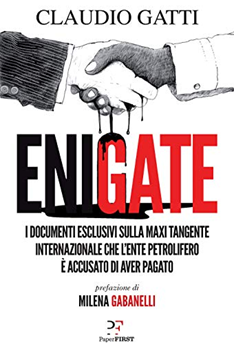
Italy’s most recent breach of its treaty obligation: the refusal to appeal the acquittal of oil giant and partially state-owned firm Eni for paying a $1.1 billion bribe to Nigerian officials. A case where the evidence of wrongdoing was overwhelming (here); the trial court’s acquittal reeks of judicial incompetence or worse (here); and in an extraordinary, unprecedented move that will surely deter future foreign bribery cases, the prosecutors are themselves being prosecuted for pursuing the case (here).
That economic considerations or political pressure might dissuade a government from enforcing its foreign antibribery law was not lost on the drafters of the Antibribery Convention. To guard against it the included an article requiring the parties to submit to a “program of systematic follow-up to monitor and promote the full implementation of this Convention.” That follow up takes the form of a periodic review of compliance by the Antibribery Working Group, a committee consisting of a representative from each treaty party with a senior diplomat chairing.
On its website the Working Group stresses its commitment “to global engagement on anti-bribery.” Italy’s flagrant treaty violations have sparked anticorruption activists to take the group on its promise of a global dialogue. Last October more than two dozen of them asked it to review Italy’s compliance (here); in a tightly reasoned 47-page submission this June a coalition of civil society groups laid out the case for considering Italy’s (non)compliance (a request later amended to overcome the reason the chair gave for putting off review – amended submission here).
Most recently the Federación Latinoamericana de Fiscales, a federation of national associations of prosecutors from Latin American states, has written to the court hearing the Italian prosecutors’ case to emphasize that the proceedings are “undermining the sense of security and institutional trust that all prosecutors must have” to faithfully discharge their duties (here).
Past time for the Working Group to act.
 GAB | The Global Anticorruption Blog