How We Did It: the U.S. Congress’ Exposure of the Grand Scale of Global Corruption

 Over the past two decades the U.S. Senate Permanent Subcommittee on Investigations has laid bare how Gabonese President Omar Bongo, Chilean dictator Augusto Pinochet, Equatorial Guinean President Teodoro Obiang, and a gaggle of friends and relatives of the leaders of Mexico, Pakistan, Nigeria, Angola, Saudi Arabia, and other countries conspired with large, prestigious banks to hide the enormous sums they stole from their nation’s citizens.  Financial Exposure, the new book by subcommittee investigator and later staff director Elise Bean, recounts how Democrats and Republicans united not only to document egregious cases of grand corruption but to enact legislation making banks’ complicity in future cases a crime.

Americans depressed by the rancorous polarization now gripping Congress will find her book a welcome reminder that Democrats and Republicans can work together to advance the public interest.  Scandals involving money laundering by banks in other nations, most recently Denmark’s Danske Bank and Latvian bank ABLV, should prompt non-Americans to send their parliamentarians a copy of Ms Bean’s book.  Below Ms. Bean offers a few morsels from the book to whet readers’ appetites.    

There isn’t room here to recount all the subcommittee’s anti-corruption investigations, but a few examples will illustrate what they showed and what results they produced.

Citibank Private Bank.  Corruption was the subject of a key investigation by the subcommittee in 1999, which was led by then subcommittee chair Republican Senator Susan Collins of Maine. Rumors were flying then that the United States had become the preferred banker for corrupt foreign officials around the world. Working with Democratic Senator Carl Levin of Michigan (my boss), the subcommittee elected to zero in on so-called “private banks,” banking units that opened accounts only for wealthy individuals with at least $1 million in deposits.

The inquiry ended up detailing four accountholders at Citibank Private Bank: Raul Salinas, brother to the then president of Mexico; Omar Bongo, then president of Gabon; Asif Ali Zardari, then known for his marriage to Benazir Bhutto, former prime minister of Pakistan; and the sons of Sani Abacha, recently deceased president of Nigeria.  Senate hearings exposed how Citibank had not only accepted tens of millions of suspect dollars from the accountholders, but also created offshore shell companies to hide their identities, helped them secretly move millions of dollars around the globe, and continued servicing them even after learning of corruption allegations. Continue reading

How to Crack Down on Cryptocurrencies

Bitcoin and other cryptocurrencies are electronic currencies that rely on a technological innovation called a “blockchain”—essentially, a complete transaction record, or “ledger,” stored across a network of computers rather than on a single site. Because of the transparency and alleged incorruptibility of the blockchain ledger, many anticorruption advocates have welcomed the possibility that blockchain technology might be an effective technology to combat corruption in a variety of ways, from ensuring transparency and accuracy in land records to helping to fight money laundering. Whether that optimism is justified remains to be seen. Unfortunately, the most popular application of blockchain to date—Bitcoin—is proving to be a major problem for the fight against corruption, money laundering, and a whole range of other black-market transactions.

Bitcoin is an unregulated currency and is fundamentally difficult to track. Bitcoin allows for the transmission of large amounts of money without the need to go through the traditional, and heavily regulated, financial service providers. Unlike cash, which is also difficult to trace, bitcoins are easy to hide, as the information necessary to stash hundreds of millions of dollars can be kept on a small USB thumb drive. And despite the vaunted transparency and incorruptibility of the Bitcoin “ledger,” which does indeed record all Bitcoin transactions, there is no easy way to establish the real-world identities of Bitcoin users. Nor is there any easy way to generate a record of individuals’ bitcoin holdings, which would have to be reconstructed from hundreds of thousands of transactions. Laundering money with bitcoins is further facilitated through the use “mixing” technologies that pool bitcoins and forward them onward to other accounts, thwarting the transparent blockchain.

Government efforts to address these problems have so far fallen short. China has begun to crack down on domestic Bitcoin exchanges, and some countries such as Bolivia have outright outlawed the use of Bitcoin. But these efforts have largely failed because the storage and exchange of bitcoins requires so little information; you can send bitcoins using protocols as simple as email or text message. Many governments have financial disclosure laws that require public officials to declare all their assets, including bitcoins. And sometimes officials do: three Ukrainian ministers recently disclosed, pursuant to Ukraine’s new asset declaration law, holdings of a combined US$45 million worth of bitcoins. But if corrupt government officials chose to violate the law by failing to disclose their Bitcoin holdings, it would be all too easy for them to do so without getting caught. Governments could also crack down on the services that make bitcoins easier to use—the digital exchanges and apps—but all this would likely do is cause the providers of those electronic services to shift their operations to other jurisdictions, as has happened with digital torrenting sites (which facilitate the pirating of digital content) after the US cracked down.

There is, however, an alternative regulatory strategy that holds more promise:  Continue reading

Fixing India’s Anti-Money Laundering Regime

In the past year, India has been among the most zealous countries in the world in stepping up the fight against money laundering and related economic and security issues. The effort that probably got the most attention was last year’s surprise “demonetization” policy (discussed by Harmann in last week’s post), which aimed to remove around 85% of the total currency in circulation. But to assess India’s overall anti-money laundering (AML) regime, it’s more important to focus on the basic legal framework in place.

The most important legal instrument in India’s AML regime is the Prevention of Money Laundering Act, which was enacted in 2002, entered into force in 2005, and has been substantially amended since then. The Act defines a set of money laundering offenses, enforced by the Enforcement Directorate (India’s principal AML agency), and also imposes a range of reporting requirements on various institutions. Furthermore, the law gives the Enforcement Directorate the authority to freeze “tainted assets” (those suspected of being the proceeds of listed predicate offenses), and to ultimately seize those assets following the conviction of the defendant for the underlying offense.

How effective has India been in its stepped-up fight against money laundering? On the one hand, over the past year (since the demonetization policy was announced), banks logged an unprecedented increase of 706% in the number of suspicious transaction reports (STRs) filed, and reports from last July indicated that the total value of the assets frozen under the Prevention of Money Laundering Act in the preceding 15 months may have exceeded the cumulative total of all assets frozen in the prior decade-plus of the law’s operation. And the government further reported that its crackdown on shell companies had discovered around $1.1 billion of unreported assets.

Yet these encouraging numbers mask a number of serious problems with India’s AML system, problems that can and should be addressed in order to build on the momentum built up over the past year. Here let me highlight two areas where greater reform is needed: Continue reading

India’s Demonetization One Year Later: A Failed Tool to Combat Corruption

One year ago, in an unscheduled live televised address, India’s Prime Minister Narendra Modi announced that within weeks the ₹500 and ₹1000 banknotes would become worthless. Prime Minister Modi framed this so-called “demonetization” policy as part of the battle against corruption and illicitly-obtained “black money,” which had “spread their tentacles” through the India economy. The Prime Minister identified two ways that demonetization would combat corruption. First, the surprise devaluing of currency would leave criminals, including corrupt officials, with millions of rupees’ worth of currency that would suddenly become worthless, and those holding large stashes of black money would be unwilling or unable to exchange it without having to explain where the money came from. Second, going forward, demonetization would make it more difficult to hold, transport, or exchange large quantities of cash (particularly since the Indian government was demonetizing the two largest notes in circulation); as the Prime Minister emphasized, “[t]he magnitude of cash in circulation is directly linked to the level of corruption.”

One year out, it is increasingly clear that India’s demonetization experiment imposed tremendous social and economic costs but failed to achieve either of these objectives (see here, here, and here). A closer examination of the reasons for this failure may help us understand both the potential and limits of demonetization as a tool to combat corruption and the underground economy.

Continue reading

French Court Convicts Equatorial Guinean Vice President Teodorin Obiang for Laundering Grand Corruption Proceeds

GAB is pleased to publish this account and analysis by Shirley Pouget and Ken Hurwitz of the Open Society Justice Initiative of the decision in the criminal trial for money laundering of Equatorial Guinean Vice President Teodorin Nguema Obiang. Their earlier posts on the trial are here, here, here, here, here, herehere, and here.

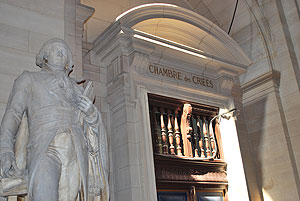
court roomIn the first ever peacetime conviction of a high-ranking, incumbent office holder by the court of another state, a Paris criminal court has convicted Equatorial Guinean First Vice President Teodoro Nguema Obiang Mangue of laundering monies from corruption in Equatorial Guinea in France.  The historic decision, announced by the 32nd Chamber of the Tribunal Correctionnel de Paris on Friday, October 27, was tempered by the reality the court faced in finding a senior official of another country guilty of violating French law.  While it unconditionally awarded Transparency International – France, which as a “civil party” helped investigate the case, €10,000 in moral and €41,081 in material damages, and ordered seizure of much of the €150 million in assets Teodorin holds in France, it suspended (sursis) the three- year prison sentence and €30 million fine it imposed on Teodorin so long as the VP stays out of trouble for five years.   It also stayed the part of the asset seizure order confiscating the obscenely extravagant 101-room property on Avenue Foch Teodorin owns pending the outcome of proceedings before the International Court of Justice where, as explained in a previous post, the EG government is claiming the assets belong to it rather than to Teodorin.

The President of the Tribunal, Mrs Benedicte de Perthuis, detailed the reasoning supporting the ruling in a 45 minute oral explanation accompanying the judgement.  She explained that the three judge court rejected all Teodorin’s procedural and substantive defenses, including a claim asserting Teodorin’s immunity from criminal prosecution on the basis of his position as  First Vice-President of Equatorial Guinea.  She noted on the latter that his nomination as First Vice-President had conveniently occurred after his indictment by the French Courts, and the Tribunal ruled that his new functions could not be equated to those of a Head of State or Minister of Foreign Affairs (officials who, under ICJ precedent, would indeed enjoy immunity from this kind of a prosecution).

The verdict sends a clear message that grand corruption and the related offense of money laundering are no longer risk-free enterprises in France.  Continue reading

Ferreting Out Kleptocrats’ Buddies: The Ukrainian Solution Part I

Every kleptocrat needs a buddy.  Someone to serve as an intermediary between the corrupt official and the bankers, real estate agents, and others in London, New York, and elsewhere happy to profit from handling dirty money.  A kleptocrat can’t just walk into a bank or real estate office in the United Kingdom, the United States, or other preferred offshore haven with a pile of money to invest.  As a public official, the antimoney laundering (AML) laws would oblige the banker or real estate agent to ask searching questions about how the kleptocrat came into the money and the law would likely also require them to report the transaction or proposed transaction to the authorities.  A buddy, particularly one who has remained out of the public limelight, is the perfect solution.  So long as they don’t know a potential customer is close to a senior public official, the banker or real estate agent meets their obligation to ascertain the source of the would-be customer’s funds by asking a few pro forma questions.

To plug the buddy loophole, the AML laws require banks and real estate agents to determine if anyone wanting to do business with them is a “close associate” of a senior official — a “politically exposed person” in the inelegant term coined by AML specialists.  If a potential customer is a PEP, the bank or real estate agent must ask the same searching questions about the origins of the individual’s funds that they must ask of a senior official.  Recognizing that bankers and real estate agents can’t be expected to know whether a foreign national wanting to do business with them is a close associate of a senior official in 190 plus countries, AML regulators allow them to rely on one of the several PEP lists peddled by commercial firms.  So long as the potential customer doesn’t appear on whatever PEP list they use, the banker or real estate agent need not conduct a detailed inquiry (“enhanced due diligence” in AML-speak) into where their money came from.

So how well do these commercial PEP lists do at identifying kleptocrats’ buddies?  Continue reading

Cash Crunch: How Will India’s Supreme Court Respond to Modi’s Radical Move?

Last November 8th, the same day the United States elected a kleptocrat to its highest office, an executive on the other side of the world—Indian Prime Minister Narendra Modi—launched what Larry Summers called “the most sweeping change in currency policy that has occurred anywhere in the world for decades.” Prime Minister Modi’s surprise “demonetization” drive gave citizens fifty days to exchange all 500 and 1000 rupee notes (valued at about 8 and 15 USD respectively). Modi’s radical move, which will remove approximately 86% of all currency in circulation, is an attempt to combat endemic petty corruption, money laundering, terrorist financing, and tax   evasion (only 2% of Indians pay income tax). Prime Minister Modi was elected on an anticorruption platform in 2014, and pledged during his campaign to target hidden cash (so-called “black money”). Yet the demonetization campaign came as a surprise. Indeed, it probably had to be a surprise, lest those hiding fortunes in cash would have been able to prepare for the policy change.

While the Indian public generally supports aggressive anticorruption efforts, it would be hard to exaggerate the disruption resulting from demonetization. The real estate and wedding industries run largely on cash, as do most small businesses. And the demonetization program has hit regular citizens hard: People have been waiting in lines for hours to exchange their cash, which can be especially difficult for the four-fifths of women who don’t have a bank account. In the short term, consumption, the stock market, and growth forecasts have all plummeted and the agricultural sector is expected to suffer as well. Prime Minister Modi acknowledged the campaign would cause pain for many honest people, but believed it was worth it, stating that black money and “corruption are the biggest obstacles in eradicating poverty.” (Since then, the official justification for the campaign appears to have shifted to an attack on the cash economy as a whole, rather than a campaign against black money specifically.)

The fate of the demonetization program now lies with India’s judiciary: Continue reading

Artful Transactions: Corruption in the Market for Fine Arts and Antiques

The fascination surrounding art theft and forgery has long been the subject of much exploration. Only more recently, however, has the art market come under increased scrutiny regarding its connection to money laundering and corruption. It’s not just that stolen artworks often end up in the hands of criminals: even the market for non-stolen art is especially vulnerable to money laundering and corruption. With more banks cracking down on illicit activities, art has become an “efficient instrument for hiding cash.” As an article in the New York Times observed, no business seems “more custom-made for money laundering, with million-dollar sales conducted in secrecy and with virtually no oversight.”

Considering the attention paid by anticorruption and anti-money laundering activists to the role of the real estate market and the market for other luxury goods to facilitate money laundering and bribery, it is perhaps a bit surprising that there hasn’t been more attention to the art market—which is perhaps even more deserving of scrutiny. Continue reading

Watching the Watchmen: Should the Public Have Access to Monitorship Reports in FCPA Settlements?

When the Department of Justice (DOJ) settles Foreign Corrupt Practices Act (FCPA) cases with corporate defendants, the settlement sometimes stipulates that the firm must retain a “corporate monitor” for some period of time as a condition of the DOJ’s decision not to pursue further action against the firm. The monitor, paid for by the firm, reports to the government on whether the firm is effectively cleaning up its act and improving its compliance system. While lacking direct decision-making power, the corporate monitor has broad access to internal firm information and engages directly with top-level management on issues related to the firm’s compliance. The monitor’s reports to the DOJ are (or at least are supposed to be) critically important to the government’s determination whether the firm has complied with the terms of the settlement agreement.

Recent initiatives by transparency advocates and other civil society groups have raised a question that had not previously attracted much attention: Should the public have access to these monitor reports? Consider the efforts of 100Reporters, a news organization focused on corruption issues, to obtain monitorship documents related to the 2008 FCPA settlement between Siemens and the DOJ. Back in 2008, Siemens pleaded guilty to bribery charges and agreed to pay large fines to the DOJ and SEC. As a condition of the settlement, Siemens agreed to install a corporate monitor, Dr. Theo Waigel, for four years. That monitorship ended in 2012, and the DOJ determined Siemens satisfied its obligations under the plea agreement. Shortly afterwards, 100Reporters filed a Freedom of Information Act (FOIA) request with the DOJ, seeking access to the compliance monitoring documents, including four of Dr. Waigel’s annual reports. After the DOJ denied the FOIA request, on the grounds that the documents were exempt from FOIA because they comprised part of law enforcement deliberations, 100Reporters sued.

The legal questions at issue in this and similar cases are somewhat complicated; they can involve, for example, the question whether monitoring reports are “judicial records”—a question that has caused some disagreement among U.S. courts. For this post, I will put the more technical legal issues to one side and focus on the broader policy issue: Should monitor reports be available to interested members of the public, or should the government be able to keep them confidential? The case for disclosure is straightforward: as 100Reporters argues, there is a public interest in ensuring that settlements appropriately ensure future compliance, as well as a public interest in monitoring how effectively the DOJ and SEC oversee these settlement agreements. But in resisting 100Reporters’ FOIA request, the DOJ (and Siemens and Dr. Waigel) have argued that ordering public disclosure of these documents will hurt, not help, FCPA enforcement, for two reasons:  Continue reading

Equity Crowdfunding: Considerations for Anti-Money Laundering Regulation

Equity crowdfunding involves the use of an internet-based platform to market equity shares in a given company to a wide range of potential investors (the “crowd”). The result is financial democratization of sorts – harnessing the power of the crowd to make many small investments instead of relying on large capital infusions from a relatively small number of sophisticated investors. The key to equity crowdfunding is to keep transaction costs low, so that small businesses are able to participate, without sacrificing investor protection. This latter consideration is especially important given the potentially low financial sophistication of the crowd.

In my last post, I discussed how equity crowdfunding could help small and medium-sized enterprises (SMEs) in developing countries overcome corruption-related barriers to accessing finance. Because equity crowdfunding makes use of internet-based platforms, it is particularly useful for cross-border transactions. As a result, SMEs in developing countries that are unable to access finance through traditional means (often because of corruption in domestic capital markets) can use equity crowdfunding platforms to connect with investors outside of their home countries. As with other technology-based tools that have the potential to sidestep the effects of corruption and contribute to economic development, though, there is also reason to be concerned about the opportunities for corruption for which equity crowdfunding could be abused. In particular, equity crowdfunding platforms could be used to facilitate money laundering, in at least two ways: Continue reading