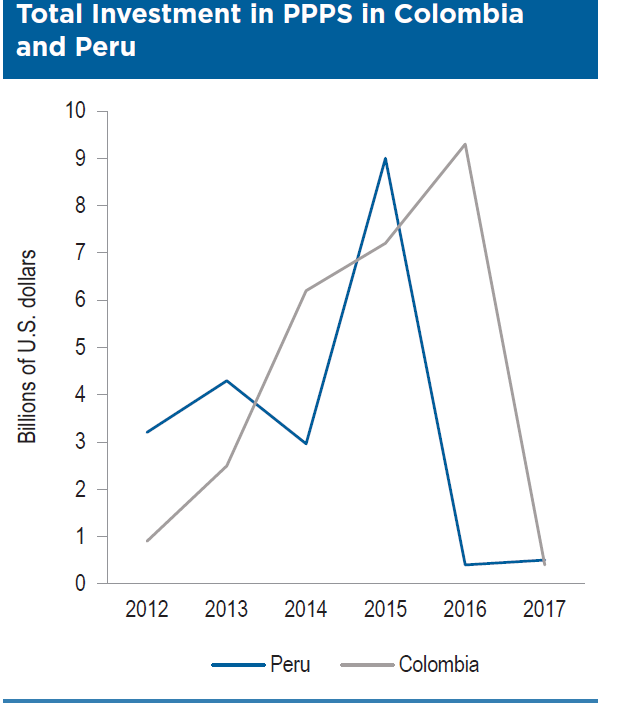
The chart above shows what happens when policy is based on a slogan. In this case “Zero Tolerance.” Procurement rules in both Peru and Colombia require that any public contract tainted by corruption be terminated immediately. As the Brazilian investigation into construction giant Odebrecht unfolded, it became clear that many projects to build highways, power plants, and other infrastructure projects in the two countries had been corruptly awarded. Authorities in both countries then did what the law told them they must: cancel the contracts.
Most large infrastructure contracts in Peru and Colombia are in the form of Public-Private Partnerships (PPPs), and the immediate termination of a PPP can be enormously costly. Not only to the firms that paid bribes to secure the contract, but to lenders, suppliers, and the hundreds of other contractors on the project who had no knowledge or involvement in the bribery scheme. The greatest costs are likely be felt by the citizens of Colombia and Peru. For as the chart shows, the consequence of zero tolerance is a halt to new spending for roads, power, and other essential facilities as investors and project developers shy away from the risk future contracts will be terminated for the tiniest of infractions by anyone associated with the project.
Colombians and Peruvians may today be proud their governments are so tough on corruption neither one will tolerate a speck of it in any contract for infrastructure. Tomorrow citizens of the two countries may have a different view: when power shortages mean the lights won’t come on and the failure to build new roads and maintain old ones produces horrendous traffic jams.
Last week the World Bank hosted a presentation by Inter-American Development Bank staff where the issue of why “zero tolerance” is a good slogan but a bad policy was examined and means for addressing infrastructure corruption without producing the results shown in the chart was discussed. A paper the IDB presenters recently published, the source of the figure above and the basis of their presentation, is here. A video of the session here.
 GAB | The Global Anticorruption Blog