Sri Lanka Should Cancel Not Renegotiate Corrupt Loans 

It will be years if not decades before the once prospering nation of Sri Lanka recovers from the financial and humanitarian crisis brought on by the fiscal profligacy of the Rajapaksa family. During the 10-year rule presidential rule of Mahindra (2005 -2015), the government began borrowing ever larger sums, principally from China, to build ports, roads, and other infrastructure. Younger brother Gotabaya continued the family tradition when elected president in 2019, borrowing more and more to keep the project pipeline full and the business community happy.

For many projects, the terminus of the pipeline was the Rajapaksa’s home district. A herd of white elephants poured forth: an unused airport (Mattala Rajapaksa International Airport), a deserted cricket stadium (Mahinda Rajapaksa International Cricket Stadium), and a useless international conference center. Whether the loans for these projects were the result of corrupt dealings has been much discussed but never investigated. Same with many other loans taken out during Mahinda and Gotabaya’s reigns.

The Rajapaksa’ reckless borrowing was accompanied by other equally irresponsible fiscal policies: state-owned enterprises that bled resources, a regressive, poorly enforced tax code. Gotabaya’s 2019 cuts in personal and corporate taxation and its almost halving the VAT (from 15% to 8%) put an economy headed over the cliff into overdrive. The inevitable result of borrowing too much and taking too little in: last May the government announced it could not pay its debts, the sovereign equivalent of a corporation or person declaring bankruptcy.

The International Monetary Fund has now come to the rescue, offering to lend the government $2.9 billion while it renegotiates the some $35 billion it owes the Asian Development Bank, China, India, Japan, the World Bank, and private lenders.

But not all Sri Lanka’s debts should be renegotiated. Where a loan was taken out because a government official was bribed, Sri Lanka has a clear right to cancel or rescind it. That right to walk from a loan procured through corruption is recognized under international law (article 8(2) of the Council of Europe’s Civil Law Convention Against Corruption, article 34 of the UN Convention Against Corruption, UNICTRAL Principles of International Contracts 3.3.1) and the domestic laws of most legal systems. Indeed, it is a part of the common law of Sri Lanka (Review Sri Lanka UNCAC Compliance) and article 52 of China’s contract law expressly states “A contract is void [if] 1. either party enters into the contract by means of fraud. . ..”

Sri Lankans will suffer for years for the wrongs done to them by the Rajapaksas and accomplices. They should not have to bear the burden of paying off one single dollar, yuan, rupee, or yen of a loan taken out corruptly. Where there are suspicions that a loan, as those to support the elephant herd in the Rajapaksas’ home district, was tainted with corruption, an investigation should be opened. And during loan renegotiations, Sir Lanka should make it clear that no matter the terms, it reserves the right to cancel or rescind any contract procured through corruption.

Anticorruption Bibliography–September 2022 Update

Hi everyone, As some of you have noticed, GAB has been on a longer-than-usual summer break, but we will be back to getting new content up on a regular basis soon. In the meantime, I’m happy to say than an updated version of my anticorruption bibliography is now available from my faculty webpage. A direct link to the pdf of the full bibliography is here, and a list of the new sources added in this update is here. Additionally, the bibliography is available in more user-friendly, searchable form at Global Integrity’s Anti-Corruption Corpus website. As always, I welcome suggestions for other sources that are not yet included, including any papers GAB readers have written.

State Capture: A “How to” Guide

The Democratic Alliance, South African’s principle opposition party, has brought suit seeking a declaration a policy of the African National Congress, the nation’s ruling party, is “inconsistent with the Constitution. . . and the Public Service Act” and hence invalid.

The policy at issue is the ANC’s Cadre Deployment and Development Policy. It sets out how the party selects who will serve in the national, regional, and local levels of South Africa’s government, either in an elected position or as a member of the career service.  The DA alleges that the effect of the policy is to give the ANC “control over the functioning of critical institutions of government. . . blurr[ing] the lines between the ANC and the State and facili[tating] state capture. . . . .” The case’s founding affidavit, equivalent to a complaint in common law jurisdictions, asserts the policy has “inhibited the ability of the State to function effectively in order to promote the rights in the Bill of Rights [and that it] has eroded South Africa’s democratic founding. . . . “

Evidence developed by the Judicial Commission of Inquiry into Allegations of State Capture, established after ANC leader Jacob Zuma was forced to resign as South African president, is cited throughout the affidavit to show how he and ANC cronies implemented the policy and what its effect has been.* The policy reads as a “how to” manual for capturing the state in a weak or developing democracy. One can only hope this will be how the South Africa’s judges read it as well.

A copy of the policy is here for readers’ information. And more importantly, for those working on prevent state capture elsewhere, to help them thwart similar efforts.

*Earlier today South African Chief Justice Raymond Mnyamezeli Mlungisi “Ray” Zondo, the commission chair, spoke to the failure of the ANC to come to grips with Zuma’s behavior and expressed the fear the state could be re-captured were another Zuma-like figure elected president. Click here to listen to his to warning to South Africans of all parties. Thanks to a South African reader for alerting me to his extraordinary and powerful remarks.

That Corruption Infects the Italian Judiciary Is Now Undeniable

In March 2021, a Milan trial court acquitted Italian oil giant ENI, its partner Royal Dutch Shell, and numerous individuals of bribing Nigerian President Goodluck Jonathan and pals to secure the rights to the lucrative offshore oil field denominated OPL-245. The evidence of bribery was overwhelming, including internal Shell e-mails describing the scheme and the testimony of an ENI official confirming his bosses were fully aware of it. Suspicions that someone had “gotten” to the judges immediately arose stoked by revelations of close ties between the presiding judge and ENI’s senior counsel.

Any doubt that the verdict was tainted was put to rest when the court published its opinion justifying it. As the attached analysis by the British, Italian, and Nigerian NGOs that have pushed the case shows, the court’s “reasoning” was laughable. Two examples of many. The court wrote off the then oil minister’s sale of OPL-245 rights to a company he secretly owned as a trifle because neither he nor the government officials bribed to approve the sale objected. Equally ridiculous, the court found that a Shell briefing note reporting that part of the bribe would be in the form of political contributions simply recounted a rumor then circulating.

Between the strength of the evidence the prosecution presented and the court’s flimsy if not bizarre reasoning dismissing it, the expectation was that the acquittal would easily and quickly be overturned on appeal. That hope is not to be however.  Last week the Italian prosecutors assigned to handle the appeal announced they were withdrawing it. 

Thus ENI, Shell, and the 13 individuals named as accomplices in the payment of a $1.1 billion bribe stand exonerated. And it now clear that the rot in the Italian judiciary reaches into its once revered prosecution service.

Nor is the damage from the rot limited to Italy. Thanks to the doctrine of ne bis in idem (double jeopardy in American law), a Dutch investigation of Shell’s role had to be dropped (here).  

The last hope for justice now lies with the Nigerian judiciary. Ne bid in idem only bars EU countries from pursuing a case. A Nigerian investigation of the companies and their accomplices is underway. It is critical it continue and that the international anticorruption community do all it can to support it given what has happened in Italy.

Moreover, as this blog has urged, it is critical too that the OECD hold Italy to account for its failure to live up to its obligations to sanction Italian companies that bribe foreign officials. The ENI-Shell case must be an outlier not a precedent.

New Podcast Episode, Featuring Andrii Borovyk and Gretta Fenner

A new episode of KickBack: The Global Anticorruption Podcast is now available.I know that I said in the post announcing the episode from a couple weeks back that that one would be the last post before our summer vacation, but I spoke too soon–last week I had the opportunity to speak with Andrii Borovyk, the Executive Director of Transparency International’s Ukraine chapter, and Gretta Fenner, the Managing Director of the Basel Institute on Governance, about addressing corruption risks inherent in emergency aid to Ukraine during the current conflict and the anticipated future infusion of funds to assist with post-war reconstruction. (Full disclosure: I am on the Board of Directors for Transparency International Ukraine, an unpaid position, and in that capacity I have worked with Andrii, though not directly on this issue.) After sharing their respective backgrounds in the field, Andrii and Gretta discuss how Russia’s aggression affected anticorruption advocacy work within Ukraine, and emphasize the importance for both domestic and international actors to strengthen institutions and mechanisms to prevent corruption in aid and reconstruction efforts. The conversation touches on, among other things, the challenges of pushing an anticorruption agenda in a time of national emergency, the role that aid conditionalities can play in promoting effective reform, and the importance of open, accessible, and centralized public information repositories. You can also find both this episode and an archive of prior episodes at the following locations: This really will be the last podcast episode before we go on summer break, but we will be releasing new episodes in September. The Global Anticorruption Blog is also going to go on summer hiatus during August, though I may post occasionally if something particularly important and time-sensitive comes up. As always, I’ll remind you that KickBack is a collaborative effort between GAB and the Interdisciplinary Corruption Research Network (ICRN), encourage you to subscribe, and invite you to suggest for people or topics you’d like to hear on the podcast by sending me a message.

Money for Something: Do Remittances Have an Anticorruption Effect?

Remittances—the money or goods that migrants send home to support their families and friends—have become increasingly important in developing countries. In nations like Haiti, Honduras, and Tajikistan, remittances account for more than 20% of their respective GDPs. Interestingly, many of these top recipient countries also rank among the most corrupt in the world, at least according to Transparency International’s Corruption Perceptions Index. While that correlation does not by itself establish causation, it does invite the question of whether large flows of remittances have any meaningful impact on corruption within the recipient country.

Surprisingly, this question has been “virtually ignored” in academic literature. Only a few studies investigate the connection between remittances and corruption, and the handful of papers on this topic come to quite different conclusions.

Continue Reading

Anticorruption Bibliography–July 2022 Update

An updated version of my anticorruption bibliography is available from my faculty webpage. A direct link to the pdf of the full bibliography is here, and a list of the new sources added in this update is here. Additionally, the bibliography is available in more user-friendly, searchable form at Global Integrity’s Anti-Corruption Corpus website. As always, I welcome suggestions for other sources that are not yet included, including any papers GAB readers have written.

Corrupt State Officials and Companies Are Razing Malaysia’s Ancient Forests. Here’s How to Stop Them.

Malaysia is home to two of the world’s oldest rainforests. Dating back 130 million years, the Taman Negara and Borneo Lowland forests are older than even the Amazon and the Congo Basin. As of 2016, Malaysia had 19.3 mega-hectares of forested land, which is close to 60% of the country’s total land area. But these forests are under the constant threat of their destruction by private commercial exploiters that engage in logging and development. Already in various parts of Peninsular Malaysia and Borneo Island, forests have been transferred to private ownership and used to develop palm oil and rubber plantations, durian farms, and mines. Once-serene forests are now plagued by mudslides and logjams, their biodiversity has suffered, and the indigenous communities that used to cultivate the forests have been displaced.

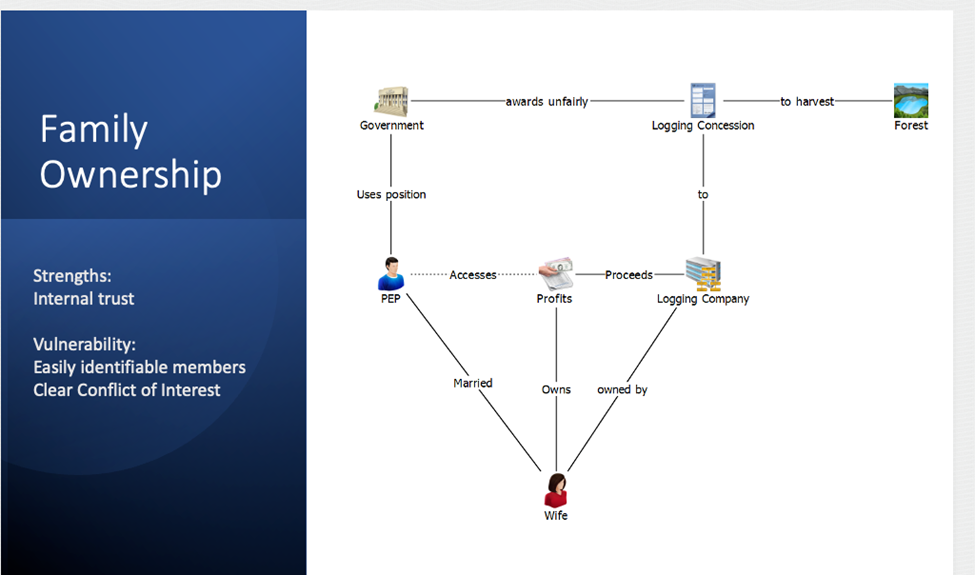
The reckless exploitation of Malaysia’s forests has many causes, including poorly-designed conservation regulations. But corruption is one of the most important root causes of unchecked and unsustainable deforestation. Such corruption comes in two main forms:

  • The first is the corrupt award of land titles and logging concessions to cronies, or in exchange for bribes. This sort of corruption is epitomized by the sale of the Sarawak State’s land and forests bordering the Mulu UNESCO World Heritage site.  by to cronies and family. In 2013, several NGOs reported that the powerful Chief Minister Abdul Taib Mahmud had arranged for the state to sell these lands to his cronies and family members at cut-rate prices, after a non-transparent process with no formal tendering. The new (crony) owners planned to raze the forests to develop palm oil plantations. To the frustration of anticorruption activists and lawyers, the Malaysian Anti-Corruption Commission (MACC) found no grounds to charge Taib Mahmud for abuse of power, due to insufficient evidence of his specific personal involvement in the sale decision.
  • Second, when commercial exploiters want to log in areas where they do not have a concession, they have been known to bribe local officials to overlook these illegal logging activities. To take just one example, in 2017 the authorities prosecuted corrupt forestry officials for taking kickbacks of RM340,000 (about US$76,800) from a logging company over several months. The only thing unusual about this case is that it was uncovered and prosecuted. Bribery of local government officials and law enforcement officers is widespread in Malaysia, and typically goes undetected. In the forestry context, the costs of such corruption are massive: The Deputy Natural Resources and Environment Minister reported in 2017 that the losses from illegal logging in Peninsular Malaysia amounted to RM15.2 million (about US$3.5 million).

To curtail the rampant destruction of Malaysia’s vital and irreplaceable forest resources, the government needs to do more to combat both these forms of corruption.

Continue reading

New Podcast Episode, Featuring Mihaly Fazekas

A new episode of KickBack: The Global Anticorruption Podcast is now available. In the new episode, my ICRN colleagues Nils Kobis and Christopher Starke interview Mihaly Fazekas, Assistant Professor of Public Policy at the Central European University. Professor Fazekas explains how he became interested in the study of corruption and describes some of his lines of research, including his work on measurement of corruption, particularly in the context of public procurement, and the challenges of scaling up the best corruption measures. The interview also covers additional topics such as the role of investigative journalism in fighting corruption, and the anticorruption potential impact of new technologies, including big data analysis and artificial intelligence.

You can also find both this episode and an archive of prior episodes at the following locations:

A quick note: We will be going on summer break, so we will not be releasing any new episodes over the next six weeks, but KickBack will return with new episodes in September. KickBack is a collaborative effort between GAB and the Interdisciplinary Corruption Research Network (ICRN). If you like it, please subscribe/follow, and tell all your friends! And if you have suggestions for voices you’d like to hear on the podcast, just send me a message and let me know.

Explaining (the Lack of) Corruption in the US Federal Judiciary

The United States judiciary has a history with corruption. Corruption pervaded every aspect of pre-revolution America, from the customs enforcers up to the colonial judges. Corruption in the United States only worsened a century after the Revolution, with politicians during the late 19th century taking “spectacularly handsome bribes from corporations and demand[ing] kickbacks as the helping hand they extended often came with an open palm.” Early twentieth century America, in many ways, had systemic corruption similar to that seen in modern developing countries. Even as recently as the early 2000s, state judges have come under fire for not only individual corruption, but pervasive, systemic corruption rings. Outright bribery is only one problem: state judges have also been known to engage in misappropriation of public resources, nepotism in appointing counsel, and “skimming off the top.”

Yet in spite of the environment around them, the federal judiciary—more or less since day one—has been mostly corruption-free. As Professor Mathew Stephenson observed, even during the quite corrupt nineteenth century, “at least at the federal level, the institutions of justice—courts and prosecutors—seemed relatively clean and basically functional.” If anything, the federal judiciary, and federal prosecutors, have served as a check on corruption at the state and local level, “particularly in the latter half of the twentieth century.” This pattern continues into the present day: Although the federal judiciary comprises 5% of all judges in the United States, they only account for 0.2% of known cases of judicial bribery.

This raises a question: How did the federal judiciary remain relatively free from corruption, especially during the first century of the country’s existence, when corruption pervaded so many aspects of American society, including state and local courts? There are two broad categories of explanation: historical and structural. These are not mutually exclusive alternatives; rather, the historical and structural explanations complement one another.

Continue reading