The Obiang Trial: Prosecutor Seeks 3 Years Imprisonment, Large Fine, Asset Confiscation  

GAB is pleased to publish this account and analysis by Shirley Pouget and Ken Hurwitz of the Open Society Justice Initiative of the concluding arguments the civil parties and the prosecution made at the trial of Equatorial Guinean Vice President Teodorin Nguema Obiang.

The July 5th proceedings in the Obiang trial opened with the court rejecting the defense request that it be allowed to pursue its claim that the prosecution was unconstitutional.  It closed with the state prosecutor asking the court to find Teodorin guilty, sentence to him three years in prison, fine him €30 million, and confiscate all of his assets located in France.  In between the two civil parties – CORED, a coalition of Equatorial Guinean political parties, and Transparency International-France – presented their arguments in support of conviction.  Continue reading

Guest Post: How Will Nationalist Election Outcomes in the US and UK Affect Foreign Anticorruption Enforcement?

Professor Rachel Brewster of Duke Law School and Mat Tromme, Project Lead & Senior Research Fellow at the Bingham Centre for the Rule of Law, contribute today’s guest post, which is based on discussions at a recent Bingham Center-Duke Law School FCPA Roundtable:

In the past year, we have twice seen voters make a significant turn toward nationalism. In June 2016, in a move that was largely motivated by protectionist views, the UK voted to leave the EU, and in November, the United States elected Donald Trump, who campaigned on an “America First” promise. What do these developments mean for US and UK enforcement of their respective laws against overseas bribery (the Foreign Corrupt Practices Act (FCPA) and UK Bribery Act (UKBA), respectively)? Many worry that, insofar as government leaders view anticorruption laws as harming their country’s international competitiveness (a dubious assumption), then nationalistic fervor can lead to weaker enforcement. This is a reasonable concern in both countries—but a more careful analysis of the situation suggests uncertainty is greater in the UK than it is in the US.

Continue reading

Guest Post: Encouraging Signs for a Possible U.S. Legislative Crackdown on Anonymous Companies

Gary Kalman, the Executive Director of the FACT Coalition, contributes today’s guest post:

A little over a year ago, the International Consortium of Investigative Journalists (ICIJ) released the Panama Papers, a treasure trove of information and a window into the world of financial secrecy. In some ways, much of what the Panama Papers revealed was already well known. Previous estimates put the amount of money hidden in offshore secrecy havens somewhere between $8 trillion and $32 trillion. In 2015, The New York Times published an impressive five-part series on the use of anonymous shell companies to purchase prime real estate in New York City. Prior to that, the U.S. Justice Department filed a lawsuit (which they just won on June 29th) to force the forfeiture of New York property secretly owned by the government of Iran in direct violation of economic sanctions. And so on. Yet it is hard to deny the captivating intrigue of the specific stories in the Panama Papers involving Russian kleptocrats, world leaders, athletes, movie stars, and others.

The big question is: more than a year later, did anything change? As I recently observed, there are indeed encouraging signs around the world, particularly in Great Britain, several EU member-states, and some developing countries such as Ghana. What about the United States? After all, with U.S. transparency laws ranging from weak to non-existent, there is little need to go to Panama to launder one’s dirty money. While Delaware gets the most notoriety, no state collects information on the true (“beneficial” owners of corporations. In fact, in its recent assessment of the U.S., the Financial Action Task Force, an international anti-money laundering body, noted that for all the progress the U.S. has made, the lack of beneficial ownership transparency remains a glaring weakness. And in the past, when some U.S. legislators – most notably former U.S. Senator Carl Levin (D-MI) – pushed legislation to require states to collect beneficial ownership information, the proposed bills never received so much as a hearing.

That may be about to change, and anticorruption advocates should take note. Continue reading

Day Six of the Trial of Teodorin Obiang

GAB is pleased to publish this account and analysis of the 6th day of the trial of Equatorial Guinean Vice President Teodorin Nguema Obiang by Shirley Pouget and Ken Hurwitz of the Open Society Justice.

On day six of his trial for actions arising from theft of public monies, Teodorin’s lawyers offered several legal defenses.  The most bizarre, and the one most strenuously advanced, was that in Equatorial Guinea theft of public funds is not a crime if the thief is a senior government official.  Teodorin was a government minister at the time he stole the money, and according to his lawyers, there was no law in Equatorial Guinea that made it a crime for a minister to steal public funds.

The defense also tried to lob a procedural bombshell into the proceedings.  It claimed that the way French courts have interpretred bribery as a predicate offense for money laundering is unconstitutional.  This constitutional objection, a Question Prioritaire de Constitutionalite, could have been lodged early in the proceeding.  Raising it so late in the case, would, if the court accepted the defense request, postpone the trial proceedings for many months. 

Continue reading

Guest Post: Using Open Data To Combat Corruption—Moving Beyond the Hype

Robert Palmer, the Director of Partnerships and Communication at the Open Data Charter, contributes today’s guest post:

In order to tackle corruption effectively, one first needs to understand the networks that link government officials, businesses, and professional intermediaries, and then work to either dismantle these networks or at least ensure that these webs of connections are not exploited to enrich individuals and undermine good government. Fortunately, these clandestine networks often leave traces in government-held databases, such as company registers, land title deeds, asset disclosures, and other official records. That’s where open data can be helpful. When the government provides easily accessible public information, it makes it easier for government officials, journalists, and citizens to follow financial flows, understand who’s providing government services, and to spot suspect behavior. And that’s why there has been so much enthusiasm about the open data in the anticorruption community. In 2015, for example, the G20 anticorruption working group announced a common approach saying that “Open Data can help prevent, detect, investigate and reduce corruption.”

Yet what’s happening on the ground isn’t living up to this hype. Part of the reason is that, as the Web Foundation and Transparency International found in a recent study of five G20 countries, many countries have made only limited progress toward meeting international commitments on open data. But even where open data is available, relatively few organizations are actually using open data to expose and combat corruption. There are, of course, exceptions, including Global Witness, the data journalists at Organised Crime and Corruption Reporting project, and accountability groups such as BudgIT. Yet the potential for open data to help fight corruption remains largely unrealized.

To help address this shortcoming, the Open Data Charter has spent the last year pulling together a guide for how to use open data to combat corruption. The guide lists 30 types of datasets that could help expose and combat corruption if they are released in the right way, as well as key data standards to ensure consistency and quality between different countries. Of course, the underlying assumptions here are that the types of data listed in the guide can be collected and released by governments in the ways the guide advises, and that there are anticorruption actors who can process this data in ways that are helpful in exposing or preventing corruption. In order to probe these assumptions, the Open Data Charter has teamed up with the Government of Mexico to “road-test” the guide. This will include working out which of the 30 datasets in our guide the government already publishes, which further ones can be released, and how to engage potential users. We’re interested in understanding how if data is released in the right way, users such as journalists, law enforcement, and civil society can process the data and then use it to have an impact on corruption.

Our approach to this piece of work is guided by a real desire to learn what works: what’s helpful to the government and what’s helpful to external stakeholders who want to tackle corruption. We hope to be able to report on our initial findings over August. If you’re interested in learning more, please get in touch with me: robert [at] opendatacharter.org. In the spirit of transparency and collaboration, the guide itself is open to comment here.
Day Four of the Trial of Teodorin Obiang, Part II

GAB is pleased to publish this account of the second part of the 4th day of the trial of Equatorial Guinean Vice President Teodorin Nguema Obiang by Shirley Pouget of the Open Society Justice Initiative.

As detailed in an earlier post, five witnesses testified June 26, 2017, in support of the corruption charges laid against Equatorial Vice President Teodorin Nguema Obiang.  Teodorin called but a single witness in his defense: Simon Mann, an assistant to Teodoro Obiang Nguema Mbasogo, who has been President of Equatorial Guinea for the past 38 years and also happens to be Teodorin’s father.

Mann came into President Obiang’s employ by a strange route.  Hired by a Lebanese businessman to overthrow Obiang, he was captured and jailed.  Mann explained that Obiang later pardoned him and then hired him as an advisor.  When the court asked if he was still employed by Obiang he replied:

“They pay my expenses as well as a per diem.”

He denied, however, that he was being paid to testify. Continue reading

Day Four of the Trial of Teodorin Obiang

GAB is pleased to publish this account of the 4th day of the trial of Equatorial Guinean Vice President Teodorin Nguema Obiang by Shirley Pouget of the Open Society Justice Initiative.

Monday, June 26, was the fourth day of trial of Equatorial Guinean Vice President Teodorin Obiang on charges amounting to kleptocracy.  After three days of skirmishing about procedural issues, the court finally heard testimony in support of the charges.

court room *Roberto Berardi, who had been in business with Teodorin, told the court that after confronting Teodorin about allegations of corruption leveled by the U.S. Department of Justice he was jailed and held in solitary confinement for almost three years.  The reason, he believes, was to prevent him from talking to U.S. authorities.

*Delfin Mocache Massoko, whose on-line news site Diaro Rombe chronicles the Obiang family’s business dealings, told the court that he and many of his sources had been told “they will pay” for exposing the Obiang’s corruption to the world.

* Tutu Alicante León, an Equatorial Guinean exile who runs EG Justice, detailed the brutality and repression Equatorial Guineans face and deprivation and extremen poverty they live in thanks to the Obiangs’ crimes.  At the court’s request he explained how any assets the court ordered seized from Teodorin could be returned to the country in ways that would benefit its citizens.

* Pedro German Tomo, another Equatorial Guinean exile, testified that when Teodorin was Minister of Agriculture and Forestry he forced logging companies to pay 10,000 francs per square meter of board logged to a company Teodorin controlled and later, when Teodorin took responsibility for infrastructure, any company winning a construction contract had to pay a 10 percent commission to the same company.

* Daniel Lebegue of Transparency International France explained to the court why his organization felt it had no choice but to bring this case against Teodorin.  He said TI-France had consulted extensively with TI chapters in Senegal, Mali, Niger, Nigeria, Namibia, Kenya and Tanzania before lodging the complaint: “we wanted to go hand in hand with our colleagues from the African Chapters and be sure that our action was right.”

What follows is an account of each witness’ testimony.  No recording or transcript of the proceedings was made.  To GAB’s knowledge, Mme. Pouget’s account of the witnesses’ testimony will therefore serve as the only record.  Anyone who believes there is an error, or who wishes to provide additional context, is urged to post a comment below.    Continue reading

Guest Post: Paris Court Rules That a US FCPA Guilty Plea Precludes Subsequent Prosecution in France

GAB is pleased to welcome back Frederick Davis, a lawyer in the Paris office of Debevoise & Plimpton, who contributes the following guest post:

Overseas bribery and similar crimes can often be investigated by prosecutors in more than one country. But does (or should) the resolution of a criminal investigation in one country—say, through a negotiated resolution—bar subsequent prosecutions in other countries for the same underlying conduct? In earlier posts, I have explored some recent rulings that address aspects of this debate over so-called “international double jeopardy” (see here, here and here). A recent decision of the Paris Court of Appeals added an interesting new element to this debate. Faced with a classic situation of parallel prosecutions, the Paris Court held that an individual who had pleaded guilty in the United States for violations of the U.S. Foreign Corrupt Practices Act (FCPA) could not be prosecuted under French anti-bribery law—not because of the standard international double jeopardy principle, but rather because, according to the Paris Court, the US proceedings deprived the defendant of the right to defend himself protected by the European Convention on Human Rights (ECHR).

The facts of the case are simple: an individual entered into a written plea agreement with the U.S. Department of Justice (DOJ), in which the defendant agreed to plead guilty in a US court to FCPA charges, on which he was subsequently sentenced. He was separately bound over for trial in France under French anti-bribery laws, apparently for the same underlying conduct.  In affirming the dismissal of the French prosecution, the Paris Appellate Court’s reasoning proceeded in two steps: Continue reading

Day Three of the Trial of Teodorin Obiang

GAB is pleased to publish this account of the 3rd day of the trial of Equatorial Guinean Vice President Teodorin Nguema Obiang by Shirley Pouget and Ken Hurwitz of the Open Society Justice Initiative.

court room

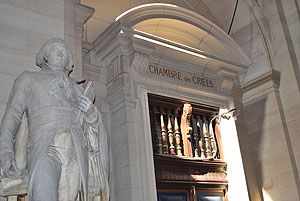
Much of the third day of Teodorin’s trial was taken up with a lengthy, and highly misleading, “explanation” by defense counsel of United States of America v. One White Crystal-Covered “Bad Tour” Glove And Other Michael Jackson Memorabilia, a civil forfeiture action the US Department of Justice filed and later settled that involved property Teodorin owned in California.  The Paris hearing began at 1:30 pm, Wednesday, June 22, with the three judges filing into the august Chambre des Crieés of the Tribunal Correctionnel of Paris.  The Presiding Judge asked the civil parties and the defense counsel to comment on the background to the case she had reviewed the preceding day.  While the civil parties’ counsel had little to say, the defense had much to say — little of which was accurate. Continue reading

Guest Post: Timor-Leste Needs a New National Anticorruption Strategy

Jonas Guterres, who previously served as an Advisor to the Anti-Corruption Commission of Timor-Leste, contributes today’s guest post:

Corruption in Timor-Leste is a chronic disease that can infiltrate almost all aspects of human life and all sectors of society. A number of mechanisms have been put in place within the nation’s legal framework since its restoration of independence, culminating in the establishment of the Anti-Corruption Commission (the Comissão Anti-Corrupção, or CAC) in 2010. However, the prevalence of corruption remains high. There are a number of factors which explain why the anticorruption efforts to date remain far from ideal. Continue reading