Today’s guest post is from Roberto de Michele and Francesco De Simone, of the Inter-American Development Bank and Ugo Panizza of the Graduate Institute of International and Development Studies in Geneva.
A year ago, at a seminar at the Inter-American Development Bank (IDB), a representative from one of the major private credit rating agencies got everyone’s attention with a single slide. That slide showed a strong positive correlation between corruption perception indicators and sovereign risk ratings. The simple yet compelling message: corruption, or at least its perception, negatively affects a country’s perceived credit risk, in turn may raise the country’s borrowing cost.
What are we to make of this correlation? Does it indeed indicate a causal connection between corruption and high borrowing costs? If so, what are the implications for policymakers? Although there was some discussion of this issue in the academic literature a decade ago, the subject had not received much attention. Intrigued by this simple correlation, the IDB Transparency Fund sponsored a study of this topic, for which one of us (Ugo Panizza) served as principal investigator. That study, published last October, is available in English and Spanish on the IDB website. The main findings were as follows: Continue reading
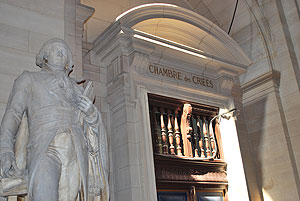 In the first ever peacetime conviction of a high-ranking, incumbent office holder by the court of another state, a Paris criminal court has convicted Equatorial Guinean First Vice President Teodoro Nguema Obiang Mangue of laundering monies from corruption in Equatorial Guinea in France. The historic decision, announced by the 32nd Chamber of the Tribunal Correctionnel de Paris on Friday, October 27, was tempered by the reality the court faced in finding a senior official of another country guilty of violating French law. While it unconditionally awarded Transparency International – France, which as a “civil party” helped investigate the case, €10,000 in moral and €41,081 in material damages, and ordered seizure of much of the €150 million in assets Teodorin holds in France, it suspended (sursis) the three- year prison sentence and €30 million fine it imposed on Teodorin so long as the VP stays out of trouble for five years. It also stayed the part of the asset seizure order confiscating the obscenely extravagant 101-room property on Avenue Foch Teodorin owns pending the outcome of proceedings before the International Court of Justice where, as explained in a previous
 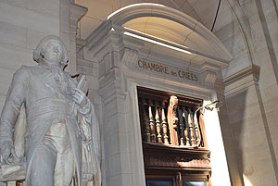 Teodoro Nguema Obiang Mangue’s trial concluded July 5, 2017, with closing arguments by his defense counsel. The trial marks a major milestone in the struggle to ensure accountability for grand corruption, even when committed by those at the highest political levels. A spicy mixture of high principle, juridical gravitas, and sophisticated argumentation on intricate issues of pressing urgency in the real world, the trial also contained moments of wrenching emotion and undignified, even scandalous, claims and insinuations.
 GAB | The Global Anticorruption Blog