Mozambique Hidden Debt Scandal UPDATE: Two Presidents Implicated/Crony’s Return Temporarily Blocked

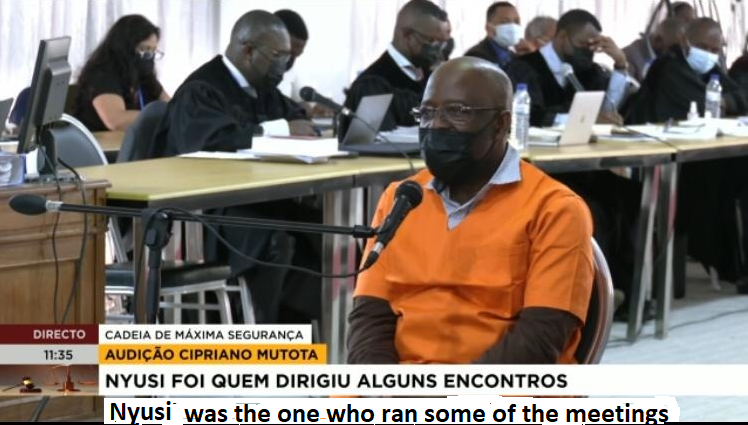
The government of Mozambique took two hits at the second day of what could well be the corruption trial of the decade. Defendant Cipriano Mutota, a former intelligence official, testified that both the country’s current president and his predecessor were deeply involved in the corruption, a scheme where officials approved $2.1 billion in secret loans for dodgy projects in return for $150 million in bribes. His gripping testimony, captured in a screen grab circulating on Mozambican social media, appears below.

Separately, the Budget Monitoring Forum, or FMO after its initials in Portuguese, has filed an emergency motion to prevent South Africa from extraditing Manual Chang, who signed off on the loans as Finance Minister, to Mozambique. Chang has been jailed in South Africa for two years pending the government’s decision on whether to extradite him to the U.S. or Mozambique. Both want him, the U.S. because American investors lost millions thanks to the secret debts, Mozambique to stand trial for his role in the corruption.

Screenshot, Hidden debt trial, August 24, 2021

The government of South Africa has agreed to delay returning Chang to Mozambique pending a hearing on its legality Friday at 10:00 AM. Along with South Africa’s Minister of Justice, the government of Mozambique will appear and argue in support of the decision. FMO’s draft order, which the court accepted and issued, is here.

FMO filed the emergency request Tuesday evening after the South African government refused to consent to a brief delay in Chang’s return to allow an orderly consideration of whether the decision complied with South African and international law. In its filing, the group, an umbrella organization whose 22 civil society organizations serve virtually every impoverished or low income Mozambican, argues that the evidence shows the government will not really put such a senior figure on trial for corruption. Or if it does, he will get a most a slap on the wrist for a scheme that threw millions into poverty and by one estimate shaved $10 billion off the GDP.

FMO cites a previous Mozambique extradition request (here) that had every appearance of a put-up job, initiated not to bring Chang to justice but from a fear that were he sent to the U.S. he would spill the beans on cronies in return for leniency. Rumors circulating in Maputo that Chang’s relatives have planned a lavish welcome home party have only stoked concerns he has little to fear from a trial in Mozambique.

FMO chair Adriano Nuvunga has called South Africa’s decision to send Chang to Mozambique, “a victory of impunity” and has urged “all southern Africa CSO movements to come together to stop the triumph of impunity.” FMO’s papers seeking a temporary delay in Chang’s return pending a full hearing are here. The Gauteng Division of the High Court may act on the request as early as Wednesday morning South African time.

On Corruption

Taking a break from his GAB duties, our indefatigable editor-in-chief Matthew Stephenson provides readers of Liberties, a leading American journal on culture and politics, a tutorial on corruption. GAB readers will not want to miss it. For in less than 10,000 words, his essay not only make sense of the (tens of? hundreds of?) millions of words written on the topic but provides corruption fighters an order of battle.

Citing passages from the Hebrew Bible and the great Indian text on governance the Arthaśāstra, Matthew reminds that corruption has always been with us and always tolerated — if only grudgingly. What’s new is the extraordinary international consensus that has formed over the past quarter century to end that toleration. Matthew explains how that consensus developed and the opposition it has had to overcome. From those who argue that in some societies corruption is culturally acceptable, from those who believe corruption fosters economic development, and from those think nothing can be done to combat it.

He calls each of these claims a “quasi-myth,” for each contains a kernel of truth, just enough to make a debater’s point. He crushes each, with the cultural determinate one quoting Edmund Burke’s pithy response that the claim of “geographical morality” simply doesn’t stand up to scrutiny.  

The research on corruption has exploded over the past two decades. Matthew’s bibliography is now at 720 pages! He seems to have read every one of the articles, for he brings their findings to bear on the pros and cons of the various solutions that have been proposed — “wise king,” “moment of crisis,” “long slog” — interweaving stories how Denmark, Sweden, and the United States overcame entrenched corruption. He admits that taming corruption is no easy task, especially where it involves persuading corrupt elites reform is critical (“bit like trying to convince turkeys to support Thanksgiving”), but he concludes that while history shows the cancer of corruption can never be fully eradicated “progress against this chronic disease of the body politic is possible, so long as those engaged in the fight do not lose heart.”

The full text of Matthew Stephenson, “Honey and Poison: On Corruption,” Liberties, Summer 2021 is here.

A Cautious Challenge to Constitutionalizing Anticorruption Commissions

Anticorruption commissions (ACCs) have had a turbulent history as a mechanism for fighting corruption. While some, such as those in Hong Kong and Singapore, have effectively executed their mandate to investigate and prosecute instances of graft, bribery, and other forms of corruption, others ACCs have been criticized as toothless, inefficient, or themselves corrupt. The failure of most African ACCs, in particular, has left some wondering whether these institutions were worth the trouble.

One influential view holds that the key to making ACCs more effective is constitutionalizing them. While a handful of countries began incorporating constitutional provisions on ACCs back in the 1980s, the trend towards constitutionalization accelerated in the 2010s. This practice reflected an emerging consensus in the anticorruption community. The 2012 Jakarta Statement on Principles for Anti-Corruption Agencies, for example, recommended that in order to ensure “independence and effectiveness,” ACCs should “be established by proper and stable legal framework, such as the Constitution.” Transparency International highlighted constitutionalization as a best practice in ACC design in 2014. That same year, a joint report by International IDEA, the Center for Constitutional Transitions, and the UN Development Programme (UNDP) cited a “growing international consensus” around the wisdom of enshrining ACCs in the constitution. And in the seven years since that report, some of the most high-profile, internationalized constitutional processes—including those in Tunisia (2014), Nepal (2015), Yemen (2015) Sudan (2019), and Algeria (2020)—have included an ACC in their interim or permanent constitutions. By my count, the number of countries that have an explicit constitutional provision mandating an ACC now stands at 23 and counting.

Does constitutionalizing the ACC help in the way that proponents hope? Are the benefits of constitutionalizing these institutions large enough to justify their inclusion in such a diverse range of constitutional processes? Possibly—but possibly not. The evidence is murky and inconclusive, but there are some reasons to doubt whether constitutionalization can overcome the obstacles that have limited the effectiveness of ACCs in the past.

Continue reading

Major League Soccer: A Prime Target for Organized Crime Groups?

Sports corruption, though not a new problem, has been an ever-increasing source of concern and attention in both the sporting world and the anticorruption community. In the United States, much of the attention regarding this issue has focused on corruption scandals in the most popular U.S. sports, such as college footballcollege basketball, and professional basketball. But other less high-profile sports may be even more at risk of corruption. Indeed, in surveying the landscape of sports in America, the league that stands out as very high-risk for corruption is Major League Soccer (MLS).

This may seem surprising. Although soccer is considered to be the most corrupt sport in the world, there have not, to my knowledge, been any reports of significant corruption in MLS to date. Indeed, back in 2015 MLS commissioner Don Garber declared that MLS is “one hundred thousand percent” clean. But just because corruption hasn’t (yet) been uncovered doesn’t mean it isn’t there, or that it won’t arise in the future. My concerns for corruption in the MLS arises from my observation that MLS has several of the risk factors that investigations of sports corruption in other contexts have identified. Three such risk factors in particular stand out:

continue reading

Why Guatemala’s Experiment with Fighting Grand Corruption Was Not a Failure

The July 23 firing of Juan Francisco Sandoval, Guatemala’s top corruption prosecutor, seemed to put paid to the nation’s extraordinary experiment in fighting grand corruption.  Sandoval’s office was established to prosecute cases developed by the Commission Against Impunity, or CICIG after its Spanish initials. CICIG was a U.N. entity the Guatemalan government accepted as the price for international assistance after the civil war ended. It was tasked with investigating gross human rights abuses and grand corruption; recognizing how powerful Guatemalan elites were and how weak the judiciary was, it was staffed by non-Guatemalan investigators and prosecutors.

As Matthew described here, in 2019 an unholy alliance of Guatemalan elites and Trump cronies succeeded in pulling U.S. support for CICIG, allowing the elites to kill it off. With its demise, all that stood in the way of their looting the country was Sandoval’s office.  

The original plan had been for CICIG to both investigate and prosecute cases themselves.  But after the Guatemalan Supreme Court ruled that only the public prosecution office (Ministerio Publico) could prosecute, CICIG’s first head, Carlos Castresana, worked out arrangement with the then Attorney General to assign ten young, “clean,” newly recruited lawyers to an office that would be responsible for CICIG’s cases.  Given how far the elites’ tentacles reached into Guatemala’s middle class, Castresana doubted “clean” recruits could be found.  Or if they were clean, they would stay that way if faced with the notorious choice between plata o pluma, taking a bribe to drop the case or being killed. One of the great parts of the CICIG story, and as far as I can tell one still untold, is how those like Sandoval, from a new generation of Guatemalans, rose to the challenge.

The creation of CICIG and its early successes developing cases against powerful military and civilian leaders that Sandoval’s office successfully prosecuted provided a hopeful example of what an alliance between the international community and a nation’s citizenry could achieve. Its end, and now Sandoval’s firing, show the limits of the approach.  At the same time, it shows the effort is worth emulating.  Sandoval’s firing prompted international and condemnation and will lead to sanctions likely to create divisions between at least some in the business class and the politicians.  The governing body of the judiciary has demanded an explanation for his termination, and his initial replacement stepped down after less than days in office (here). Sandoval and like-minded lawyers and public servants aren’t going away, and many are now moving up the ranks in the judiciary and prosecution service.  

In a fine article for PlazaPublica, former U.S. Ambassador to Guatemala Stephen McFarland explains what the U.S. and others in the international community can do in light of Sandoval’s firing to combat corruption in Guatemala.  That whatever they do, they have in-country allies like Sandoval is why the CICIG experiment should not be treated as a one-off failure.  

Fighting Corruption Isn’t Rocket Science

Space, the final frontier, sure is expensive to explore. Every launch, every mission, can cost billions of dollars in research, materials, and overhead. And partly because of this, government space agencies may be especially susceptible to corruption. After all, these agencies are responsible for enormous projects with thousands of moving parts (literally and figuratively), but are monitored principally by committees that lack the scientific knowhow to conduct effective oversight. Embezzlement, overspending, bribery, and other crimes are easy to miss. Not only is corruption easily buried by bureaucratic or technical minutiae, it’s also extremely costly, as mistakes can result in the loss of valuable equipment or even human life. Even when corruption causes things to go wrong, the fact that space missions are inherently risky and complex may make it difficult to recognize when a malfunction is due to malfeasance.

Roscosmos, the Russian state corporation responsible for space flights, serves as a cautionary tale. For years, Roscosmos funds have been embezzled though contracting bids— officials were bribed to make fake deals and artificially inflate costs, allowing hundreds of millions of dollars to evaporate and a few Soyuz rockets to accidentally explode. (In 2014 alone, corruption and other malfeasance caused Roscosmos to lose roughly US$1.8 billion.) After Russian anticorruption activist Alexei Navalny called out the “astronomic” levels of corruption and mismanagement at the Vostochny space center (one of President Putin’s pet projects), multiple criminal investigations resulted in the conviction and sentencing of fifty-eight officials for fraud and abuse of office.

Though the record of the U.S. National Aeronautics and Space Administration (NASA) is not nearly as egregious, neither is it pristine. Suspicions regarding bribes by private contractors to NASA officials have existed for decades. For instance, back in the mid-1990s, a controversial FBI sting operation implicated dozens of contractors that allegedly paid bribes to NASA employees in hopes of determining which commercial experiments would be selected for the International Space Station. Representative John Conyers, who chaired the Committee on Government Operations in the House of Representatives at the time, pinned the blame on “NASA’s dismal record of contract mismanagement and faulty financial controls.” And the problems haven’t gone away: just last year, NASA’s associate administrator for human spaceflight Doug Loverro resigned amid allegations for improper contacts with Boeing regarding the contracts for NASA’s moon lander program. NASA’s Office of the Inspector General (OIG) has raised numerous concerns about NASA’s procurement system, and NASA attributed the Taurus XL launch failures, worth $700 million, to faulty materials provided by a contractor that falsified thousands of certifications for their aluminum products.

Though NASA has since taken some measures to curb against the potential for this sort of corruption (such as the installation of a Chief Financial Officer and the Acquisition Integrity Program), the risks are still significant, especially as NASA ponders a return to crewed missions by way of billion dollar contracts. These risks are further exacerbated by the agency’s even greater reliance on private sector contractors to compensate for the decline in the agency’s budget. There are therefore several additional steps that NASA can and should take to further safeguard integrity in the procurement process.

Continue reading

Nation-Building and Corruption: A Warning from French Vietnam

Nation-building has long been a popular project—albeit a controversial one—among Western nations. Nation-building is a complicated activity, one that requires balancing such a wide variety of considerations, and making hard choices about what areas to prioritize. As a result, anticorruption is sometimes neglected or ignored in the nation-building process. This, however, is a mistake. Unchecked corruption can have devastating effects on nation-building. And while contemporary critics make this point in the context of modern nation-building initiatives, such as U.S.-led efforts in Afghanistan, there are also compelling historical illustrations of how tolerance of corruption can help derail the nation-building project. One such lesson comes from the French experience during the First Indochina War.

Though France had held on to Vietnam with ease from the mid-nineteenth century to the early days of World War II, the post-war era spelled trouble for the French Empire in Southeast Asia. The Viet Minh, a burgeoning nationalist force led by Ho Chi Minh, challenged French colonial dominance in the region, eventually securing the support of China and the Soviet Union. By the early 1950s, France’s military campaign against Ho’s guerrilla forces was flailing. So, rather than trying to continue to hold Vietnam as a colonial territory, French leaders decided to create an independent Vietnamese state. In attempting to build this new country, however, French leaders turned a blind eye to a corruption scheme—the so-called “Piastres Affair”—that would gravely weaken this enterprise.

Continue reading

NGOs, Dark Money, and Corruption: Lessons from Ohio’s Biggest Public Corruption Scandal

Ohio public utility giant FirstEnergy pled guilty June 20 to capturing or at least renting the Ohio state legislature long enough to win passage of financial bailout legislation. The picture below shows how the company used third-parties and cut-outs to hide its campaign to get Ohio’s legislature to do its bidding.

As with all large corruption schemes, several lessons can be learned from its unraveling.  One comes from the picture itself: how a well-designed graphic can make a complex, convoluted corruption scheme readily understandable. A second is how savvy prosecutors can craft plea agreements to curb future corruption.  A third is a step the Biden Administration could take to make it easier to ferret out those behind some of the dark money now plaguing American politics.

Continue reading

To Cut Corruption in the Palestinian Authority, Cut Off Development Aid

Foreign development aid plays a unique role in the lives of Palestinians, as aid is the main driver of growth in the Palestinian economy. For this reason, many people welcomed the Biden Administration’s announcement in April to reverse the Trump Administration’s decision to halt all development aid to Palestinians. Yet widespread corruption in the Palestinian Authority (PA)—which remains the principal recipient of aid to Palestinians—threatens to undermine the effectiveness of aid. Worse, foreign aid to the PA helps perpetuate and exacerbate the PA’s culture of corruption.

Corruption in the PA is deeply entrenched. To illustrate with just a handful of many possible examples: There are allegations that the PA has embezzled development aid money from the European Union. There are reports that the PA spent staggering sums on fake companies and projects, including a non-existent airline. But there are also documented examples of corrupt use of funds. Rather than develop welfare programs to distribute social services or development aid money to the public, the PA allocates the money to salary payouts for security officers and government officials in job placements secured by cronyism. High-ranking PA officials regularly establish their own NGOs and phony companies to attract additional funds from aid programs. Yet for the most part donors have turned a blind eye to the PA’s blatant corruption and mismanagement of development funds. Consequently, despite more than US$15 billion in development aid given to Palestinians in the past thirty years, that aid has failed to reduce poverty or deliver sustainable improvements in ordinary Palestinians’ quality of life.

And it’s not just that the PA’s corruption undermines the effectiveness of aid. Perhaps the even bigger problem is that the flow of development aid contributes to and props up the PA’s culture of large-scale corruption. The more funding the PA can access, the more powerful it becomes, and the more capable it is of embezzling funds and extorting bribes from its populace. Worse still, the costs of the corruption that the aid to the PA fuels are not merely economic costs: In Palestine, corruption contributes to needless violence, political radicalization, and, ultimately, the loss of innocent lives.

The only way to break out of this malignant cycle is for donors to call a halt to unfettered development aid to Palestinian government institutions, which have proven themselves time and again to be too weak and unscrupulous to handle aid without corruption.

Continue reading

A Dearth of Data in the De-Risking Debate

As readers of this blog are likely well aware, the fight against grand corruption is closely linked to the fight against money laundering. After all, kleptocrats and others involved in grand corruption need to hide the origins of their ill-gotten wealth. While the criminals who seek to launder their illicit cash are sometimes prosecuted for money laundering, much of the burden of the anti-money laundering (AML) regime falls on banks and other financial institutions. These institutions have obligations to perform due diligence on prospective clients—especially those clients with attributes suggesting high risk—and to report suspicious transaction to the government. Financial institutions can be held liable for failing to fulfill these obligations, and in some cases for their complicity in money laundering schemes. Yet many advocates believe that the current AML framework is not stringent enough, and have called for reforms that would impose additional obligations, and potential liabilities, on the financial institutions that handle clients and transactions that pose a high money laundering risk.

Banks and other skeptics often resist these reforms, arguing not only that the various proposals will do little to reduce money laundering, but also that more stringent AML regulations will lead to a phenomenon known as “de-risking.” This piece of industry jargon refers to the practice of ending or avoiding relationships with individuals or businesses perceived as “high risk” for money laundering. Of course, we want banks to eschew an individual client or transaction with characteristics that suggest a high probability of money laundering. But when banks and others warn about de-risking, they are referring to a phenomenon in which banks refuse to do business with broad categories of clients – for instance, those from particular countries or regions, or in specific lines of business – despite the fact that most of the individuals or firms in that category do not actually present a serious money laundering risk. If the monitoring costs and legal risks associated with certain kinds of accounts are too high relative to the value of those accounts, the argument goes, it’s easier for banks to simply close all of the accounts in the “de-risked” category. But this indiscriminate closure of allegedly risky accounts cuts off many deserving people, firms, and organizations from much-needed financial services.

Is de-risking really a significant problem? Skeptics might observe that the financial industry has incentives to resist more stringent AML regulation, and their warnings of de-risking may be, if not deliberately pretextual, then at least self-serving. That said, other actors, including non-profit groups, have alleged that they have experienced account closures due to de-risking. So the concern is likely a real one. Still, to set rational AML policy, we would want to know not just whether de-risking is a potential problem (it is) or whether it occurs sometimes (it probably does); we would want to know whether it is a systematic and serious problem, one that would likely be exacerbated by a significant enhancement of banks’ AML obligations.

So, what do we know about the extent and magnitude of de-risking in response to AML regulations? The short answer is: not much.

Continue reading