What’s Corruption Got to Do With It? The Role of Anticorruption Rhetoric in Kolkata’s R.G. Kar Protests

Doctors in in the Indian city of Kolkata have been protesting and striking against the state’s ruling political regime since August 2024, with no end to the demonstrations in sight. The protests were initially sparked by the brutal rape and murder of a junior doctor at R.G. Kar Medical Hospital, with anti-misogyny as the protesters’ central rallying cry. The “Reclaim the Night” march in Kolkata, which inspired parallel marches across India and garnered international attention, epitomized this early focus. In recent months, however, the protests have evolved into a broader movement against corruption. As one politician noted in his resignation letter, “the present outpouring of public anger is against this unchecked overbearing attitude of the corrupt.”

This might appear puzzling, as this anticorruption rhetoric seems rather disconnected from the movement’s original focus on justice for the victim and the broader culture of misogyny and violence against women. But there are at least three reasons why protests that originated in outrage over violence and misogyny have evolved into protests that foreground concerns about corruption.

Continue reading

Announcement: 9th Interdisciplinary Corruption Research Network Forum — Call For Papers

Ilona Wysmulek, Assistant Professor at the Polish Academy of Sciences and a leader of the Interdisciplinary Corruption Research Network (ICRN), provides the following announcement, which may be of interest to many GAB readers:

The Interdisciplinary Corruption Research Network (ICRN) will be holding its 9th ICRN Forum for early-career corruption researchers and practitioners in June 12 to 14, 2025, at the Central European University (CEU) in Vienna. The ICRN Forum is a dynamic gathering of international and interdisciplinary early career researchers working on (anti-)corruption and integrity. Participants will have the opportunity to present their research, exchange ideas, start collaborative projects and take part in co-creation sessions in the field. This year, it is also an opportunity for researchers from OECD ODA countries to apply for the two-year Governance & Integrity Fellowship, which will start at ICRN 2025. The Fellowship includes research training, mentoring and a small research grant. It also includes sponsorship to attend the Forum in Vienna to present a research proposal.

Those interested in applying, may do so here. Applicants are required to fill in the registration form, choose your session type and follow the guidelines. ICRN Forum welcomes submissions to four types of sessions:

(1) Promotion  – presentations of advanced-stage research that is nearing completion or has been completed.  This includes work where the researcher has already conducted fieldwork/collected data, undertaken some degree of analysis and produced some results. We also encourage submissions that focus on promoting completed work, discussing the challenges of fieldwork, and/or possible avenues of analysis based on material already collected.

(2) Work in Progress  – presentations of researchers currently at the early stages of their research process who wish to discuss their research design, expected/potential fieldwork issues (i.e., before data collection), identified research gaps, and contribution statements. The objective of these sessions is for presenters to benefit from feedback on the initial phase of their research work.

(3) Co-creation  – sessions dedicated to developing new research ideas and fostering open collaboration projects. These may include concepts for joint publications, teaching initiatives, or the organization of conference panels, as well as more innovative approaches to advancing corruption research through discussions of methodologies or data collection techniques. Applicants to a co-creation session are expected to volunteer to moderate (chair) the session. Proposals for a co-creation session must include a clear description of objectives, procedures, guiding questions, and any other elements considered relevant for the successful holding of discussions.

(4) New ideas from the Global South (fellowship programme)  – presentations of research proposals by selected Governance & Integrity Fellows. These proposals should outline a plan for research that has not yet been conducted. The sessions will provide the opportunity for discussion and constructive feedback.

For the Promotion, Work in Progress or Co-creation sessions, a 300-word abstract is required. To become a  Governance & Integrity Fellow and present at the “New ideas from the Global South” session, a  500-word research proposal, a 300-word motivation statement  and a  2-page CV are required.

There is no registration fee, but participants would bear travel and accommodation expenses. Governance & Integrity Fellows will be supported by a travel and accommodation grant. Any questions can be sent to the organizing team at icrn2025@ceu.edu

Application Deadline: Monday, February 3, 2025.

Where? Central European University (CEU), Vienna, Austria

When? Thursday, June 12, to Saturday, June 14, 2025

Who? Early-career scholars and practitioners studying (anti-)corruption and integrity

Launching the Fellowship: Researchers living and working in the OECD ODA country can apply to a two-year Governance & Integrity Fellowship that launches at ICRN 2025.
The Kerjiwal Case and the Erosion of Transparency and Accountability in India

Former Delhi Chief Minister Arvind Kejriwal rose to power championing anticorruption in Indian politics. But last March, India’s Enforcement Directorate (ED), a semi-independent agency tasked with enforcing anticorruption laws, arrested Kejriwal in connection with allegations that his Aam Aadmi Party (AAP) received over $10 million in kickbacks in exchange for favorable liquor licenses in Delhi. This is not the first time that the AAP—a self-described anticorruption party—has been implicated in a corruption scandal (see here and here). Perhaps Kejriwal is yet another example of a politician caught betraying in private the principles he’d championed in public. 

But several observers have raised concerns about Kejriwal’s arrest, and suggested that it may reflect a disturbing politicization of anticorruption enforcement under Prime Minister Narendra Modi. For one thing, critics point to the suspicious timing of the arrest: Kejriwal was arrested just weeks before India’s national elections, following two years of investigation with no prior action. And Kejriwal’s arrest may have distracted public attention from a potential corruption scandal that would affect Modi’s party, the BJP, involving BJP fundraising from anonymous corporate donations through a system that the Indian Supreme Court recently declared unconstitutional. More generally, Kejriwal’s arrest fit a troubling pattern: Since 2014, 95% of the ED’s cases are against politicians from minority parties (under the previous regime, the number was 54%). Even more disturbing, 23 of the last 25 politicians probed for corruption saw charges dropped after switching allegiances to the BJP. And just a month prior to Kejriwal’s arrest, Hemant Soren, another popular Chief Minister critical of the BJP, was arrested on corruption charges.

So, is this a case where a hypocritical politician is being held accountable for betraying his own principles? Or is this an instance in which anticorruption enforcement has been weaponized by the incumbent president to discredit and punish political adversaries? Or both? How are citizens to know? Uncovering the truth is especially difficult when the three pillars meant to ensure transparency and accountability in Indian anticorruption efforts—the judiciary, the media, and civic organizations—appear increasingly susceptible to political and systemic pressures. When these institutions fail to inspire public confidence, the boundary between legitimate accountability and political retribution is obscured. Kejriwal’s case highlights the need to examine the state of these pillars and their ability to fulfill their critical roles in such contentious cases. 

Continue reading

Italian Prosecutors’ Criminal Conviction For Not Disclosing Information in OPL-245 Bribery Case Called A Travesty of Justice

“Questionable conjectures” and “illogical reasoning” produced a decision which “does not correspond to the reality or the nature of the crime.” That is how Italian legal scholar Nello Rossi explains the conviction of prosecutors Fabio de Pasquale and Sergio Spadaro for their failure to disclose information to Shell and ENI during the trial of the two for paying massive bribes to secure the rights to Nigerian oil tract OPL-245.

Writing in the January issue of a leading Italian law journal (original; translation), the former judge, Deputy Chief Prosecutor, and High Council of the Judiciary member excoriates the November 11 judgement by a trial court sitting in Brescia (here), showing it to be the result of an unprecedented, unrealistic reading of the governing law together with misstatements if not down-right misrepresentations of the facts.

In finding the prosecutors guilty of failing to perform an official act, the court ruled the law requires prosecutors to automatically turn over to defendants all material received from any third-party before or during trial no matter its credibility or relevance. That the two decided to secretly withhold the material, the court said, showed they knew withholding it was a crime. To buttress its decision, the court added that the material’s disclosure would have affected how the judges in the bribery case assessed the evidence.

Rossi’s meticulous analysis of the court’s decision eviscerates each of these contentions.

Continue reading

Dreaming Small: Curtailing Prop Bets to Prevent Sports Corruption

Globally, sports betting has become the “number one factor fueling corruption in sports.” Although the United States has not been as affected by this problem as other countries (at least in modern times), the recent widespread legalization of sports betting in America—accompanied by a surge in sports gambling, especially online—might change that. Thirty-eight U.S. states now permit sports betting, and six more are considering following suit. In 2023, Americans placed roughly $120 billion worth of bets with legal sportsbooks, a near $30 billion increase from 2022, and the percentage of Americans who bet on sports has grown to 39%, up from 19% in 2022. As sports gambling proliferates, so too does the risk of competition manipulation for monetary gain. A slate of recent scandals provides anecdotal evidence that this is indeed a serious problem. For example, in 2024, NBA player Jontay Porter was banned from the NBA for his involvement in a gambling scheme that included tipping off certain bettors that he would exit a game early and underperform sportsbooks’ expectations. In 2023, the University of Alabama head baseball coach was fired for providing information that Alabama would lose a certain game to a gambler who then bet on that outcome.

A comprehensive, or even global, solution to this problem would be ideal, but such a solution will likely take time to enact and implement. Regulators ought not wait. Instead, in the near term, state regulators can and should target a subset of the problem by restricting forms of betting that present an especially significant risk of competition manipulation. One area that deserves particular attention is the proliferation of “prop bets” on individual athletes at the collegiate level. Continue reading

Guest Post: State of Corruption in Mongolia and Government’s Plans to Address It

The fight against corruption in Mongolia, a fledgling democracy wedged between Russia and China, is especially challenging. Not only must corruption fighters in government and allies in civil society contend with constant meddling in its internal politics by its powerful neighbors, but its vast resources of copper, coal, and other minerals create enormous incentives for home-grown corruption. GAB is pleased to publish this guest post on the current developments in the fight against corruption fight by Mongolian lawyer Battsengel Bayarbaatar, an expert in intellectual property law and long-time good governance, anticorruption advocate and due diligence expert.

Mongolia is currently grappling with significant corruption issues, a central concern for both the public and the government. The situation has intensified due to several high-profile corruption scandals, particularly within the mining sector, a cornerstone of Mongolia’s economy.

One of the most prominent cases is the so-called “coal theft” scandal, which erupted in late 2022. This scandal involves allegations that large quantities of coal were illegally transported to China, leading to an estimated loss of up to $12 billion for the Mongolian economy (here). High-ranking officials and influential business figures were implicated in this scheme, triggering widespread public outrage and protests. The Mongolian government responded by launching several criminal investigations and reforming laws related to strategic minerals. However, despite these efforts, enforcement remains weak, and the institutional coordination necessary to address these issues effectively is lacking.

The public’s dissatisfaction with how corruption is being handled reached a boiling point in December 2023 when massive protests broke out in Ulaanbaatar’s Sukhbaatar Square. These protests were primarily driven by youth and various civil society groups demanding transparency and accountability from the government, particularly concerning the coal theft case. The protests are reflective of broader frustrations within Mongolian society over issues such as inequality, unemployment, and environmental degradation. The government has responded to some demands, such as declassifying information related to state-owned enterprises like Erdenes Tavan Tolgoi, but many in the public remain skeptical of the government’s commitment to genuine reform.

In response to these challenges, the Mongolian government has introduced a new anti-corruption strategy, which aims to tackle corruption comprehensively by 2030.

Continue reading

Artificial Intelligence in Anticorruption: Opportunities and Challenges

Artificial intelligence (AI) tools, with their capacity to efficiently process and analyze vast amounts of data, have enormous potential to enhance anticorruption efforts. Traditional investigative methods, which often require extensive manual review of financial records, contracts, and communications, can be time-consuming and prone to human error. AI-powered systems, especially those driven by machine learning, can review large datasets to identify patterns and anomalies, flagging potentially corrupt activities more swiftly and accurately than human investigators. Some of the most promising applications of AI technology to anticorruption include:

Continue reading

Italian Court: That ENI Bribed Nigerian Officials for Rights to OPL-245 Based on “Multiple Reliable Sources”

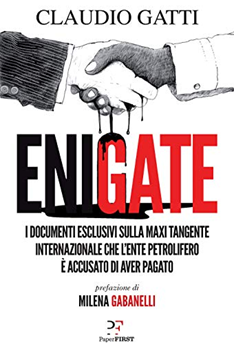
A courageous Italian judge has affirmed that the evidence showing oil giant ENI paid massive bribes for rights to Nigerian oil block OPL-245 is reliable. Judge Francesca Giacomini ruled in December that ENIgate, a book reporting the bribery scheme, was based on “multiple reliable sources.”

In her opinion she not only dismissed ENI’s lawsuit that author Claudio Gatti and publisher Il Fatto (“the Fact”) had defamed the company by claiming it had paid bribes but ordered it to pay defendants’ legal fees as well.

Saying OPL-245 was secured through bribery isn’t what makes Judge Giacomini courageous. The bribery has been a matter of public record for over a decade (here).

The judge merits the accolade for having the fortitude to say so in the face of the fecklessness and likely downright corruption of her judicial colleagues (here). On even more evidence than she had before her, three of them exonerated ENI, its executives, and accomplices of all bribery charges with the flimsiest of reasoning (here). Even more scandalous, in a separate case a fourth found the prosecutors guilty of a crime for how they chose to present the case.

That case rests on an imagined set of facts and an unprecedented interpretation of Italian law (here). Is it too much to hope that the court hearing the appeal show the same courage as Judge Giacomini?

Time for English translation?

Key excerpts of Judge Giacomini’s ruling in English, courtesy of Google and Microsoft office translation programs, below.  Full text of decision here.

Continue reading

The Anticorruption Legacy of American Civil Service Reform

In the waning months of President Donald Trump’s first term, he issued an executive order that could have drastically reshaped the U.S. federal bureaucracy. The order created a new federal government job classification with far fewer civil service protections, called “Schedule F.” While most career civil servants in the U.S. federal government are protected from politically motivated firings and cannot be fired without cause, under Schedule F, employees “of a confidential, policy-determining, policy-making, or policy-advocating character” could be fired without following standard civil service procedures. With Trump now set to reassume power, Schedule F is back on the table, threatening to take away employment protections from potentially hundreds of thousands of federal employees and making it easier to fire civil servants for purely political reasons.

Commentators have pointed out the potential negative effects of Schedule F on administrative capacity, government performance, and accountability. But another key reason to be skeptical of Schedule F is that it represents a step backwards in the history of American civil service reform, which has its roots in 19th century anticorruption movements. Civil service independence and merit-based hiring came about in response to endemic corruption in the federal bureaucracy. The anticorruption history of the American civil service holds important lessons for modern civil service reformers, both in the United States and elsewhere.

Continue reading

Guest Post: Italy’s Misguided, and Possibly Illegal, Repeal of the Abuse of Office Offense

Today’s guest post is from Roberta De Paolis, a post doctoral fellow in Criminal Law at the Sant’Anna School of Advanced Studies of Pisa.

For nearly a hundred years, the Italian criminal code included an “abuse of office” offense. Public officials committed this crime when, in the course of performing their duties, they acted in a way that was otherwise unlawful or entailed a conflict of interest, and in so doing secured a monetary advantage to themselves and/or inflicted monetary damage on others. For example, if a public official rigged a public procurement auction, steering a government contract to a relative or friend, that public official would not only have violated the rules on competition procedures, but would also have committed the crime of abuse of office. But the crime could apply more broadly. For example, if a local official denied a citizen a building permit for self-interested reasons, the official may have committed the abuse-of-office crime.

On its face, the abuse of office offense seems like a potentially powerful anticorruption tool. But it had proved to be controversial. Many, including Justice Minister Carlo Nordio, claimed that the crime was too vague, and potentially too broad. For example, in many small Italian towns, many people—particularly at the elite level—know each other socially and often have family ties, and as a result many decisions that local politicians make could be characterized as helping their friends or relations or otherwise involving a conflict of interest. Consider a mayor who announces a tender for public construction project, and the best bid comes from an acquaintance of the mayor. If the city government accepts that bid, the local political opposition could report the decision to the authorities and assert that the mayor abused her office by favoring an acquaintance in the tender procedure. As a result, according to critics of the abuse-of-office offense, many local public officials were discouraged from implementing socially valuable public works projects, out of fear of ending up under criminal investigation. The critics also pointed out that, despite the large number of prosecutions for abuse of office, these prosecutions rarely produced convictions: the most up-to-date statistics report that about 5,000 criminal prosecutions for abuse of office resulted in only nine convictions. This is suggestive evidence that many of the investigations were meritless, and possibly politically motivated tools of harassment.

That, at least, is what critics of the law argued, and this past August, those criticisms carried the day: Parliament voted to repeal the abuse-of-office offense. But was that the right decision? Many experts say no. Notably, the President of Italy’s National Anti-Corruption Authority, Giuseppe Busia, asserted that repealing the abuse of office offense leads to impunity in cases of conflict of interest like favoritism in public competition or tenders. Similarly, a spokesman for the European Commission claimed that the repeal of this law “decriminalizes an important form of corruption and may have an impact on the effectiveness of the European fight against corruption.” (Indeed, it is worth noting that 25 of the 27 EU countries have criminal laws prohibiting abuse of office.) Supporters of the repeal respond that these concerns are overblown because other provisions of the criminal code, as well as Italian administrative law, still apply to the egregious cases. But that is not obviously true, and, worrisomely, the repeal of the criminal abuse of office offense has not been counterbalanced by the introduction of new administrative offenses to address the problematic conduct. Continue reading