The Brazilian Courts’ Indefensible Double Standard: The Disparate Treatment of Harmless Procedural Errors in Corruption and Non-Corruption Cases

Before Brazil’s so-called Lava Jato (“Car Wash”) Operation, almost every attempt to prosecute high-level corruption in Brazil failed. Many cases were never investigated or prosecuted, but even in those cases where prosecutors started investigations, identified crimes, and brought charges, appeals courts ended up nullifying the proceedings, often before trial, on technical grounds for failure to comply with procedural rules (see, for example, here, here, here, and here). The result was a culture of impunity, in which grand corruption thrived. The Lava Jato Operation has been hailed as a historic breakthrough not only because of the breadth of the corruption it uncovered, but also because the convictions secured by prosecutors had, by and large, been affirmed on appeal. Unfortunately, there are troubling signs that the Brazilian judiciary is reverting to its old ways. Last October, for example, the Brazilian Supreme Court issued a procedural ruling  concerning the sequence of closing arguments that the Court held required the nullification of two Lava Jato convictions (so far), and may end up doing more widespread damage. The larger issue here, though, is the double-standard that Brazilian appellate courts seem to have embraced: adopting an (excessively) stringent and unforgiving view of even minor technical procedural noncompliance in corruption cases involving elite defendants, while at the same time relying (properly) on “harmless error” doctrines to excuse similar sorts of procedural noncompliance in cases involving other sorts of crimes, such as drug trafficking. Continue reading

Guest Post: A Defense of Anticorruption Orthodoxy

Robert Barrington, Professor of Anti-Corruption Practice at the University of Sussex’s Centre for the Study of Corruption, contributes today’s guest post.

The international anticorruption movement, which has been so successful over the last 25 years in putting this once-taboo issue squarely at the forefront of the international agenda, is suffering a crisis of confidence. The aspiration to eliminate corruption now seems to many like a fantasy from the dreamy era of the fall of the Berlin Wall. And what had appeared to be an emerging consensus about how to diagnose corruption, and how to respond, is fracturing. There has long been a lively debate within the anticorruption community about the best ways to understand and respond to corruption; and likewise, a growing challenge from several different quarters (including governments, businesses, journalists, and academics) on areas such as measurement, what has been successful, and whether the evidence matches the theory for fundamental approaches such as transparency. The debate and challenge have been broadly healthy, and have led to sharper thinking and improved approaches. But some criticism has veered towards attacking simplistic caricatures of the perceived orthodoxy, or launching broad-brush critiques that, intentionally or not, serve to undermine the anticorruption movement and provide nourishment for those that would prefer to see the anticorruption movement diminished or fail.

Take, for example, two common lines of attack against the “orthodox” approach to tackling corruption, one concerning the diagnosis of the problem and the other concerning appropriate responses: Continue reading

Tracking Corruption and Conflicts of Interest in the Trump Administration–March 2020 Update

As regular readers of this blog are aware, since May 2017 we’ve been tracking and cataloguing credible allegations that President Trump, and his family members and close associates, have been corruptly, and possibly illegally, leveraging the power of the presidency to enrich themselves. The newest update is now available here.

A previously noted, while we try to include only those allegations that appear credible, many of the allegations that we discuss are speculative and/or contested. We also do not attempt a full analysis of the laws and regulations that may or may not have been broken if the allegations are true. (For an overview of some of the relevant federal laws and regulations that might apply to some of the alleged problematic conduct, see here.)

Recovering Damages for Mozambican Victims of the Hidden Debt Scandal: Possible Suits in the United Kingdom

A recent post explained that Mozambicans harmed by the corruption behind the “hidden debt” scandal may well be able to sue the perpetrators for damages in the courts of many nations.  Mozambique, where the harm was suffered, and most probably France, Lebanon, Russia, Switzerland, the United Arab Emirates, and the United Kingdom, countries where one or more of the alleged perpetrators is located or does business.  The legal basis would be article 35 of the United Nations Convention Against Corruption.  It requires convention parties to open their courts to actions by corruption victims against “those responsible” for the corruption “in order to obtain compensation.”

The U.N. Office of Drugs and Crimes reports that all 187 parties accept the principle of compensation for corruption.  Suits for corruption damages are a relatively recent development, however, and in its latest review of the convention’s implementation, UNODC explains that establishing causation and proving damages remain to be elaborated through application of parties’ domestic law principles governing harm caused by intentional acts.  At the same time, it noted that in corruption damage cases article 35 mandates that these principles be interpreted broadly.  There need be no direct interaction between the perpetrators of corruption and the victim; nor is recovery limited to cases where the perpetrators foresaw the injury the victim would suffer.

In a just released paper, London barrister James Mather shows how English law would apply to claims Mozambicans brought for hidden debt damages in the United Kingdom. He opines that recovery could be had on the basis of an unlawful means conspiracy and perhaps too on the tort of bribery and dishonest assistance.  English law, he writes, incorporates the liberal principles of causation of damages enshrined in article 35. “The approach to the award of damages for conspiracy in particular is quite liberal in English law and extends to losses which cannot be strictly proved.”  English law also offers Mozambican claimants a procedural advantage.  Rather than each person having to file a separate suit, a group action could be filed with a single claimant suing on behalf of all those who suffered a similar injury.

Mather, a distinguished member of Serle Court in London, cautions that while based on what has been reported it would appear Mozambicans injured by the hidden debt scandal could recover damages in the United Kingdom, much factual research is required to be sure. His paper is an important step forward in seeing that those who suffered enormous harm thanks to the corruption behind the hidden debt scandal are made whole by the perpetrators.  Click on Mather paper to download a copy of his first-rate analysis.

Are Financial Declaration Systems Creating Opportunities for Corrupt Extortion?

One of the most popular reform measures for combating public corruption is the establishment or strengthening of requirements that public officials regularly file declarations of assets and income sources. Mandatory financial disclosure rules are not exclusively about fighting corruption, of course, but anticorruption is certainly one of their principal justifications. Requiring public officials to formally submit and update income and asset declarations, and attaching meaningful penalties for false or misleading declarations, is thought to help suppress corruption in at least three ways:

  • First, identifying assets and income sources makes it easier to identify, and hopefully to avoid, conflicts of interest.
  • Second, public officials who report suspicious asset growth during their time in office might attract unwanted scrutiny from law enforcement investigators—and also, if the declarations are public, from journalists and activists. Submitting false reports or finding clever ways to hide assets are of course possible, but are costly and risky.
  • Third, precisely because corrupt public officials will often lie on their financial declarations in order to avoid scrutiny, these mandatory disclosure laws can sometimes provide the hook to hold corrupt officials legally or politically accountable even when it is impossible to prove the underlying corruption. We might not be able to nail the corrupt official for bribe-taking or embezzlement, but if we can show that he owns substantial undeclared assets, we can still nail him for lying on his financial declarations.

There are important ongoing debates about the appropriate design of financial disclosure systems, including questions about whether the disclosures should be public or kept confidential, who should be required to submit disclosures (and how often), what sort of information should be required (and at what level of detail), whether and how declarations should be independently verified, the appropriate institution to manage the system, and the appropriate penalties for noncompliance (see also here). And the efficacy of mandatory financial disclosures in reducing corruption is still unsettled (see here, here, here, here, and here). Nevertheless, the basic anticorruption case for some form of mandatory financial disclosure system seems strong. Both domestic anticorruption activists and the international community therefore regularly push for the creation of such systems where they do not already exist, as well as for the strengthening and expansion of existing systems.

While acknowledging the uncertainties and complexities of the issue, I find the basic case for some form of (strong) mandatory financial declaration system persuasive. That said, I’ve recently had some interesting conversations with a couple of experts who have highlighted a potential problem that I confess I hadn’t previously thought about or seen discussed in the published literature: In countries where corruption is widespread and institutional checks are weak, the government agents who administer the financial disclosure system could abuse their power to extort bribes from the public officials who are subject to the declaration requirements. Continue reading

Ukraine’s Bold Experiment: The Role of Foreign Experts in Selecting Judges for the New Anticorruption Court

The fight against corruption has been a central focus for Ukraine since the 2014 Maidan Revolution. In the immediate aftermath of Maidan, the country created four new institutions, the National Anti-Corruption Bureau of Ukraine (NABU) (an investigative body), the Special Anti-Corruption Prosecutor’s Office (SAPO) (with prosecutorial powers), the National Agency for Prevention of Corruption (NAPC) (responsible for administering the e-asset declaration system), and the Asset Recovery and Management Agency (ARMA) (tasked with recovering stolen assets). Yet the problem of impunity for grand corruption has persisted, and many believe that the weak link in the chain has been the Ukrainian judiciary. In addition to familiar problems of delay and inefficiency, Ukrainian judges are widely viewed as susceptible to political influence, and even corrupt themselves. To address this problem, in 2018—thanks to the combined lobbying efforts of Ukraine’s vibrant civil society and pressure from international donors, primarily the International Monetary Fund (IMF)—Ukraine enacted a new law creating a specialized anticorruption court known as the High Anti-Corruption Court (HACC), which began operations this past September.

The most innovative and controversial feature of this new court is the inclusion of foreign experts in the judicial selection process. While many countries have created specialized anticorruption courts, and many of these have special judicial selection systems that differ from the procedures for appointing ordinary judges, the participation of foreign experts in the HACC judicial selection process was unprecedented. Yet both domestic civil society groups and outside actors like the IMF and the Venice Commission (the Council of Europe’s advisory body for legal and constitutional matters) came to see foreign participation in the selection of HACC judges as crucial, particularly in light of the controversial selection process for judges to Ukraine’s Supreme Court in 2017. In the selection to the Supreme Court, multiple candidates were approved by Ukraine’s High Council of Justice (HCJ) despite the fact that those candidates were found to be ethically tainted by the Public Integrity Council (PIC), a civil society watchdog that assists the High Qualification Commission of Judges (HQCJ) in assessing the integrity of judicial candidates. Thus, when lobbying for the HACC, civil society and some members of parliament demanded that the law guarantee the presence of foreign experts with the power to veto judicial candidates, in order to ensure that no judges were appointed to the HACC if there was reasonable doubt about their integrity.

As a short-term stopgap, the involvement of foreign experts in the HACC judge selection is promising and may even serve as a useful model for other institutional reforms within Ukraine, and for other countries. But reliance on foreign experts to address concerns about selecting judges (or other officials) of sufficient integrity is probably not a long-term solution. Continue reading

High Costs: Corruption Scandals in America’s Legal Marijuana Industry

The movement to legalize marijuana in the United States has been gaining momentum. Thirty-three states and the District of Columbia have currently legalized marijuana to some degree, and of those, eleven states and D.C. have legalized recreational use of marijuana.  (Selling, possessing, consuming marijuana remains illegal under federal law, but the federal laws against marijuana are rarely enforced, which creates a rather odd situation in the states that have legalized marijuana: those who participate in the marijuana market are still technically engaged in illegal activity, even though that market operates out in the open.) In the absence of uniform federal regulation, those states that have legalized marijuana have adopted different regulatory approaches; most states issue a limited number of licenses to sell or supply marijuana, but have capped the number of licenses in order to limit the amount of marijuana on the market. This makes each license extremely valuable, given that the total value of the marijuana market is estimated to be somewhere in the neighborhood of $52 billion. Additionally, in most states the license evaluation criteria, and the evaluation process, are extremely opaque, and local government officials frequently have substantial discretion regarding who receives these licenses.

Given this combination of factors—state and local officials with the power to issue a small number of extremely valuable licenses through an opaque process—it should come as no surprise that the legal marijuana market has become a hotbed for corruption. Consider just a few examples: Continue reading

U4 Brief on “An International Anti-Corruption Court? A Synopsis of the Debate”

As regular readers likely know, GAB has featured a number of commentaries over the past few years on the proposal to create an International Anti-Corruption Court (IACC), modeled on the International Criminal Court, to try senior figures for grand corruption when their domestic justice systems prove unwilling or unable to do so (see here, here, here, here, and here). The idea has attracted a great deal of interest, as well as both support and criticism. To provide a basic overview of the debate so far, a few months ago the U4 Anti-Corruption Resource Center Centre’s Sofie Schütte and I published a short U4 paper entitled “An International Anticorruption Court? A Synopsis of the Debate.”(The brief is also available in French and Spanish.)  For those out there who are new to this topic, this U4 Brief is meant to provide some general background information and a succinct summary of (1) the strongest arguments in favor of creating an IACC, (2) the strongest criticisms of the IACC proposal, and (3) an overview of some other approaches to the grand corruption and impunity problems. Hope it’s helpful!

Will This Whistleblower Cost Equatorial Guinea its IMF Loan?

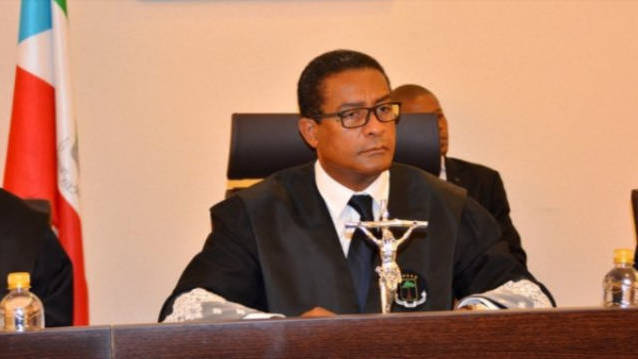
Juan Carlos Angue Ondo, pictured below, is the latest individual to reveal details of the grand corruption that plagues Equatorial Guinea.  In recent interviews (here in English and here in Spanish), he describes how the country’s rulers use the judicial system to perpetrate corrupt schemes and maintain their grip on power. The revelations confirm what human rights (here and here) and anticorruption groups (here and here) have said for years: that ideas of judicial independence, due process, and the rule of law are strangers to Equatorial Guinea. 

Angue’s whistleblowing comes at particularly fraught time – both for the nation and for the International Monetary Fund. As blog readers know (here and here), last December the government secured an IMF loan to rescue the economy from recession.  In return, it pledged to take concrete, measurable steps to strengthen the rule of law and combat corruption.  An obvious first step would be to take what Angue claims seriously.  To investigate the allegations, and where warranted prosecute wrongdoers and make needed reforms to laws and judicial institutions. But will Equatorial Guinea’s government do so?

And what will the IMF do if it does not? Halt loan disbursements?  Or sweep the matter under the rug?

The allegations cannot be lightly dismissed. Angue likely knows more about judicial corruption, the absence of the rule of law, and the lack of judicial independence than anyone in Equatorial Guinea. Continue reading

New Podcast, Featuring Roberto de Michele and Francesco De Simone

A new episode of KickBack: The Global Anticorruption Podcast is now available. This episode features my interview with Roberto de Michele and Francesco De Simone, who work as work in the state modernization specialists at the Inter-American Development Bank (IDB). In our conversation, we discuss the work that the IDB does on anticorruption, transparency, and related issues, and also how the IDB (or any other entity working in this area) can assess the impact of its projects. We further discuss the relationship between grand and petty corruption, and closely associated questions concerning incremental versus disruptive anticorruption reform strategies. (This discussion includes some discussions of the recommendations of the report prepared by an outside expert advisory group commissioned by the IDB, which Rick discussed shortly after it came out.) Toward the end of the interview, we talk about the impact that scholarly research has had on Roberto and Francesco’s thinking on anticorruption-related topics, and we conclude the interview with a discussion of the current state of corruption in the Americas–considering both the optimistic and pessimistic views of where things are going in the region.

You can find this episode, along with links to previous podcast episodes, at the following locations:

KickBack is a collaborative effort between GAB and the ICRN. If you like it, please subscribe/follow, and tell all your friends! And if you have suggestions for voices you’d like to hear on the podcast, just send me a message and let me know.