Guest Post: Global Lessons from Sri Lankan Civil Society for Post-Crisis Governance Reform

Today’s guest post is from Nishan de Mel and Inoshini Perera of Verite Research and Nikhil Wilmink of the Open Society Foundations.

In 2022, Sri Lanka experienced the most severe economic crisis of its post-independence history. Foreign reserves were emptied as the currency depreciated by over 80% and essential imports such as fuel and medicine were curtailed. Sri Lanka was forced to default on its external debt of over USD 40 billion. In desperation, the government went to the International Monetary Fund (IMF) for assistance—the seventeenth time Sri Lanka has done so since 1965. The IMF’s rescue program, which prioritized price stabilization above all else, inflicted substantial hardship, as interest rates spiked, poverty doubled to around 30%, and the previous eight years of GDP growth were wiped out.

The crisis triggered an awakening among the Sri Lankan people about the consequences of corrupt governance. Protests proliferated and grew into an avalanche known as the Aragalaya (mass uprising), the largest democratic protest in Sri Lanka’s history. Protestors viewed Sri Lanka’s economic collapse as rooted in corruption, impunity, and the abuse of political power. The protests ultimately forced then-President Gotabaya Rajapaksa to resign and flee the country.

Given that concerns about corruption and misgovernance were so central to the discussion of Sri Lanka’s economic crisis, in early 2023 the IMF reached an agreement with the Sri Lankan government to conduct a “Governance Diagnostic Assessment” (GDA) – the first one in Asia. Civil society in Sri Lanka was not overly impressed, however. Sri Lankan civil society organizations (CSOs) were concerned that IMF consultations with civil society would be largely performative. CSOs were also concerned that there would not be sufficient accountability for implementation of the anticorruption measures that the IMF designed with the government. Leading think tanks and CSOs in Sri Lanka came together to form the Civil Society Initiative on Anti-Corruption Reform for Economic Recovery (CSI-group). The CSI-group initially requested that the IMF transcribe and publish its consultations with CSOs, but the IMF would not agree to this. Therefore, the CSI-group took an independent path by bringing hundreds of other CSOs together into a process for producing a “Civil Society Governance Diagnostic Report”. This was the first time any country’s civil society sector had ever drafted a governance report to guide the IMF’s GDA. That GDA, produced after the civil society diagnostic, was an excellent document that aligned closely with what had been produced by the CSOs. Sri Lankan CSOs also created of an independent IMF Tracker to monitor the government’s implementation of its IMF program commitments and to provide more transparency about the significant failures to comply with commitments on governance and anticorruption, even when these were not highlighted in the IMF’s reviews.

Recognizing the core governance weaknesses needed a multi-pronged approach. The Sri Lankan think tank Verité Research decided to involve bondholders as well. In June 2024, Verité Research proposed a new debt instrument: a “Governance-Linked Bond” (GLB), designed to reduce reducing the risk of repeated defaults in countries with poor governance. Through the GLB, creditors agree to reduce the borrowing country’s coupon payments if that country takes certain governance-improving actions—actions that benefit the creditors as well by reducing the risk of default. Thus, GLBs make the adoption of these governance improvements a win-win for both debtor countries and creditors. The GLB proposal was adopted by private creditors in Sri Lanka’s debt restructuring in December 2024. The final GLB issue made up about 13.5% of Sri Lanka’s new restructured debt (USD 1.44 billion) with a coupon reduction of 75 basis points, from 2028-2035 if three key performance indicators (KPIs) are met: (1) a target revenue-to-GDP ratio; (2) the publication of a fiscal strategy that complies with the new public finance management act that Sri Lanka adopted in August 2024; and (3) compliance with the information disclosure covenant in the restructured bond contracts. Notably, these KPIs were drawn from a set of sensible set of compliance actions related to the existing laws of the country, its macroeconomic targets, and stipulations on the bond contract; there was no need to link them to the IMF’s GDA.

In sum, CSOs’ engagement in Sri Lanka resulted in a number of meaningful improvements, including the IMF’s adoption of a much-improved GDA and the innovation of the GLB, a new global instrument to improve governance. With Kenya now undertaking a similar process, some key lessons from Sri Lanka include: being able to take advantage of windows of opportunity and momentum swings (such as the momentum from popular protests around corruption and the IMF program in Sri Lanka); and building diverse coalitions able to take a systemic approach (Sri Lanka’s significant achievements have come from partnerships with unusual partners including bondholders).

TI Senegal to IMF: Hold Our Government to its Anticorruption Commitments

Last June the International Monetary Fund approved $1.8 billion in loans to Senegal to stave off a debt crisis. Funds were conditioned among other measures on the government’s promise to strengthen the fight against corruption, a condition the government accepted wholeheartedly and without reservation. Indeed, IMF Deputy Director Kenji Okamura assured the IMF board before voting the loan that the Senegalese government was serious about anticorruption reform, that it recognized it was “critical to the restoration of growth and fiscal stability” (here).

The government’s promises and Okamura’s assurances are now in doubt. Forum Civil, the Senegal chapter of Transparency International, reported in late October that the government has done virtually nothing to keep its promises.  

The Fund is not helpless in the face of the government’s broken promises. The loan funds are being disbursed in tranches; each tranche requires board approval and a meeting to okay the first tranche set for December. Moreover, four of the anticorruption reforms – enforcing the asset declaration system, strengthening the anticorruption agency and the prosecution, and tightening the civil service ethics code — are “structural benchmarks. That is, IMF procedures require the Board to assay progress on each before okaying a tranche.

In its October report, reprinted below, the Forum Civil documents the government’s failure to live up to its promises, lays out immediate steps it should take to demonstrate it intends to keep them, and urges the IMF, for the sake of the citizens of Senegal and their future, to hold the government to its commitments

Continue reading

The IMF’s (Non-)Engagement with Corruption in Military Spending

In a move that has been hailed by the anticorruption community as a “major step forward,” the International Monetary Fund (IMF) has declared that it will address corruption in its member states, insofar as that corruption is “macro-critical” – that is, when corruption “affects, or has the potential to affect, domestic or external [macroeconomic] stability.” As I stressed in a previous post, the focus on “macro-criticality” is the IMF’s solution to a persistent problem with how to distinguish economic policy (which the IMF may influence) from matters that are outside the IMF’s mandate—because, after all, the IMF is a “monetary agency, not a development agency.” Grounding anticorruption in the Fund’s mission to support the international financial system allows IMF staff to discuss anticorruption strategies frankly with country authorities.

Yet certain corruption-related topics still seem off limits, notwithstanding their arguably macro-critical characteristics. For instance, although the IMF has touted its comprehensive framework for reviewing corruption risks, the IMF’s strategy leaves out certain key channels that facilitate corruption, such as the corrosive effect of corruption on, and in, military spending. The wholesale omission of military spending from the IMF’s anticorruption strategy demonstrates that the IMF’s attention to macro-critical corruption problems is tempered by understandable concerns about the reputational blowback that might result from intervention into politically sensitive areas. Understandable as it may be, the IMF’s decision to exclude military spending from its anticorruption strategy deprives member countries of the broader benefits that are provided when the IMF acknowledges a concern as macro-critical.

Understandable as it may be, the IMF’s decision to exclude military spending from its anticorruption strategy deprives member countries of the broader benefits that are provided when the IMF acknowledges a concern as macro-critical.

Continue Reading

A Covid-19 Checkup: How the IMF’s Transparency Measures Have Fared So Far

With a trillion dollars in lending capability, the International Monetary Fund (IMF) is one of the best-equipped institutions to deal with the Covid-19 public health and financial crisis. Since March, the IMF has met an “unprecedented number of calls for emergency financing” with “unprecedented speed and magnitude,” through renegotiations of rapid credit facilities, refinancing initiatives, and debt relief assistance for more than 100 countries, totaling over $100 billion in disbursements so far. In the early days of the pandemic, there was a great deal of concern among anticorruption advocates over the way these emergency funds would be monitored (see collections of pieces here and here). The IMF’s initial approach generally did not impose formal transparency or governance requirements as a condition for receiving emergency Covid relief funds. Rather, the IMF chose to rely more on after-the-fact safeguards: recipient countries were told to spend as needed but to “keep the receipts.”

The IMF’s approach is understandable. As Jason Keene argued on this blog, the IMF at that early stage faced a trade-off between speed and transparency, and may have reasonably concluded that it would not be advisable to bargain over transparency measures if doing so would slow the deployment of much-needed funds. This conclusion, as a May 2020 IMF publication revealed, was influenced by the IMF’s experience with the 2014-2016 Ebola outbreak in West Africa: Many, including a prominent public health journal, blamed the IMF for the lethality of the Ebola epidemic, provoking a backlash against what was seen as unduly burdensome loans, a focus on austerity, and the underfunding of medical systems in vulnerable countries (see here, here, and here). Given this background, it’s understandable that the IMF might, on balance, favor speed over transparency, providing loans for Covid-related public health and budgetary shortfalls without much conditionality.

Continue Reading

Guest Post: IMF General Counsel Rhoda Weeks-Brown on the Fund’s Role in Promoting Governance, Transparency and Accountability

Since 2018 the IMF has laid greater stress on governance and corruption issues in its annual reviews of member countries’ economic performance and when extending loans to stabilize their economies and restore economic growth. GAB is delighted to publish this post by Fund General Counsel Rhoda Weeks-Brown explaining why the organization strengthened its focus on governance and corruption and what it is doing to help member countries promote good governance and combat corruption.

The COVID-19 pandemic is a crisis like no other. It has brought about tragic human loss and suffering, coupled with disruptions in the social and economic order on a scale that we have not seen in living memory. The IMF’s response to help its member countries manage the crisis and save lives and livelihoods has been similarly unprecedented, including in the sheer speed and size of that effort. In only seven months, the institution has provided lending assistance of more than US$100 billion to over 80 countries, including over US$31 billion in emergency financing to 78 countries (as of December 4, 2020). We can all agree that the dire economic effects projected to result from the COVID crisis—including declines in living standards, increases in inequality, and a reversal of the decades-long declining trend in global poverty—have made the fight against corruption more urgent now than ever before.

Despite the speed of the IMF’s response, we have focused on safeguards to ensure that appropriate governance, transparency and accountability measures are in place even for our rapid emergency financing. This financing supports countries’ commitments to level up healthcare spending and provide income support for affected households and businesses. Our advice to countries has been “spend what you need, but keep the receipts.” Governments in turn have made firm commitments to address governance, transparency and accountability.

The IMF is also providing technical assistance to countries to help them make progress on these commitments. This reflects a clear understanding that improvements in transparency and accountability are driven by changes in institutional practices across multiple institutions involved in budgeting, spending, monitoring the use of public financial resources and responding to instances of misappropriation and misbehavior.

Governancekey to economic success

Continue reading

Macro-Criticality: The International Monetary Fund’s Black Box

Back in 2018, the International Monetary Fund (IMF) promised to tackle corruption within its member states when that corruption is “macro-critical”—that is, when corruption “affects, or has the potential to affect, domestic or external [macroeconomic] stability.” The IMF’s declaration that corruption is, or at least can be, “macro-critical” was an important development, one that anticorruption professionals applauded as a “major step forward.” For those less familiar with the IMF, though, the significance of the “macro-criticality” finding may not be immediately obvious. To understand this particular piece of IMF jargon, and why it’s so important for when and how the IMF engages in anticorruption work, it’s necessary to understand a bit more about how the IMF operates.

First and foremost, the IMF is a “monetary agency, not a development agency.” In contrast to a development agency like the World Bank, the IMF does not finance specific projects, nor is its mandate to promote economic development and poverty reduction as a general matter. Rather, the IMF helps protect global macroeconomic stability by lending funds to governments in dire straits. Furthermore, the IMF often requires, as a condition for receiving these emergency loans, that the recipient governments adopt institutional or policy reforms—a controversial practice known as “conditionality.” The IMF has also sometimes forgiven loans for particularly debt-burdened countries. And in recent years, the IMF has expanded its capacity development apparatus by providing advice to countries on a wide range of issues related to a country’s macroeconomic management, including central banking, monetary and exchange rate policy, tax policy and administration, and official statistics. All these services function to protect the international monetary system from potential risks, which is the IMF’s primary task.

But although the IMF’s mission is, at least in principle, narrowly focused on macroeconomic stability, the IMF has consistently faced the question of how to distinguish economic policy (which the IMF may influence) from social or political matters that are outside the IMF’s mandate (see, e.g., here, here, and here). Recognizing that there can be a porous boundary between economic and political matters, the IMF developed the concept of “macro-criticality.” So long as an issue—even a political or social issue—affects, or has the potential to affect, the macro-economy in a significant way, the IMF may treat the topic as it would any other issue traditionally recognized to be the IMF’s bread and butter.

And that’s why it was so important that the IMF has declared that corruption is a “macro-critical” issue. Once the IMF considers corruption in a given country to be macro-critical, the IMF may place anticorruption conditions on IMF loans to that country. The macro-criticality finding also validates data collection and capacity building measures related to corruption and anticorruption—measures that would otherwise seem to fall outside the IMF’s jurisdiction.

Nevertheless, confusion persists about when the IMF will consider corruption to be a “macro-critical” issue, and what exactly the IMF promised to do in its 2018 statement. One reason it’s hard to understand what the IMF actually committed to is because there are many ways for an issue to affect domestic or external macroeconomic stability. Perhaps most importantly, it’s important to distinguish a finding that an issue, such as corruption, is globally macro-critical—in the sense that there is robust evidence that this issue can have significant effects on macro-economic stability—from a finding that this issue is macro-critical in a particular country. Even a globally macro-critical issue may not by macro-critical in a specific country, either because the country in question already has adequate safeguards in place to address the issue, or because the macroeconomic risks associated with this particular issue are minimal in comparison to other country-specific threats.

Continue reading

Should International Organizations Like the IMF Require More Anticorruption Conditions on Their Pandemic Emergency Funding?

In response to the unprecedented COVID-19 pandemic, governments across the world are taking emergency measures to secure and distribute necessary medical equipment to hospitals, front-line medical workers, and at-risk groups. Moreover, to respond to the dangerous economic crisis that has resulted from stay-at-home orders and other essential public health measures, national governments have rapidly adopted new fiscal programs and other measures that have pushed trillions of dollars out the door. Multilateral institutions like the International Monetary Fund (IMF) have also stepped in to assist countries that have seen their foreign exchange inflows drying up due to a variety of factors associated with the pandemic (including lower international oil prices, lack of tourism receipts, and declining remittance flows). These countries urgently need for foreign exchange to purchase critical medical supplies and equipment from abroad. The IMF has existing facilities for providing emergency funding to address balance of payments shortfalls in times of emergency (the Rapid Credit Facility (RCF) and the Rapid Financing Instrument (RFI)), and has  already begun providing funding under these programs, with more funds likely on the way. In contrast to other IMF programs, there are relatively few conditions that recipients need to satisfy up front in order to have access to RCF/RFI financing.

The global anticorruption community has been understandably worried about the risks that emergency response funds could be misappropriated or mismanaged, which would impede the collective public health efforts. (See, for example, the pieces collected here and here). For example, Transparency International has pushed for open data publishing on public procurement, and Sarah Steingrüber, the Global Health Lead for CurbingCorruption, recently made the case on GAB for the establishment of oversight task forces and for directing some donor funds to enhancing anticorruption safeguards (i.e. public financial management improvements and CSO funding). With respect to the IMF in particular, a group of 99 civil society organizations (CSOs) sent an open letter to the IMF, pushing back against what they characterized as the Fund’s “retroactive approach” to anticorruption efforts, and instead called for loan conditions that would require recipient governments to (1) receive all IMF funds in a single Treasury account, (2) hire independent auditors within six months of disbursement, (3) publish a procurement plan with names and beneficial ownership information, and (4) repeal or amend laws that prevent groups from safely monitoring government spending.

While nobody seriously questions the importance of reducing corruption and other forms of “leakage” of funds spent to fight the coronavirus and its associated economic dislocation, much of the emerging commentary from the anticorruption community seems to lack a sufficient appreciation of, and engagement with, the trade-offs between controlling leakage and ensuring a sufficiently rapid response. The CSOs’ open letter to the IMF is an illustrative example of the apparent neglect of these trade-offs. Continue reading

Will This Whistleblower Cost Equatorial Guinea its IMF Loan?

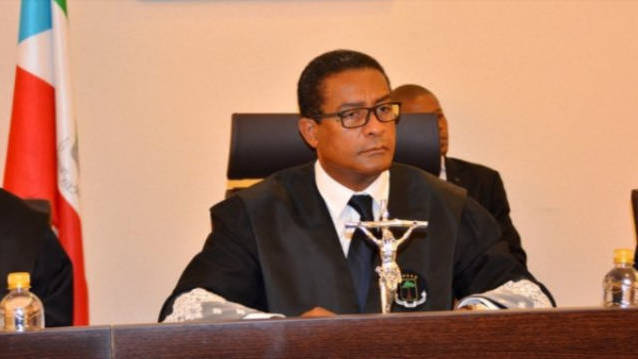
Juan Carlos Angue Ondo, pictured below, is the latest individual to reveal details of the grand corruption that plagues Equatorial Guinea.  In recent interviews (here in English and here in Spanish), he describes how the country’s rulers use the judicial system to perpetrate corrupt schemes and maintain their grip on power. The revelations confirm what human rights (here and here) and anticorruption groups (here and here) have said for years: that ideas of judicial independence, due process, and the rule of law are strangers to Equatorial Guinea. 

Angue’s whistleblowing comes at particularly fraught time – both for the nation and for the International Monetary Fund. As blog readers know (here and here), last December the government secured an IMF loan to rescue the economy from recession.  In return, it pledged to take concrete, measurable steps to strengthen the rule of law and combat corruption.  An obvious first step would be to take what Angue claims seriously.  To investigate the allegations, and where warranted prosecute wrongdoers and make needed reforms to laws and judicial institutions. But will Equatorial Guinea’s government do so?

And what will the IMF do if it does not? Halt loan disbursements?  Or sweep the matter under the rug?

The allegations cannot be lightly dismissed. Angue likely knows more about judicial corruption, the absence of the rule of law, and the lack of judicial independence than anyone in Equatorial Guinea. Continue reading