Large-Scale Land Acquisitions: Opportunities for Corruption

Recent years have seen a significant rise in large-scale land acquisitions by foreign investors, generally for agricultural or extractive purposes. Many of these land deals, termed “land grabs,” have had injurious effects on local populations who are often pushed off of their land without their informed consent. (For a description of contemporary land grabs and a land grab bibliography, see here.) Foreign companies and governments secure the majority of these land deals in poorer countries, where large tracts of land can be purchased cheaply, and where many of the local inhabitants do not have the means to contest the deals through the legal system. The land is frequently used for agriculture or production of “flex crops” (such as soy or palm oil), which are then sold abroad, rather than to the host country. Therefore, land grabs can result in not only the displacement of local communities, but also the reallocation of these vital resources to external actors, rather than to the inhabitants of the host country.

Large-scale land deals are often facilitated by corrupt practices perpetrated by the foreign purchaser and/or the host government, through the transactions themselves or through weak institutions. Last November, the International Corporate Accountability Roundtable (ICAR) and Global Witness released a report that details the opportunities for corruption at each stage of large-scale land acquisitions, as well as the current legal frameworks for addressing this corruption. As noted in the report, corruption can occur in each of the six phases of a land deal: Continue reading

Asking Too Much: Why Regional Human Rights Courts Cannot Tackle Corruption

Should regional human rights courts, such as the Inter-American Court of Human Rights (IACHR) and the European Court of Human Rights (ECHR), expand their mandates to explicitly address corruption? Commentators have explored the possibilities of incorporating corruption into the human rights framework (see here and here), and in a previous post, Kaitlin Beach specifically explored the benefits of utilizing regional human rights courts to address corruption (see here and here). Kaitlin emphasizes certain advantages that regional human rights courts have, mainly their flexibility in the types of reparations they can demand. This enables them to order structural anticorruption changes at the state level, as opposed to simply issuing individual indictments.

Despite these advantages, though, we should not get our hopes too high about the role these courts can play in the fight against corruption. Indeed, the IACHR – which Kaitlin points to as her lead example for the productive role that regional human rights bodies can play in combating corruption – is currently burdened by its lack of compliance mechanisms, inefficiency, and financial instability. These setbacks have caused the IACHR to have only limited success in combating human rights abuses. To expect an institution that is still struggling to fulfill its original mandate to also take on an additional mission is unrealistic, and adding this additional burden would further strain the limited resources that courts like the IACHR have available to remedy human rights abuses.

Consider the following limitations of the IACHR, which are characteristic of other regional human rights bodies as well, and which make it unlikely that these institutions will be able to do what some anticorruption advocates hope: Continue reading

Coming Along for the Ride: Regional Human Rights Courts Should Demand Government Measures to Affirmatively Address Corruption

In an earlier post, I discussed an order by the Inter-American Court of Human Rights demanding that Brazil investigate and report on prison guards’ corruption. Mandating that a country review its own corruption seems to be a new step for an international judicial body. The approach suggests a way to more closely integrate corruption-related concerns into international human rights work: including corruption-specific mandates within broader holdings. Other international adjudicative bodies, particularly regional human rights courts, should follow this model.

The idea of directly adjudicating corruption through an international court has been floated but also strongly opposed. Some corruption commentators advocate making grand corruption a crime against humanity that could be prosecuted by the International Criminal Court (ICC). As discussed on this blog, Judge Mark Wolf has proposed an independent international anticorruption court, an idea that met with some tempered support and a good deal of opposition (see here, here, and Matthew’s concerns here). I agree that grand corruption does not belong in the ICC or an independent court. To reject grand corruption as a stand-alone offense to be prosecuted in international criminal tribunals is not, however, to reject that corruption should be addressed by international criminal tribunals where it is relevant. Existing bodies like regional human rights courts—the European Court of Human Rights (ECtHR), the Inter-American Court of Human Rights (IACtHR), and the much newer African Court on Human and Peoples’ Rights, as well as other, even younger human rights bodies in Southeast Asia and the Middle East—should explicitly address corruption-related issues within the context of the large volume of human rights adjudication already taking place. As other commentators have already discussed, these regional human rights courts can fold corruption into their respective mandates and generate meaningful corruption-related law (see here, here, and here). Indeed, regional human rights bodies are already well-placed to highlight corruption where it emerges and to respond appropriately to both the existing situation and future concerns:

Continue reading

TNI’s Gold Mine: Corruption and Military-Owned Businesses in Indonesia

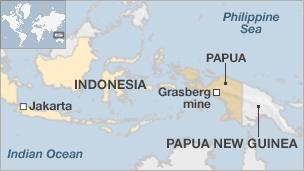
The Grasberg Mine, located close to the highest mountain in West Papua, Indonesia, is the world’s largest gold mine and third-largest copper mine. The mine, owned by the corporation Freeport-McMoRan Copper & Gold, has been the site of strings of grave human rights abuses, linked to Indonesia’s own National Armed Forces (Tentara National Indonesia/TNI). TNI’s presence in the territory is ostensibly to protect the mine, and Freeport’s Indonesian subsidiary acknowledges having made payments of as much as US$4.7 million in 2001 and US$5.6 million in 2002 for such government-provided security. A report by Global Witness, however, revealed numerous other payments ranging from US$200 to US$60,000 that Freeport Indonesia allegedly made to individual military officers.

The TNI’s sale of security services to companies like Freeport is only one of the many business ventures conducted by the TNI and its officers. As Human Rights Watch has reported, the Indonesian military has been supplementing its income through both its formally established companies, and through informal and often illicit businesses such as black market dealing. Moreover, the military’s business activities (both lawful and unlawful) are largely shielded from public scrutiny: budgeting for military purposes is generally kept secret, and TNI members generally refuse to answer questions about institutional spending.

Military-owned business in Indonesia are problematic, not only because this private-sector activity impedes military professionalism and distorts the function of the military, but also because it also contributes to crime, human rights abuses, and especially corruption. This problem is greatly compounded by the fact that TNI officers generally enjoy immunity from corruption charges brought by civilian institutions. In fact, the Transparency International’s Defense and Security Program has deemed Indonesia one of the countries most prone to corruption in its defense and security institutions. It is therefore appalling that this issue has not been addressed more seriously by the Indonesian government. Although a 2004 law mandated the transfer of control over TNI businesses to the civilian government within five years, the law did not clearly specify which types of business activities were covered, and this legal loophole enabled the TNI to preserve many of its moneymaking ventures, including TNI’s infamous security services—to say nothing of already-illegal criminal enterprises and illicit corporations. Moreover, despite the five-year timetable in the law, the government has been notably reluctant to enforce the transfer of ownership, making repeated excuses alluding vaguely to the need for the TNI to compensate for the lack of budgeting for security purposes. As a result, despite some efforts to reform the way the TNI is allowed to handle its businesses, military-owned businesses in Indonesia continues to flourish, with the Indonesian people of Indonesia having to pay the price.

The government’s weak response towards the military’s non-compliance with the 2004 law is merely one of the many indicators of how impervious the TNI’s power and seeming impunity. There are factors that contribute to this impunity, along with the corresponding corruption and abuse of power in the operations of military-owned businesses: Continue reading

Mandatory Prison Corruption Report Looks for a Cure in Brazil

In a recent provisional measure (currently only in Spanish), the Inter-American Court of Human Rights ordered the Brazilian government to take a variety of steps to address human rights violations at the notorious Curado prison complex. Such violations are pervasive: Shockingly, the Curado guards, in exchange for kickbacks or other illicit benefits, essentially handed over control of the prison (and other prisoners) to certain inmates (often the most violent or feared), turned a blind eye to or participated in the complex’s massive drugs and weapons trade, and repeatedly failed to stop prison breaks and riots.

Notably, among the steps in the Court’s order is a demand that the government investigate and report back to the Court on corruption, particularly on weapons and drugs trafficking, among officials at the prison. The Court—like its companion institution, the Inter-American Commission on Human Rights (IACHR), which investigates and reports to the Court—is not directly tasked with addressing corruption. However, its mandate includes protecting the right to humane treatment. At Curado, the prison guards, as agents of Brazil, affirmatively jeopardized the safety of prisoners with their corruption, and the Brazilian government failed to protect prisoners from abuses stemming from those actions. The Court’s measure, drawing from the Commission’s recommendations, emphasizes that the widespread corruption of the guards and other prison officials was one of the factors that allowed the inhumane conditions in the prison to continue.

The Court’s ruling seems to be one of the first times an international judicial body has ordered a country to undertake a review of corruption within its borders and then be held directly accountable to that international body. Thus, beyond its immediate significance to the Curado situation, the Court’s decision is a milestone in more directly recognizing and addressing corruption as a proximate cause of human rights violations. While this recognition will not by itself resolve the dire situation at Curado, it is an important step forward, and is notable for several reasons:

Continue reading

Violence Is Not the Answer: The Case Against Rodrigo Duterte

The life of Rodrigo Duterte, mayor of Davao City in the southern Philippines, reads more like that of a mob boss than a mayor. The National Bureau of Investigation (NBI) has investigated Duterte for his alleged links to a vigilante group called the Davao Death Squad (ties he later admitted), as well as threats made to kill village chiefs who did not support his government programs. He has expressed his support for extrajudicial killings as a means to fight corruption and crime. And in case you don’t think he’s serious, suspects have turned up dead after Duterte issued an ultimatum to all drug dealers to either leave his city within 48 hours or be killed. The man is rumored to have pushed a drug dealer out of a moving helicopter, and has openly stated that he would like to kill all criminals himself and throw them into Manila Bay. The most terrifying thing about him? He’s running for President, and he’s winning.

Duterte’s success can be explained by a number of factors, but one of the most troubling reasons for his popularity is that Filipinos have become so disillusioned by corruption in politics that they’ve become attracted to dangerous, zero tolerance policies. Duterte has stated that he would like to bring back the death penalty for the crime of plunder, and while he back-pedaled on his support for extrajudicial killings in the last presidential debate, Duterte still admits to having killed in the past, with a new ominous and unclear caveat: “It’s always bloody, but I never said extrajudicial.”

The popularity of these extreme policies reflects how frustrated citizens are with corruption in the Philippines. Corruption is incredibly widespread, and plagues the country’s politics, courts, and police forces at the local and national levels. Many voters view Duterte’s approach as necessary to combat this immense problem, which persists despite years of promises from many so-called anticorruption candidates.

While I understand this frustration with Philippine corruption, Duterte’s zero-tolerance approach is short-sighted, misguided, and incredibly dangerous. As voters prepare for the election next month, they should consider the troubling implications of Duterte’s violent approach to the fight against corruption.

Continue reading

Guest Post: Brazil Must Fight Corruption, But Preserve the Rule of Law

GAB is delighted to welcome back Mat Tromme, Project Lead & Senior Research Fellow at the Bingham Centre for the Rule of Law, who (along with research assistant Domenico Vallario) contributes the following guest post:

Across Latin America, the past year has provided reasons for hope that the struggle against grand corruption and impunity is finally making progress. Prosecutors have gone after corrupt elites in Guatemala and Honduras, while political leaders in Mexico and Chile have also been under pressure for their links to corruption scandals. And in Brazil, the investigations into the corruption scandal at the state-owned oil giant Petrobras have led to charges against around 80 people, including high-ranking political figures like the speaker of the Lower Chamber and former President Collor de Mello, and a former treasurer of the ruling Worker’s Party.

The investigation into the Petrobras scandal is being led by Brazil’s Federal Police and by Public Ministry Prosecutor Deltan Dallagnol, under the watchful eye of Judge Sergio Moro. And Judge Moro’s tenacious attitude to pursuing graft stands in sharp contrast to a judicial system that has traditionally been slow and ineffective, especially in corruption cases: out of ten salient scandals between 1990 and 2010, 841 people were implicated, but only 55 were convicted. Yet Judge Moro’s approach may actually be emblematic of a broader shift in the Brazilian judiciary, as corruption cases that are tried in courts have been on the increase over the past few years.

On the face of it, these convictions should be welcomed as a sign that justice is meted out against the corrupt and that the judiciary is playing its part in tackling grand corruption. Yet some critics have raised legitimate concerns about the arguably overzealous approach the authorities (not only the legislature and the executive, but also the judiciary) have taken in tackling corruption, in light of rule of law and human rights commitments. Continue reading

Guest Post: A “Right to Truth” in Grand Corruption Cases?

Lucas E. Gómez and Ignacio A. Boulin Victoria of the Latin American Center for Human Rights (Centro Latinoamericano de Derechos Humanos, CLADH) in Argentina contribute the following guest post:

Argentina, 1978. In the midst of terror, a group of parents searching for their children finds no answer in domestic justice. Thousands of habeas corpus petitions are rejected by judges. The military dictatorship denies having any clue about them: Videla, the leader of the government, declares: “they are neither dead, nor alive; they are disappeared.” These parents respond with innovative strategies (maybe without being aware of the innovation): They start sending letters of complaint (over a thousand) to the Inter-American Commission on Human Rights (IAHCR). The result: the IACHR visits Argentina and issues a 1980 report recognizing widespread human rights violations; the report has an enormous impact both inside and outside of Argentina. Yet by 1990, these parents still don’t know what happened to their children. Despite the return to democracy in 1983, and some trials of military officers and terrorists shortly thereafter, in 1986 and 1987 Congress passes two acts restricting the criminal prosecution of military officers, and a few years later, President Menem pardons both military hierarchies and terrorists, releasing them from jail.

Argentina, 1995. Some of these parents devise a new strategy: Even if criminal prosecution is forbidden, they assert that there is still a “right to the truth”—a right to know what happened to the disappeared. Though Argentina’s Supreme Court rejects the claim, the parents again take the case to the IACHR. Finally, in 1999, Argentina settles the IACHR case, recognizing the existence of the right to truth. This development ultimately led to the re-opening of the criminal prosecutions against military officers: Once information about the atrocities came out, society started mobilizing for justice. The right to truth put in front of people’s eyes the extent and gravity of the crimes, and the identities of both the victims and the perpetrators. Continue reading

Anticorruption Truth Commissions? Lessons to be Learned from Human Rights and Transitional Justice

A few months back, Anusha made the case for why “freedom from corruption” should not be regarded as a human right. She pointed out a number of legitimate distinctions between corruption and other human rights violations, as well as practical problems with framing corruption in this way. But there are other ways in which corruption does resemble a human rights violation: namely, in the harm it causes. Like widespread human rights abuses, the harm stemming from corruption is often diffuse and difficult to quantify, often with many victims (not always identifiable) and numerous perpetrators. For practical and functional purposes, in the case of systemic corruption–as in the case of regimes with pervasive human rights abuses–it may not be possible to make reparations to all of the victims or to hold all of the offenders to account.

Thus, even if it is impossible – or undesirable – to fully integrate the anticorruption and human rights agendas, it is still worth considering what lessons we can draw from the human rights regime and incorporate into the anticorruption field. Consider, in particular, one mechanism designed to deal with instances of mass atrocities and systematic human rights violations: the truth commission. In the human rights and transitional justice context, truth commissions are temporary bodies responsible for investigating and publicizing past rights abuses committed by public and private actors. As a general matter, truth commissions prioritize gathering information and establishing an accurate record over punitive sanctions. Truth commissions also often involve a quasi-judicial element – which frequently entails granting amnesty to certain actors or referring cases to prosecutorial entities – and emphasize “bottom-up” victim participation. Certain elements of the truth commission model may be instructive in designing justice measures for corruption crimes.

Continue reading

Can the United State Avoid a Hypocritical Anticorruption Policy?

Last week Matthew wrote how hypocritical Britain appeared when at virtually the same time Prime Minister David Cameron was telling leaders in Southeast Asia to take more vigorous action against corruption, his government was asking U.K. companies if Britain’s anti-bribery law was too harsh.  As Matthew explained, the contradiction was likely more apparent than real, probably the result of poor timing rather than any real difference between the government’s policy towards bribery by British and non-British firms.  Nonetheless, even the possibility of differing standards offered much ammunition to critics of the Cameron government’s aggressive international anticorruption campaign.

Like Prime Minister Cameron, U.S. President Barack Obama has been vocal in urging other governments to tackle corruption, lecturing the African Union during his recent visit on the evils of rampant bribery and telling its members to emulate the American example with its “strong laws” against bribery that “we actually enforce.” And like Britain, sooner or later the United States will face the charge that its international anticorruption rhetoric is hypocritical.  The difference will be that whereas the charges laid against the British government arose from a public relations faux pas, in the American case the charges will stem from a genuine contradiction, that between its human rights policy and its commitment to the U.N. Convention Against Corruption.

How will it happen? Continue reading