Zelensky’s Legislation Does Not Undo the Damage Parliament Did to Ukraine’s Anticorruption Regime

President Zelensky is proposing legislation that supporters say remedies the problem Parliament created Tuesday by enacting Law No. 4555-IX (English translation). 

As yesterday’s post explained, that law gives the Prosecutor General unchecked power to

  • order both the anticorruption agency (NABU) and the special corruption prosecutor (SAP) follow his directions,
  • review pretrial investigations,
  • reassign NABU-led cases to other law enforcement bodies,
  • close cases at the request of the defense, and
  • appoint staff to prosecution teams.

The simple way to undo the damage this law has created is to repeal it, and indeed some reports say that is precisely what Zelensky’s proposed legislation does. But an analysis by Ukraine’s Laboratory of Legislative Initiatives makes clear that that is not the case.

Rather, the analysis shows that in several ways Zelensky’s bill exacerbates the damage 4555-IX did to the two agencies. Most damaging is it perpetuates the myth that the two have been infiltrated by Russian spies. As the Laboratory’s analysis explains:

Continue reading
Ukrainian Anticorruption Agencies Under Attack

Ukraine’s National Anticorruption Bureau (NABU), the independent agency responsible for investigating corruption, was searched July 21 by agents of the State Security Office and the Prosecutor General’s Office. In a post on X, NABU says no warrant or other legal authorization was presented to justify the search (here).

On Tuesday, the day after the search, Parliament approved legislation putting both NABU and the Special Anti-Corruption Prosecutor’s Office (SAP), which is responsible for prosecuting NABU cases, under the control of the Prosecutor General of Ukraine, an appointee of the Ukrainian President (here).

Both actions come a little more than a week after security service personnel searched the home and office of Vitaly Shabunin, a leading anticorruption activist.

The searches and the legislation were justified on two grounds. First, NABU and SAP have abused their powers. Second, and more significantly and darkly, the two are alleged to have ties to Russia and are furthering its interests.

The grounds for these actions seem shaky to say the least. A July 16 letter (original here; translation here) by Ukrainian civil society organizations shows the allegations levelled at Shabunin are without foundation. It also observes that all first appeared on anonymous Telegram channels.

Close observers say there may be cases where NABU or SAP or both were overly aggressive, but that is a far cry from doing Russia’s bidding. And indeed the real fear is that it is the critics of a vigorous anticorruption campaign who are doing the aggressor’s bidding.

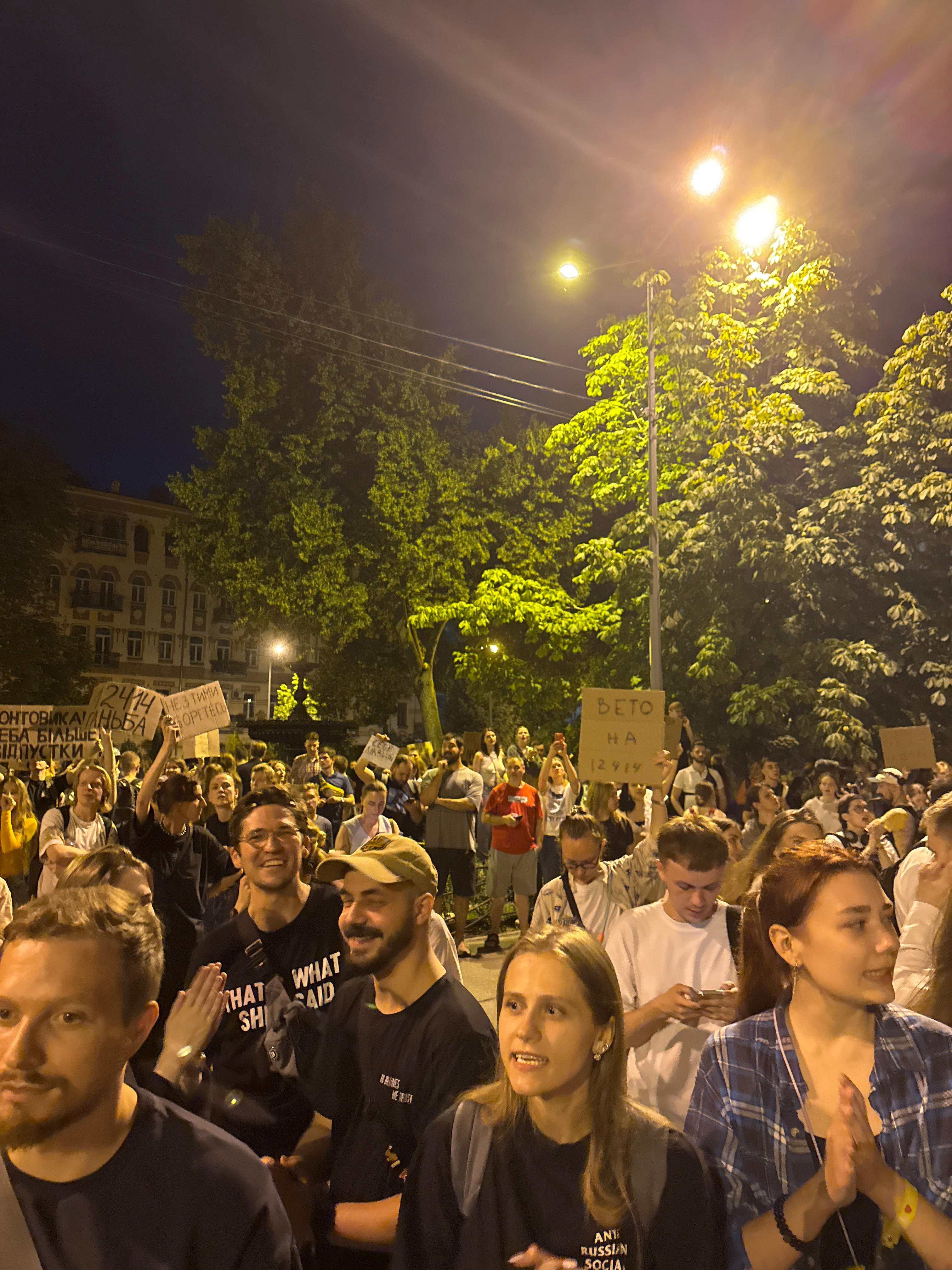
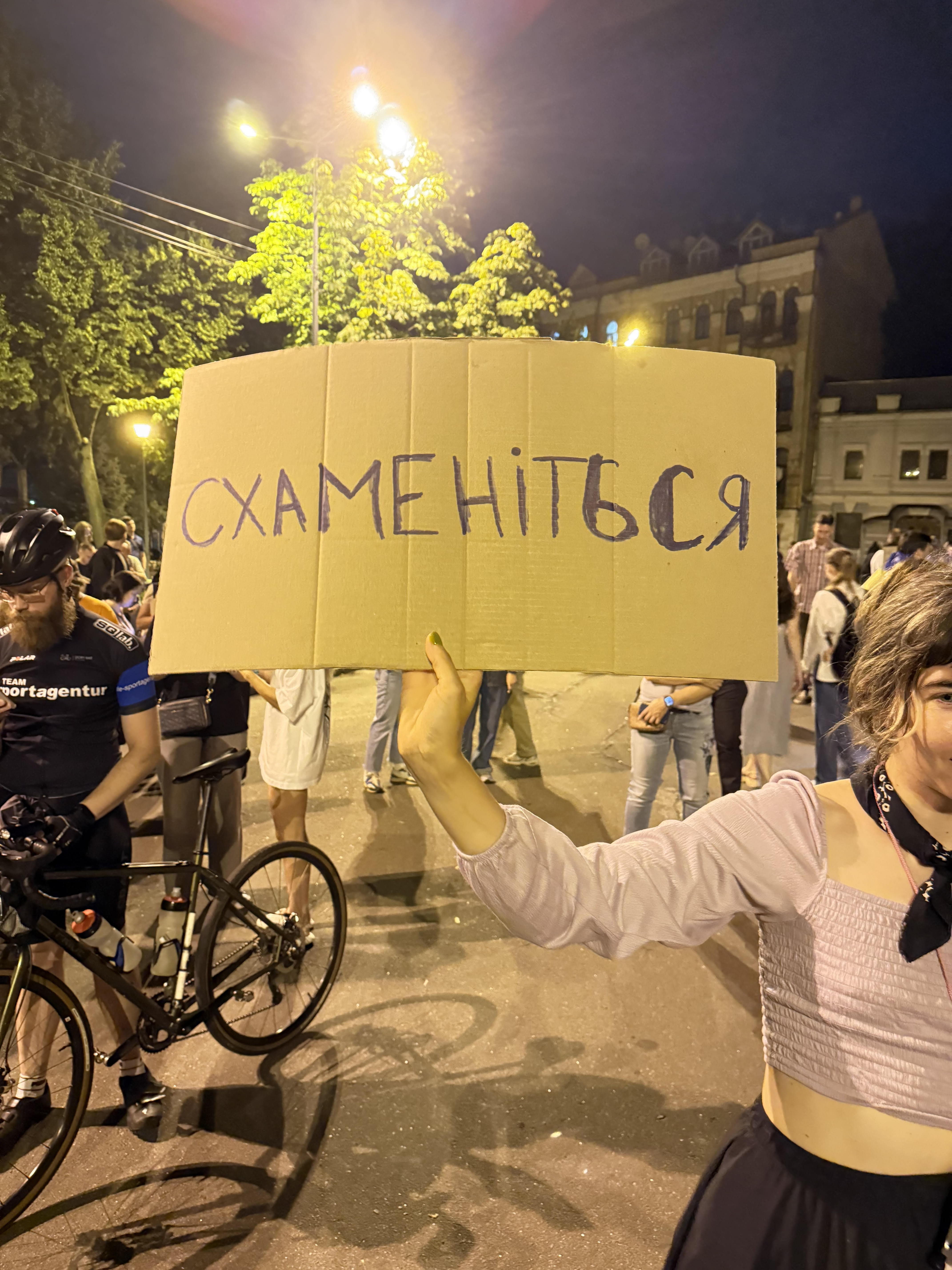
The bill curbing NABU and SAP’s independence is now before President Zelensky for signature or veto. The European Union, which made the independence of NABU and SAP a condition for continued support, have weighed in with Zelensky. Pictures from demonstrations in Kyiv urging a veto (by GAB special correspondent) are below. More demonstrations planned for Wednesday.

Guest Post: The Ukrainian Constitutional Court’s Invalidation of Anticorruption Laws Has Plunged the Country into a Double Crisis

Today’s guest post is from Kyrylo Korol, a judicial clerk at the High Anti-Corruption Court of Ukraine.

This past fall, between August and October, the Constitutional Court of Ukraine (CCU) ruled that several of Ukraine’s most important anticorruption laws and institutions are unconstitutional.

  • The CCU first ruled unconstitutional the Decree of the President of Ukraine on the appointment of the director of the National Anti-Corruption Bureau of Ukraine (NABU), which is responsible for anticorruption investigations; the Court also invalidated the President’s powers to appoint NABU’s head, a decision that created uncertainty regarding the legitimacy of the current director of NABU. The Court reasoned that the because the power to appoint the NABU director was not included in the list of presidential powers specified in the Constitution, the President could not exercise this power. The CCU also ruled unconstitutional the external commission that evaluates NABU’s performance.
  • In a subsequent case, the CCU declared unconstitutional the powers of the National Agency on Corruption Prevention (NACP) to check the public official’s declarations of assets. The Court reasoned that the NACP’s powers to review asset declarations extended to asset declarations submitted by judges, and that this arrangement would give an executive body impermissible control over the judiciary. The CCU further ruled that the law that imposes criminal liability for knowingly submitting a false asset declarations was unconstitutional, on the grounds that the penalties (which can include fines of up to $1,700, community service, or, imprisonment and disqualification from certain offices) was unconstitutionally disproportionate to the damage caused by the crime. These decisions led to the closure of hundreds of criminal cases for false declaration and the acquittals of public officials who had been found guilty of this crime. Going forward, the elimination of penalties for public officials who fail to file asset declarations, or who file false declarations, essentially nullifies the financial declaration system.

Continue reading