Peruvian President Dina Boluarte is the latest government leader to be ensnarled in a corruption flap thanks to a penchant for high-end time pieces. Before her it was the then-Prime Minister of Croatia Ivo Sanader (here) and after him the then-Thai Deputy Prime Minister Prawit Wongsuwan (here).
Like them, she apparently believed wearing a different expensive watch on different occasions was part of the job of running a country. And like them, her luxurious taste was caught on camera. Photographs show her at one or another function modeling watches that in toto cost more than $500,000.
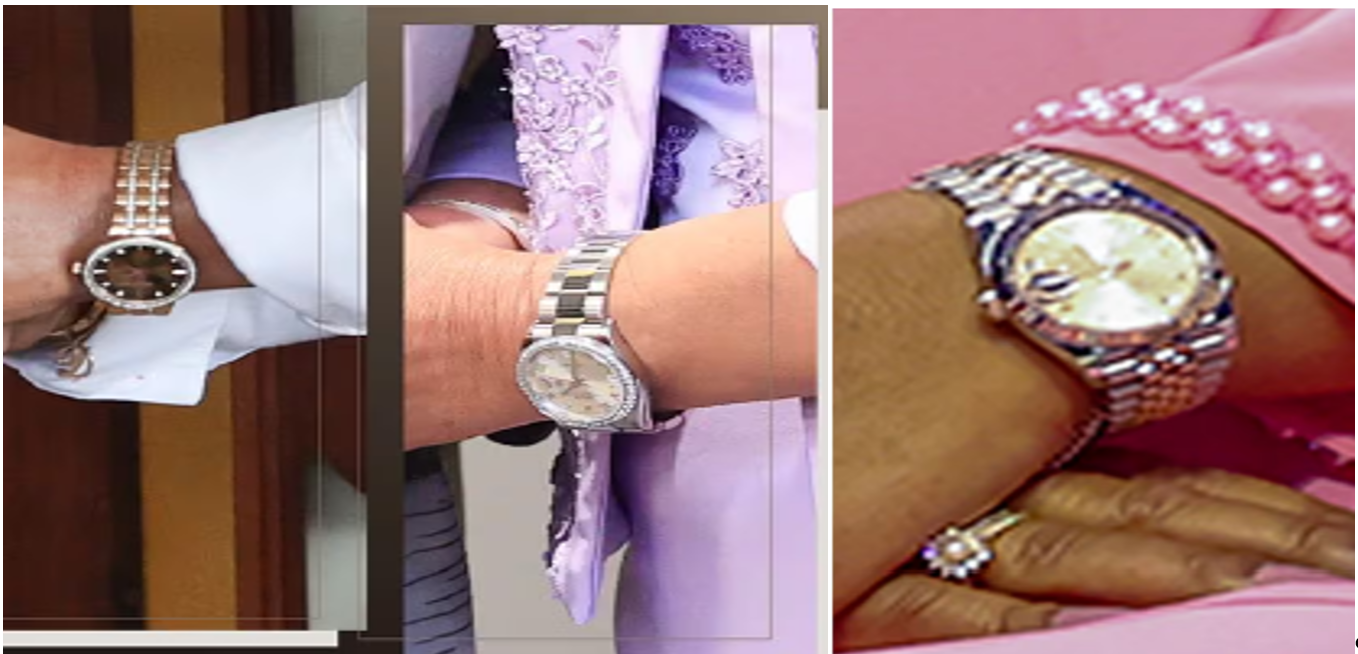
From the collection of Peruvian President Dina Boluarte. Source: Presidential Flickr account
Just as with the Sanader and Wongsuwan flaps, photos of Boluarte’s watch collection prompted uncomfortable questions: Why didn’t she report the collection on her income and asset declaration form as required by law? And how could she, like them a longtime government employee, afford such a pricey collection?
Despite Sanader and Wongsuwan’s lame explanations –“I didn’t know I had to report them.” “Oh wait, they aren’t mine, I just borrowed them.” – the exposure of their unexplainable wealth cost them nothing more than civil society reproaches. Whether Peruvian authorities will accept Boluarte’s similarly flimsy explanations remains at this writing to be seen.
Beyond the reminder that some government leaders are incurably venal, these serial watchgates offer lessons. For leaders enamored of fancy timepieces, report them on your income and asset disclosure form or keep them up your sleeve when a photographer is nearby. For anticorruption agencies, there is a less flippant, more important lesson.
Continue reading GAB | The Global Anticorruption Blog