Three Valuable Additions to the Anticorruption Literature

March was a great month for the anticorruption community: two books and one report appeared that, in contrast to much that is published on corruption and related topics, are useful, insightful, and worthy of a careful read.

1) There is now no better introduction to the field of corruption studies than Ray Fisman and Miriam Golden’s Corruption: What Everyone Needs to Know, published in late March by Oxford University Press in an affordable paperback edition.  In nine readable chapters the authors summarize the main issues – what corruption is, why it is so harmful, the challenge of measurement, the forces behind it, and most importantly what can be done to reduce it.  The only group of readers that the book will disappoint is opportunistic politicians looking for quick and easy fixes.  There are, the authors remind readers at several points, “no easy fixes for a problem that been around for millennia.”

Theirs is not a counsel of despair, however.  Policy reforms can make a difference: higher salaries for public servants, the creation of an independent anticorruption agency, a “big bang” approach like Georgia’s wholesale dismissal of traffic police are three that are featured.  But such reforms can backfire, they warn, without complementary changes in the larger environment.  Wage hikes must be accompanied by more stringent enforcement of antibribery laws else the result may simply be to raise the bribe price. Quoting Gabe Kuris’ ISS study, they caution that anticorruption agencies will succeed only if they have built “alliances with citizens, state institutions, media, civil society, and international actors.”  With perhaps the disastrous results from disbanding the Iraqi army in mind, they discuss what could have befallen Georgia had its traffic police been let go under different circumstances.

Specialists will find nits to pick.  John Githongo never chaired the Kenyan anticorruption agency (he ran a unit in the President’s office); corporate interests are not the only ones that capture government agencies (labor and environmental interests can exercise undue influence over policy too); Switzerland long ago scrapped anonymous, numbered accounts.  But these are quibbles in what otherwise has to rank as the best one volume introduction to corruption and what can be done to fight it.

2) In the decade plus since my former World Bank colleagues Joel Hellman, Geraint Jones, and Daniel Kaufmann first advanced the idea that in some countries the forces of corruption are so powerful that they can be said to have “captured” the state’s policymaking machinery, the notion of “state capture” has been booted around academic and policymaking circles. Unfortunately not always with the greatest definitional or analytical clarity with the result that there is now a confusing mass of writing on what it means for a state to be captured and how it can be freed.  Thanks to the OECD, those looking for a source that makes sense of the welter of material on state capture now have a single volume to consult.  Preventing Policy Capture: Integrity in Public Decision Making, available here (free to read online, $20 to download) continues the high standards one has come to expect from OECD publications on governance, nicely synthesizing the massive literature Hellman and colleagues have inspired.

Just as Fisman and Golden warn that isolated interventions will not reduce corruption, the OECD authors stress that freeing a state from the bonds of corrupt interests requires a set of “actions that complement and reinforce each other.”  If anything, anti-capture policies are even trickier to implement than anticorruption policies, for, as the OECD warns, if not carefully constructed they can compromise fundamental democratic values of free expression and the right to petition government.  One of the volumes many strengths is that it never loses sight of these risks.

3) Perhaps the most salutary result of the international anticorruption movement is the spotlight it has cast on the massive theft of resources from poor countries by corrupt leaders.  There is no better guide to what has been dubbed “kleptocracy” than Cambridge Professor J.C. Sharman’s The Despots Guide to Wealth Management, just out in an inexpensive paperback edition from Cornell University Press.  The author of the leading text why tiny offshore jurisdictions were for so long able to help tax evaders and drug lords hide their money, Professor Sharman explains why kleptocracy — a practice wealthy nations once tolerated and one still facilitated by their banks, lawyers, and accountants — is now widely condemned.

Despite the sea change in attitudes, and accompanying changes in domestic and international law, however, corrupt money still gushes out of developing countries. Wealth Management is laden with pithy summaries explaining why efforts to halt the flow have failed. (Sanctioning international banks in the hopes concerns about a loss of reputation will deter them doesn’t work since “they appear to have little reputation left to lose.”)  Most importantly, Professor Sharman offers realistic recommendations for ending what has now become the most visible, and detestable, consequence of grand corruption.


Good News in the Anticorruption War

I had planned to write a reply, and partial rebuttal, to last week’s posts by Matthew and Travis on ethics, corruption, and Donald Trump.  The more I tried to come up with something to say, however, the more depressed I grew.  Instead, as a tonic — for this writer and perhaps others born or living in Trumplandia — what follows is instead good news on the global anticorruption front –

Laos: Shedding Fancy Government Vehicles that Smack of Corruption.  A December decree orders all government officials to trade their government-bought Mercedes, BMWs, Lexus, and other high-end vehicles for more modest means of transport.  Prime Minister Thongloun Sisoulith and President Bounnhang Vorachit have both returned their BMW 7 Series and now drive Toyota Camry 2.5 cars instead. Other ministry and party officials must follow suit. (Details here.)

The Netherlands: Civil Society Attacks Money Launderers.  SMX Collective, a grassroots organization of Dutch and Mexican activists, academics, artists, journalists, curators and researchers concerned about the extreme impunity and violence suffered by Mexican people, has filed a complaint with the Dutch Public Prosecutor demanding the Dutch Bank Rabobank be charged with money laundering for its role in aiding Mexican drug cartels.  Vigorous pursuit of banks and other intermediaries for facilitating corrupt activities is urgently required, and Dutch civil society’s complaint is a welcome sign and an example others should copy.  For an English language summary of the complaint, click on “Continue Reading” at the bottom of the page.

France & Peru: Former Heads of State in Anticorruption Dock.  Prosecutors are pursuing charges against former French President Nicolas Sarkozy for campaign finance violations (NYT account here; Le Monde here) and former Peruvian President Alejandro Toledo for accepting a bribe (AP/NYT here; El Comercio here).  Neither case seems political.  Both have been brought by career law enforcement authorities who have no apparent ax, political or otherwise to grind.  The two may ultimately be found innocent by their nations’ courts, but the fact that high office in the two countries does not automatically carry with it immunity from prosecution for corruption crimes has to be considered very good news.

All three stories lifted my spirits.  I trust it will help other readers recognize that despite the fact President Trump is unlikely to fall over corruption claims (nicely explained by New Yorker writer James Surowieki here), the war against corruption is proceeding apace.

Summary in English of SMX complaint:  Continue reading

The Role of Corruption in the Syrian Civil War

Many forces spurred on the development of the Syrian Civil War, a conflict that has likely led to the deaths of over half a million people, as well as the displacement of ten million more. While fighting was sparked by protests within Syria, a reflection of the larger wave of discontent in the Middle East and North Africa that spurred the so-called Arab Spring, the uniquely destructive path of Syria’s internal instability is tied to more specifically Syrian problems, including rule by a minority religious group – the Alawites – over a mostly Sunni country, early and continued support by Russia to maintain the Assad regime, a partially autonomous Kurdish minority in the north, and the rise of Sunni rebel groups including ISIS. While these larger points are important, another, more mundane factor is often overlooked: the pervasive corruption of the Assad regime, which contributed to the outbreak of the civil war in at least three ways:

Continue reading

Large-Scale Land Acquisitions: Opportunities for Corruption

Recent years have seen a significant rise in large-scale land acquisitions by foreign investors, generally for agricultural or extractive purposes. Many of these land deals, termed “land grabs,” have had injurious effects on local populations who are often pushed off of their land without their informed consent. (For a description of contemporary land grabs and a land grab bibliography, see here.) Foreign companies and governments secure the majority of these land deals in poorer countries, where large tracts of land can be purchased cheaply, and where many of the local inhabitants do not have the means to contest the deals through the legal system. The land is frequently used for agriculture or production of “flex crops” (such as soy or palm oil), which are then sold abroad, rather than to the host country. Therefore, land grabs can result in not only the displacement of local communities, but also the reallocation of these vital resources to external actors, rather than to the inhabitants of the host country.

Large-scale land deals are often facilitated by corrupt practices perpetrated by the foreign purchaser and/or the host government, through the transactions themselves or through weak institutions. Last November, the International Corporate Accountability Roundtable (ICAR) and Global Witness released a report that details the opportunities for corruption at each stage of large-scale land acquisitions, as well as the current legal frameworks for addressing this corruption. As noted in the report, corruption can occur in each of the six phases of a land deal: Continue reading

The Crucial Role of Corporate Boards in Ensuring Corporate Integrity

Volkswagen’s diesel emissions cheat has cost the company dearly. Last October, Volkswagen reached a US$16.5 billion dollar settlement with the US government, and the value of Volkswagen’s stock today is worth about 50% of what it was before the scandal – a US$60 billion drop in the company’s valuation. Criminal charges against several senior managers, including chairman Hans Dieter Poetsch, are still pending. Countless customers are furious, while many employees fear for their jobs as Volkswagen scrambles to cut its costs. (Some background on the scandal, as well as a regularly updated timeline, can be found here.)

What started as a “simple cheat” became a slippery slope for the whole company. Volkswagen failed to create a culture of corporate integrity; the institutional checks and balances that are supposed to prevent something like this from happening were purposefully or ignorantly subverted, and the company created all the wrong incentives. As Alison Taylor has argued on this blog, these are the perfect ingredients for a corrupt corporate culture.

Who to blame for this mess (and, similarly, many other corporate messes)? Just as “a fish rots from the head down,” a company’s board of directors must take responsibility for creating or allowing a toxic corporate culture that permits cheating and other unethical and illegal behavior. Continue reading

The Right Amount of Legislative Immunity

It many ways, legislative or parliamentary immunity seems an anathema to the fight against public corruption. Legislative immunity shields legislators from prosecution for acts taken within their legislative ambit, sometimes even shielding them when those actions are corrupt. As my earlier post on Senator Menendez hints, even when it seems clear that legislators’ actions are not protected, the very existence of legislative immunity gives legislators room to argue and prolong their court cases – all the while continuing to serve in the legislature. Legislative immunity can undermine public confidence in lawmaking and perpetuate a sense of impunity in public officials.

That said, there is a reason most democracies have some form of legislative immunity: not because individual legislators should be shielded from prosecution, but because the legislature as an institution should be protected from intrusion and second-guessing by prosecutors and the judiciary. Of particular concern are politically-motivated prosecutions brought by the government against legislators from opposing parties. Turkey provides a recent example. This past May, Turkey’s legislature voted to lift parliamentary immunity and pave the way for prosecution of pro-Kurdish legislators accused of supporting terror (see here). While concerns about terrorism are very real in Turkey, this move falls clearly within President Erdogan’s broader efforts to consolidate power and move away from democratic rule.

Ultimately, both concerns about impunity and legislative independence are valid. The question is how to strike the appropriate balance. Legislative immunity can take many forms, and there is likely no single “best” model. The most appropriate form of legislative immunity will likely depend instead on a range of contextual factors. Here I consider several critical ones:

Continue reading

TNI’s Gold Mine: Corruption and Military-Owned Businesses in Indonesia

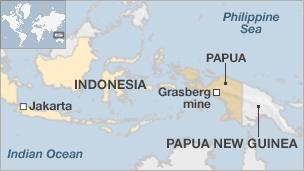
The Grasberg Mine, located close to the highest mountain in West Papua, Indonesia, is the world’s largest gold mine and third-largest copper mine. The mine, owned by the corporation Freeport-McMoRan Copper & Gold, has been the site of strings of grave human rights abuses, linked to Indonesia’s own National Armed Forces (Tentara National Indonesia/TNI). TNI’s presence in the territory is ostensibly to protect the mine, and Freeport’s Indonesian subsidiary acknowledges having made payments of as much as US$4.7 million in 2001 and US$5.6 million in 2002 for such government-provided security. A report by Global Witness, however, revealed numerous other payments ranging from US$200 to US$60,000 that Freeport Indonesia allegedly made to individual military officers.

The TNI’s sale of security services to companies like Freeport is only one of the many business ventures conducted by the TNI and its officers. As Human Rights Watch has reported, the Indonesian military has been supplementing its income through both its formally established companies, and through informal and often illicit businesses such as black market dealing. Moreover, the military’s business activities (both lawful and unlawful) are largely shielded from public scrutiny: budgeting for military purposes is generally kept secret, and TNI members generally refuse to answer questions about institutional spending.

Military-owned business in Indonesia are problematic, not only because this private-sector activity impedes military professionalism and distorts the function of the military, but also because it also contributes to crime, human rights abuses, and especially corruption. This problem is greatly compounded by the fact that TNI officers generally enjoy immunity from corruption charges brought by civilian institutions. In fact, the Transparency International’s Defense and Security Program has deemed Indonesia one of the countries most prone to corruption in its defense and security institutions. It is therefore appalling that this issue has not been addressed more seriously by the Indonesian government. Although a 2004 law mandated the transfer of control over TNI businesses to the civilian government within five years, the law did not clearly specify which types of business activities were covered, and this legal loophole enabled the TNI to preserve many of its moneymaking ventures, including TNI’s infamous security services—to say nothing of already-illegal criminal enterprises and illicit corporations. Moreover, despite the five-year timetable in the law, the government has been notably reluctant to enforce the transfer of ownership, making repeated excuses alluding vaguely to the need for the TNI to compensate for the lack of budgeting for security purposes. As a result, despite some efforts to reform the way the TNI is allowed to handle its businesses, military-owned businesses in Indonesia continues to flourish, with the Indonesian people of Indonesia having to pay the price.

The government’s weak response towards the military’s non-compliance with the 2004 law is merely one of the many indicators of how impervious the TNI’s power and seeming impunity. There are factors that contribute to this impunity, along with the corresponding corruption and abuse of power in the operations of military-owned businesses: Continue reading

Don’t Blunt the Spearhead: Why the Proposed Revision of Indonesia’s KPK Law is a Bad Idea

Indonesia’s Corruption Eradication Commission (Komisi Pemberantasan Korupsi, or “KPK”) was established in the hope that an independent anti-graft agency would effectively and fearlessly combat endemic corruption in Indonesia. True to its purposes, the KPK, in collaboration with other actors, has become one of Indonesia’s few anticorruption success stories. Since its establishment in 2003, the KPK has successfully charged 82 legislators in the parliament for corruption—a remarkable achievement in a country that has been known for the impunity of its political elite. After the appointment of its newest team of commissioners in 2015, the KPK has furthered its success in catching corrupt public officials, one of which was again a member of Indonesia’s House of Representatives (Dewan Perwakilan Rakyat, or “DPR”). It is safe to say that the KPK can indeed be deemed the “spearhead” of Indonesia’s corruption eradication efforts.

Yet, as an Indonesian proverb has it, “The taller the tree stands, the stronger the wind blows”: Attempts to weaken the KPK have grown in direct proportion to the agency’s success in bringing cases against powerful individuals and institutions. One example of this is the ongoing “Gecko v. Crocodile” struggle between the KPK (the small “gecko” with limited resources and young age) and the Indonesian National Police Force (the fierce “crocodile” with abundant power and resources), in which every time the KPK brings corruption charges against members of the Police Force, their members retaliate with criminal charges or harassment against members of the KPK. More recently, and more troublingly, members of the national parliament are now also trying to do what they can to undermine the KPK: Six out of the ten member parties in the DPR have proposed a revision of the current KPK Law–despite protests from the remaining political parties, NGOs, academics, and even the general public. Those opposed to this amendment argue (correctly) that there is no article in the revision that would increase the performance of the KPK, but instead all of the proposed revisions would undermine the KPK’s power and independence. Despite being packaged as a set of procedural improvements, the revision seeks to render KPK impotent – a strategy both subtler and likely more effective than the ham-handed tactics of the police in the “Gecko v. Crocodile” conflict.

The proposed law includes four main points of revision that proponents claim will improve the KPK’s performance. In fact, all four pose threats to the KPK’s independence and effectiveness:

Continue reading

Senator Menendez and the Great Speech or Debate Clause

The corruption allegations against Senator Robert Menendez (D-NJ) have the hallmarks of a classic Capitol Hill scandal. The Department of Justice’s Public Integrity Section indicted Senator Menendez last spring for allegedly using his official position to promote the business and personal interests of his friend and long-time donor Dr. Salomon Melgen, a Florida ophthalmologist. According to the allegations, Dr. Melgen provided Senator Menendez with lavish trips to Florida, Paris, and the Dominican Republic, as well as political contributions to allies. In exchange, Senator Menendez allegedly interceded with immigration authorities to help Dr. Melgen secure visas for his foreign girlfriends, sought to influence an administrative enforcement action against Dr. Melgen for $8.9 million in Medicare overbilling, and pressured the Executive Branch to intervene in Dr. Melgen’s contract dispute with the Dominican Republic.

Unsurprisingly, this legal fight has been ugly. Senator Menendez and his legal team have accused the prosecution of gross misconduct in the grand jury investigation, of “misapplying” and “making up from whole cloth” certain legal standards, and “disparaging defendants’ motives and defense counsel.” The prosecution, for its part, has accused the Senator’s camp of deploying “vituperation” instead of substance and of advancing “false factual premises and specious legal reasoning.”

The latest iteration of this saga is taking place at the appellate level, where the Third Circuit recently heard oral arguments on Senator Menendez’s assertion that his actions on behalf of Dr. Melgen are entitled to immunity under the U.S. Constitution’s “Speech or Debate” Clause (an argument the trial court rejected). The Speech or Debate Clause provides that “for any Speech or Debate in either House, [Members of Congress] shall not be questioned in any other Place.” Like many legislative immunity clauses in other countries, the Speech or Debate Clause was born in part out of a desire to protect legislators from political prosecution for the views they express when legislating, and to encourage free and informed debate.

U.S. courts have interpreted the Clause quite generously over the years, reading it to cover not only actual speeches and debates, but also other “legislative acts” (such as voting on legislation, authorizing an investigation by a Congressional Committee, preparing reports, and holding hearings). Senator Menendez, however, argues for an even broader understanding of the conduct that qualifies as “legislative acts” shielded by the Clause. These arguments should be rejected. Not only are Senator Menendez’s claims legally dubious under existing precedents, but, if accepted, they would also hamstring the prosecution of classic quid pro quo corruption.

Continue reading

Friends with Benefits: India’s Crony Capitalism and Conflict of Interest Regulations

In May 2014, when Narendra Modi’s National Democratic Alliance (NDA) ran and won against the incumbent United Progressive Alliance (UPA) Government on a platform of anticorruption and growth, very few were surprised. UPA’s second term was paralyzed by a string of mega-corruption scandals, including the 2G scam and Coal–Gate, pointing to entrenched crony capitalism and raising public fury. A country that had had enough with lackluster economic performance and widespread corruption kicked into survival mode and set aside its deep misgivings about a man with a troubling past. India was desperate for an efficient administrator and an uncorrupted leader—and Modi promised both.

After Modi became Prime Minister, many Indian businessmen grumbled that they had lost access to the Government—a fact hailed by the Indian media as evidence that he was finally cleaning house and cracking down on crony capitalism. However, more recent reports suggest that the Cronyism of Many has simply been replaced by the Cronyism of One. The Indian media is rife with reports hinting at a troublingly close relationship between the Prime Minister and a Gujarat-based industrialist who is one of the latest entrants to the Indian billionaire’s club (See reports here, here, here and here).

To be clear, such allegations do not necessarily imply that the PM himself is corrupt. Nonetheless, in this context even the appearance of corruption can be damaging. High officeholders in a country like India, where endemic corruption and crony capitalism have historically prevented the nation from achieving its full potential, ought to be held to much higher standards of probity.

The PM may be flirting within the permissible boundaries of business-government collaboration and may even get away with it using personal charisma, strong economic performance, and the lack of clarity in laws governing such relations. However, in the interest of keeping the high offices of the country beyond reproach, it is time to have a relook at the laws governing business-government relations in India. A good place to start will be the Conflict of Interest (COI) provisions for India’s Executive and Legislative branches. Unfortunately, the current COI regime for Indian public office holders is weak and ineffectual: Continue reading