Guest Post: First Country Ratifies the Asset Declaration Treaty

Requiring public official to disclose their assets, income, and other information about their personal finances can be an important tool for curbing corruption — as any number of posts on this blog have shown (examples here, here, and here. The program’s effectiveness depends crucially on the ability to verify the disclosures’ accuracy and in particular the ease with which verifiers can determine if an official has hidden assets abroad. A new Treaty greatly facilitates this task. Its ratification should be at the top of national anticorruption authorities to do list.

GAB is pleased to publish this guest post explaining the Treaty and its origins authored by Tilman Hoppe, an international expert on asset declarations, who played the critical role in the Treaty’s development.

Effective August 23, 2024, North Macedonia has ratified the “International Treaty on Exchange of Data for the Verification of Asset Declarations.” By doing so, North Macedonia has written history. The Treaty is the first and only mechanism for cross-border data exchange for the verification of asset declarations. Three more countries have signed the Treaty and will now have to catch up in ratifying. Other countries are about to sign – any country may join the Treaty, as may the European Union as a bloc.

The Treaty addresses the following gap: Corrupt public officials hide their wealth abroad. At the same time, bodies verifying asset declarations lack access to data abroad. This is the number one reason cited by verification bodies to explain why they can only unlock a fraction of asset declarations’ potential: Following wealth usually stops at domestic borders. Neither the UNCAC nor any other international treaty address this problem.

A significant advance in international efforts to curb corruption, the Treaty emerged from an unlikely set of circumstances:

Continue reading

Government Leaders Should Watch Who Watches Them Wearing Their Pricey Watches

Peruvian President Dina Boluarte is the latest government leader to be ensnarled in a corruption flap thanks to a penchant for high-end time pieces. Before her it was the then-Prime Minister of Croatia Ivo Sanader (here) and after him the then-Thai Deputy Prime Minister Prawit Wongsuwan (here).

Like them, she apparently believed wearing a different expensive watch on different occasions was part of the job of running a country. And like them, her luxurious taste was caught on camera. Photographs show her at one or another function modeling watches that in toto cost more than $500,000.

From the collection of Peruvian President Dina Boluarte. Source: Presidential Flickr account

Just as with the Sanader and Wongsuwan flaps, photos of Boluarte’s watch collection prompted uncomfortable questions: Why didn’t she report the collection on her income and asset declaration form as required by law? And how could she, like them a longtime government employee, afford such a pricey collection?

Despite Sanader and Wongsuwan’s lame explanations –“I didn’t know I had to report them.” “Oh wait, they aren’t mine, I just borrowed them.” – the exposure of their unexplainable wealth cost them nothing more than civil society reproaches. Whether Peruvian authorities will accept Boluarte’s similarly flimsy explanations remains at this writing to be seen.

Beyond the reminder that some government leaders are incurably venal, these serial watchgates offer lessons. For leaders enamored of fancy timepieces, report them on your income and asset disclosure form or keep them up your sleeve when a photographer is nearby. For anticorruption agencies, there is a less flippant, more important lesson.

Continue reading

Should Officials’ Asset Declarations Be Public? Why I Changed My Mind About Sierra Leone

Many countries have some form of asset declaration requirement for public officials, but there is substantial country-by-country variance as to the actual design of the process. There is especially wide variation with respect to the public accessibility of the disclosed information. In Sierra Leone, under current law, government officers’ asset declarations are kept confidential. Before I was appointed head of Sierra Leone’s Anti-Corruption Agency (ACA), I was part of a civil society consortium that called for making all of these declarations public. A few months after my appointment, I was asked if I would support changing the law to make asset declarations public, in line with what I had advocated as a member of civil society. In reflecting on this question, I found that I had changed my mind.

Part of the reason I did not advocate changing the law to make asset declarations public was simply that there was no way our Parliament would pass such an amendment in the short-to-medium term. It did not seem sensible to waste political capital on such a controversial proposal—especially since doing so might provoke a backlash and jeopardize other important reforms. But the reasons for my change of view were not merely pragmatic political calculations. I have also come to believe that, at Sierra Leone’s current stage of development, making asset declarations public could do more harm than good. Continue reading

New Research on the Effect of Income and Asset Disclosures

GAB readers have recently been treated to a vigorous back-and-forth on the efficacy of anticorruption laws. Gothenburg University Professor Rothstein sharply questions their value whereas GAB editor-in- chief Matthew Stephenson and Sussex Professor and anticorruption practitioner Robert Barrington take issue with such a sweeping claim, Professor Barrington pointing to the U.K. 2010 Bribery Act as an example of an effective legal reform.

In today’s Guest Post, George Washington University Assistant Professor David Szakonyi offers additional evidence that anticorruption laws make a difference — and in a surprising place: the Russian Federation. Exploiting a 2015 change in law that required those running for local office to disclose their income and assets (the kind of natural experiment the Nobel committee lauded when awarding this year’s prize in economics), he shows how disclosures affected different individuals’ willingness to seek office.

Professor Szakonyi is also a co-founder of the Anti-Corruption Data Collective. His academic research focuses on corruption and political economy in Russia, Western Europe, and the United States. He is a Research Fellow at the Higher School of Economics in Moscow.

There are few anti-corruption reforms as widespread as mandating officials submit income and asset disclosures. According to the World Bank, 161 out of 176 countries surveyed have some sort of disclosure system in place. Yet there still is deep skepticism that forcing public officials to disclose their personal wealth makes much of an impact. Officials have every incentive to lie on their forms, and many fail to submit them entirely. Others stash their assets in the names of relatives or cloak their ownership in offshore chains out of the reach of those tasked with oversight. In brief, verification is tough. Given all the opportunities for evasion, are disclosures anything more than an anti-corruption paper tiger?

My forthcoming paper at the American Journal of Political Science provides some encouraging evidence: requiring income and asset disclosures deters those prone to corruption from seeking office. The case studied is Russia, which perhaps surprisingly has one of the most comprehensive anti-corruption disclosure laws on the books anywhere in the world. Each year over 2 million public officials must submit detailed reports to oversight commissions about their income and assets, as well as those of their spouses and dependent children. A portion of every official’s disclosure is posted online for the general public to access.

Continue reading

Guest Post: The Ukrainian Constitutional Court’s Invalidation of Anticorruption Laws Has Plunged the Country into a Double Crisis

Today’s guest post is from Kyrylo Korol, a judicial clerk at the High Anti-Corruption Court of Ukraine.

This past fall, between August and October, the Constitutional Court of Ukraine (CCU) ruled that several of Ukraine’s most important anticorruption laws and institutions are unconstitutional.

  • The CCU first ruled unconstitutional the Decree of the President of Ukraine on the appointment of the director of the National Anti-Corruption Bureau of Ukraine (NABU), which is responsible for anticorruption investigations; the Court also invalidated the President’s powers to appoint NABU’s head, a decision that created uncertainty regarding the legitimacy of the current director of NABU. The Court reasoned that the because the power to appoint the NABU director was not included in the list of presidential powers specified in the Constitution, the President could not exercise this power. The CCU also ruled unconstitutional the external commission that evaluates NABU’s performance.
  • In a subsequent case, the CCU declared unconstitutional the powers of the National Agency on Corruption Prevention (NACP) to check the public official’s declarations of assets. The Court reasoned that the NACP’s powers to review asset declarations extended to asset declarations submitted by judges, and that this arrangement would give an executive body impermissible control over the judiciary. The CCU further ruled that the law that imposes criminal liability for knowingly submitting a false asset declarations was unconstitutional, on the grounds that the penalties (which can include fines of up to $1,700, community service, or, imprisonment and disqualification from certain offices) was unconstitutionally disproportionate to the damage caused by the crime. These decisions led to the closure of hundreds of criminal cases for false declaration and the acquittals of public officials who had been found guilty of this crime. Going forward, the elimination of penalties for public officials who fail to file asset declarations, or who file false declarations, essentially nullifies the financial declaration system.

Continue reading

Universal Asset Declarations Will Not Solve Kazakhstan’s Corruption Problem

In March 2019, Kassym-Jomart Tokayev replaced long-serving President Nursultan Nazarbayev to become independent Kazakhstan’s second head of state. Apparently recognizing the scope and scale of Kazakhstan’s corruption problem, President Tokayev made combatting corruption a central focus of his agenda from the get-go. And he has continued to emphasize that the fight against corruption is a top priority.

Although it’s not unusual for heads of state to deploy anticorruption rhetoric, often without action to back it up, there are indications that President Tokayev is serious. Over the past year and a half, the Kazakh government has implemented several concrete anticorruption measures—both large-scale and quotidian. Perhaps most prominently among the former category, in January 2020 Kazakhstan joined the Group of States against Corruption, a corruption-monitoring organization run by the Council of Europe. Additionally, a law enacted in December 2019 provides for the dismissal of public officials in managerial roles if their subordinates are convicted of corruption-related charges. Most recently, President Tokayev himself announced a new policy under which high-ranking officials and their family members will be barred from keeping bank accounts abroad. Among the more “everyday” measures, the government has created “anticorruption centers” where citizens can speak directly with employees of Kazakhstan’s anticorruption agency. And to prevent price-gouging during the COVID crisis, the government has required pharmacies to post QR codes that allow customers to easily check the legal prices of medicines.

It remains to be seen whether these measures will be effective in helping to address Kazakhstan’s corruption problem. One additional measure, however, appears unlikely to make much difference: a new system of “universal” property and income declarations that the Kazakh government is beginning to implement (see here, here, and here). Kazakhstan has required public officials to declare their assets and income since 1996, but the new initiative will extend this requirement to all citizens and foreign permanent residents of Kazakhstan in a phased rollout over the next several years. By 2025, all Kazakhstanis will be required to file, in addition to their standard income tax return, a declaration listing the value of their assets and liabilities, including real estate, cars, bank accounts, and jewelry. According to the government, this new system of universal asset declarations will help counteract the shadow economy, increase compliance with tax laws, and reduce corruption.

The new disclosure regime may well be justified as a matter of tax policy or as a measure to combat the shadow economy. However, evaluated purely as an anticorruption measure, the policy is misguided, for two main reasons: Continue reading

Are Financial Declaration Systems Creating Opportunities for Corrupt Extortion?

One of the most popular reform measures for combating public corruption is the establishment or strengthening of requirements that public officials regularly file declarations of assets and income sources. Mandatory financial disclosure rules are not exclusively about fighting corruption, of course, but anticorruption is certainly one of their principal justifications. Requiring public officials to formally submit and update income and asset declarations, and attaching meaningful penalties for false or misleading declarations, is thought to help suppress corruption in at least three ways:

  • First, identifying assets and income sources makes it easier to identify, and hopefully to avoid, conflicts of interest.
  • Second, public officials who report suspicious asset growth during their time in office might attract unwanted scrutiny from law enforcement investigators—and also, if the declarations are public, from journalists and activists. Submitting false reports or finding clever ways to hide assets are of course possible, but are costly and risky.
  • Third, precisely because corrupt public officials will often lie on their financial declarations in order to avoid scrutiny, these mandatory disclosure laws can sometimes provide the hook to hold corrupt officials legally or politically accountable even when it is impossible to prove the underlying corruption. We might not be able to nail the corrupt official for bribe-taking or embezzlement, but if we can show that he owns substantial undeclared assets, we can still nail him for lying on his financial declarations.

There are important ongoing debates about the appropriate design of financial disclosure systems, including questions about whether the disclosures should be public or kept confidential, who should be required to submit disclosures (and how often), what sort of information should be required (and at what level of detail), whether and how declarations should be independently verified, the appropriate institution to manage the system, and the appropriate penalties for noncompliance (see also here). And the efficacy of mandatory financial disclosures in reducing corruption is still unsettled (see here, here, here, here, and here). Nevertheless, the basic anticorruption case for some form of mandatory financial disclosure system seems strong. Both domestic anticorruption activists and the international community therefore regularly push for the creation of such systems where they do not already exist, as well as for the strengthening and expansion of existing systems.

While acknowledging the uncertainties and complexities of the issue, I find the basic case for some form of (strong) mandatory financial declaration system persuasive. That said, I’ve recently had some interesting conversations with a couple of experts who have highlighted a potential problem that I confess I hadn’t previously thought about or seen discussed in the published literature: In countries where corruption is widespread and institutional checks are weak, the government agents who administer the financial disclosure system could abuse their power to extort bribes from the public officials who are subject to the declaration requirements. Continue reading

An Amazing Database: DIGIWHIST Strikes Again

DIGIWHIST has struck again.  It has just released the latest version of its extraordinary data set covering political financing, disclosure of officials’ finances, conflict of interest, right to information, and public procurement in 34 European states plus the European Union.  With the laws on each subject along with an assessment of how thoroughly they address area, it is a real treat.

At least for the kind of people who read GAB (that means you, dear reader).

The database is part of an EU-funded digital whistleblowing project (DIGIWHIST).  The project’s aim is to improve trust in governments and the efficiency of public spending across Europe by providing civil society, investigative journalists, and civil servants with the information and tools they need to both increase transparency in public spending and enhance the accountability of public officials.  For those working in developing states, it is an invaluable resource, showing how different developed countries and those making the transition to a market economy deal with critical issues involving public integrity and transparency.  Thanks to the EU for supporting such a great project and congratulations to those whose hard work produced such a useful resource.

CliffsNotes for Implementing an Income and Asset Disclosure System for Public Servants

CliffsNotes are what American students pressed for time turn to at exam time.  Rather than reading the whole of Macbeth or the Iliad or sweating through their entire Physics text, students can breeze through the 20-page or so CliffsNotes on the topic, learning enough to at least pass the test.  Lawmakers are often in the same position during a session of parliament as these students are on the eve of an exam.  They must grasp enough of a subject to write legislation guiding how policy should be implemented but do not have the time to delve deeply into the subject matter.

One topic where this is the case is legislation introducing or revising a policy requiring public servants to disclose information about their personal finances.  Thanks to StAR,  the Council of Europe, the OECD, and indeed this writer and this blog (sample here and here), a diligent lawmaker could spend weeks if not months perusing volumes on how to create and operate a system for administering a personal financial disclosure law.  But like the student who would very much like to read all of Macbeth but has two other tests in the next three days, the legislator’s time is short and the demands on it high.

Hence, a need for a CliffsNotes on financial disclosure systems.  Continue reading

TNI’s Gold Mine: Corruption and Military-Owned Businesses in Indonesia

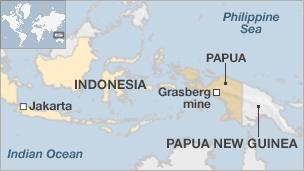
The Grasberg Mine, located close to the highest mountain in West Papua, Indonesia, is the world’s largest gold mine and third-largest copper mine. The mine, owned by the corporation Freeport-McMoRan Copper & Gold, has been the site of strings of grave human rights abuses, linked to Indonesia’s own National Armed Forces (Tentara National Indonesia/TNI). TNI’s presence in the territory is ostensibly to protect the mine, and Freeport’s Indonesian subsidiary acknowledges having made payments of as much as US$4.7 million in 2001 and US$5.6 million in 2002 for such government-provided security. A report by Global Witness, however, revealed numerous other payments ranging from US$200 to US$60,000 that Freeport Indonesia allegedly made to individual military officers.

The TNI’s sale of security services to companies like Freeport is only one of the many business ventures conducted by the TNI and its officers. As Human Rights Watch has reported, the Indonesian military has been supplementing its income through both its formally established companies, and through informal and often illicit businesses such as black market dealing. Moreover, the military’s business activities (both lawful and unlawful) are largely shielded from public scrutiny: budgeting for military purposes is generally kept secret, and TNI members generally refuse to answer questions about institutional spending.

Military-owned business in Indonesia are problematic, not only because this private-sector activity impedes military professionalism and distorts the function of the military, but also because it also contributes to crime, human rights abuses, and especially corruption. This problem is greatly compounded by the fact that TNI officers generally enjoy immunity from corruption charges brought by civilian institutions. In fact, the Transparency International’s Defense and Security Program has deemed Indonesia one of the countries most prone to corruption in its defense and security institutions. It is therefore appalling that this issue has not been addressed more seriously by the Indonesian government. Although a 2004 law mandated the transfer of control over TNI businesses to the civilian government within five years, the law did not clearly specify which types of business activities were covered, and this legal loophole enabled the TNI to preserve many of its moneymaking ventures, including TNI’s infamous security services—to say nothing of already-illegal criminal enterprises and illicit corporations. Moreover, despite the five-year timetable in the law, the government has been notably reluctant to enforce the transfer of ownership, making repeated excuses alluding vaguely to the need for the TNI to compensate for the lack of budgeting for security purposes. As a result, despite some efforts to reform the way the TNI is allowed to handle its businesses, military-owned businesses in Indonesia continues to flourish, with the Indonesian people of Indonesia having to pay the price.

The government’s weak response towards the military’s non-compliance with the 2004 law is merely one of the many indicators of how impervious the TNI’s power and seeming impunity. There are factors that contribute to this impunity, along with the corresponding corruption and abuse of power in the operations of military-owned businesses: Continue reading