Anticorruption and The Fourth Estate: Lessons from the Vatican “Trial of the Century”

In December 2023, Cardinal Becciu—once considered a leading candidate for the papacy—became one of several defendants sentenced to prison by a Vatican tribunal for financial crimes against the Church. The case, dubbed the Vatican “trial of the century,” is a high-profile example of Pope Francis’ fight against corruption within the Church, one of his top priorities since taking charge. Despite the convictions, the trial embroiled the Vatican in controversy about the fairness of its legal system and the Pope’s allegedly improper involvement in the investigation. There is extensive debate as to whether the Pope’s actions were justified.

What is less open to debate, however, is that international press coverage was highly critical of the Vatican. Major news outlets picked up and ran with defendants’ claims that certain papal actions amounted to “unacceptable abuses” and “invalidated the entire justice of the trial.” For example, the New York Times described the trial as “rais[ing] as many questions about the Vatican’s judicial system, the competence of its officials and the pope’s style of governance as it did about [the] crime.” The Washington Post said the Vatican emerged from the trial “worse for wear, with new questions raised about the effectiveness and fairness of its legal system.” The Associated Press’ (AP) reporting, which is reproduced in publications across the globe, is particularly worth highlighting. In an article titled “The First Outside Legal Analyses of Vatican’s ‘Trial of the Century’ Are In, And They’re Critical,” the AP featured Professor Geraldina Boni’s claims that the Pope’s actions “represented a clear violation of the right to a fair trial,” and raised the prospect of a “violation of divine law to which even the pope is subject.” These and other news articles included rebuttals from Vatican officials, but those rebuttals mostly consisted of conclusory platitudes, such as the claim that the trial was carried out “in full respect of the guarantees for the suspects,” or condemnation of the criticisms as “on the level of international heresy.”

As earlier posts on this blog have highlighted, because public opinion of a government’s anticorruption work is an important factor in whether the work succeeds, public relations is a “crucial tool” in fighting corruption. Negative media coverage is a familiar issue to those in the anticorruption field. Targets of a corruption probe will often do their best to delegitimize it. Common tactics include casting the probe as a politically motivated witch-hunt, or, as here, denouncing the legitimacy of the process as an unfair, abusive violation of human rights. How anticorruption authorities respond to these accusations may play a significant role in the perception and legitimacy of the prosecutions. The consistently negative press coverage of the Vatican’s prosecution of these cases suggests the Vatican made mistakes in its public relations strategy. Is that correct? And if so, what might the explanation be?

Continue reading

Jailing Peru’s Presidents: Why Peru’s Recent Crackdown Isn’t Curbing Corruption

Peru’s specially made prison for housing disgraced former presidents is full. With an official capacity of two, last year’s extradition of ex-President Pedro Castillo from the United States forced the Barbadillo prison to expand to include three former presidents. The number dropped back down to two following a presidential pardon for ex-President Alberto Fujimori, who passed away shortly after his release. The current prison population is not an anomaly: seven of the eight Peruvian presidents since 1990 are either in jail, have been in jail, or have faced a detention order. Each of them faced corruption charges for graft during their tenure as a public official.

The fact that so many ex-presidents have been incarcerated might be taken as a sign of progress. As Rosa María Palacios, a Peruvian lawyer and political commentator, wryly observed, “In Latin America, people envy us. Many people abroad say: ‘At least you get them in jail.’” Yet despite the fact that Peru has engaged in a crackdown on presidential corruption that is unparalleled among Latin American countries, Peru’s current president is under investigation for “illicit enrichment,” Peru’s ranking on the Corruption Perceptions Index (CPI) remains low, and 81% of Peruvian citizens believing that corruption has increased in the past five years. 

Of course, nobody expects that prosecuting high-level government officials, even presidents, will solve the corruption problem. But one might expect that demonstrating a willingness to do what so many other systems will not do—go after the most powerful political figures in the country—would at least create a sense of optimism and momentum in the anticorruption fight. Yet this does not seem to have happened in Peru. Why not?

Continue reading

Corruption as a National Security Priority: How Will it Shape U.S. Policy in Fragile States?

Corruption has increasingly been framed as a national security priority in United States policy. This is perhaps most readily apparent in the National Security Council’s 2023 U.S. Strategy on Countering Corruption, but it is also manifest in several major pieces of legislation. One such legislative initiative is the 2019 Global Fragility Act (GFA), which tasked the State Department, Department of Defense (DoD), and US Agency for International Development (USAID) with developing a coordinated ten-year strategy for preventing conflict in fragile states. This past March, the State Department published its inaugural Strategy for Preventing Conflict in four pilot countries—Libya, Mozambique, Haiti, and Papua New Guinea—and one region, Coastal West Africa (encompassing Guinea, Cote D’Ivoire, Ghana, Togo, and Benin). Each of these strategy documents center anticorruption reform as a means to improve state legitimacy and reduce the risk of conflict, but they take quite different approaches to addressing the problem of corruption within a national security framework. Continue reading

Twelve Years Later, Did China’s Sweeping Anticorruption Campaign Deliver?

When Xi Jinping rose to power as General Secretary of the Chinese Communist Party in 2012, he kicked off a sweeping campaign to eliminate corruption across government. Xi vowed to discipline both “tigers” and “flies” — high-ranking party leaders and low-level bureaucrats — and warned officials of the risk that corruption posed to the government’s legitimacy. Official efforts to address corruption were hardly new in China, but Xi’s anticorruption drive was notable for its aggressive enforcement and willingness to pursue even the most powerful. Xi empowered and expanded the Central Commission for Discipline Inspection (CCDI), the highest supervisory organ of the party, while also reorganizing the government to create a new National Supervisory Commission (NSC) that would unify the state’s anticorruption enforcement. Xi’s enforcers employed harsh rhetoric, seeking to deter corruption by strict enforcement. Twelve years later, millions of officials have been disciplined or purged, including top party figures such as former Chongqing party chief Bo Xilai and former security minister Zhou Yongkang. Under China’s draconian criminal justice system, such defendants stand little chance. And private individuals have not been spared, with prominent industry and business leaders caught up in bribery and corruption investigations. On top of this sweeping crackdown, Xi has taken steps to permanently institutionalize anticorruption across the party and government.

In many respects, Xi has done much of what anticorruption practitioners advocate for: He has prioritized anticorruption at the highest level of government, increased enforcement dramatically, and reformed both government and political institutions. There are signs that his anticorruption efforts have paid off. Public perception of government has improved, with officials wary of ostentatious consumption of luxury goods and other openly corrupt behavior. Xi himself declared overwhelming victory in the fight against corruption in early 2024.

Yet despite the impressive numbers, Xi’s campaign has failed to address the underlying dynamics driving corruption in China. Indeed, the fact that anticorruption authorities continue to catch record-breaking numbers of corrupt officials at all levels of government may be a warning sign, not a marker of success. While Xi’s campaign is viewed in some quarters as a model for top-down, government-led anticorruption campaigns, China’s experience over the last dozen years also highlights the inherent limitations of that approach.

Continue reading

The Fight Against Corruption Is at Stake in Milan

That’s how former French magistrate and renowned corruption fighter Eva Joly sees current developments in Italy. Two prosecutors there face prison for actions taken during the bribery trial of Italy’s largest company.  Writing in the Argentine opinion journal Clarín, Mme. Joly explains that the charges have nothing to do with their conduct and everything to do with a justice system where score-settling and the protection of Italian companies has supplanted the goal of truth and justice (Spanish original here; English translation here).

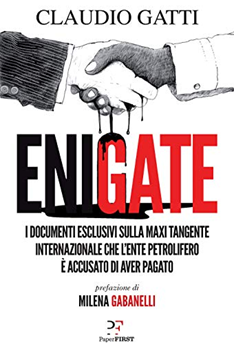
The saga begins with prosecutors Fabio de Pasquale and Sergio Spadaro opening an investigation into allegations oil giants Shell and Eni paid a $1.1 billion bribe for rights to Nigerian oil field OPL 245. With overwhelming evidence of wrongdoing on the public record (here, here), the two expected they would be trying a cut-and-dried case of foreign bribery.

Even before the trial began, however, it was clear that that was not to be. The first signs: revelations of ties between the chief trial judge and a lawyer close to ENI together with a surprising lack of interest by the Italian press in the largest bribery scandal on record. During the trial, a string of rulings highly favorable to the defense heightened suspicions the fix was in. But the acquittal still came as a surprise given the massive evidence presented coupled with the flimsy reasoning the court advanced to justify its verdict (here).

Adding to the surprise was the Italian media’s new-found interest in the case. Stories claiming the trial had been a waste of public money and questioning what Italian prosecutors were doing prosecuting Italian companies for bribing foreign officials began appearing in several outlets, the same ones where ENI was a major ad buyer.

Not to risk an appellate court would undo their handy work, those behind the trial’s outcome saw to it that the state counsel appointed to appeal the acquittal was one whose public comments on the case tracked the criticisms in the press (here). She then took the extraordinary step of refusing to pursue an appeal, meaning the trial court’s acquittal remains the final word.

Those responsible for quashing one case against ENI apparently feared there was always a risk some other pesky prosecutor didn’t get the message. Hence the orchestration of the conviction of de Pasquale and Spadaro for failing to disclose exculpatory information to the defense, a case with no precedent in Italian law based on a factual claim belied by the trial record.

If the convictions are not overturned on appeal, it’s not only the future of two talented magistrates that will suffer. As Mme. Joly says, the credibility of the Italian judicial system and the future of the fight against corruption, in Italy and far beyond, will suffer as well.

The Vatican’s Anticorruption Crackdown and the Rule of Law

One of Pope Francis’s top priorities, after his election in 2013, was cracking down on the Vatican’s financial corruption. In his first months as pope, Francis closed thousands of unauthorized accounts of the Vatican Bank, and in 2014, he created the Office of the Auditor General to monitor Vatican finances and spearhead anticorruption efforts. Perhaps the most high-profile consequence of the Pope’s crackdown was the two-and-a-half year investigation and trial of Cardinal Giovanni Angelo Becciu—the Pope’s former chief of staff—and nine others for financial corruption. While this so-called “Vatican trial of the century” included a range of alleged crimes, its locus involved the Holy See’s $380 million investment in a London real estate deal, which Vatican prosecutors alleged defrauded the Vatican to the tune of tens of millions. In December 2023, Cardinal Becciu was convicted of three counts of embezzlement and sentenced to five and a half years in prison. All but one of the other defendants were convicted on charges including embezzlement, corruption, and fraud, and several of them also received prison terms.

Although viewed by some as a triumph for the Pope’s efforts to clean up the Vatican, the investigation and prosecution of Becciu and his codefendants generated a firestorm of criticism. One legal expert affiliated with the defense described certain actions by Vatican authorities as “unacceptable abuses;” a Vatican canon lawyer likened the process to that of a “banana republic.” The most serious complaint—raised by the defense team, some legal commentators, and at least one cardinal—was that Pope Francis improperly used his power to “secretly” change the law four times via papal “rescripts” (roughly equivalent to executive orders) throughout the course of the investigation to give prosecutors “essentially, and a bit surreally, ‘carte blanche.’” These rescripts, which were never formally published (and were not produced to the defendants until the trial was underway), did four things:

Continue reading

COP Co-Opted: How Corruption and Undue Influence Threaten Multilateral Climate Action

The ongoing COP 29 climate summit in Baku, Azerbaijan, has been living up to the anticorruption community’s worst fears. Risks of undue influence, corporate capture, and corruption arising from yet another authoritarian petrostate hosting a UN climate conference are rampant. (See reports by Global Witness / BBC and OCCRP.)

Tomorrow, November 15, David Szakonyi, Co-Founder of the Anticorruption Data Collective, Associate Professor, George Washington University, and GAB contributor (here) will present a recent report examining the risks and outlining what the UNFCCC, the UN process for curbing climate change, can do to protect future COPs from corporate capture.

 The report was produced by the Collective in partnership with Transparency International.

The virtual event will be held 10:00 – 11:15am EST and is hosted by the Central Asia Program at George Washington University. Along with Professor Szakonyi it features, Kate Watters, Emin Bayramli, and Karl Horberg. 

Register here

Event link

The U.S. Congress Must (and Can) Right the Supreme Court’s Wrongs

This past June, in a case called Snyder v. United States, the U.S. Supreme Court dealt another blow to federal anticorruption law. The defendant in Snyder was a former mayor of an Indiana town. During his time as mayor, he helped steer a city contract to a certain company, and that company subsequently paid him $13,000 in “consulting fees.” He was convicted under a federal statute, 18 U.S.C. § 666, which makes it a federal crime for a state or local official to “corruptly solicit[,] demand[,] …or accept[] … anything of value from any person, intending to be influenced or rewarded in connection with any” federally funded program. The question in the case was whether this statute prohibits so-called “gratuities”—payments that are corruptly made to a government official in recognition of action that an official has taken or has committed to take, but without evidence that the promise of the payment was what induced the official to take that act. The Court held that § 666 does not prohibit gratuities. In other words, as long as there is no agreement beforehand, the Court held that § 666 allows people or businesses to reward their state and local officials for favorable government action. In so holding, the Supreme Court has in effect provided a blueprint for using money, gifts, and other material incentives to influence state and local government.

The Court’s Snyder decision is yet another in a string of recent cases that have undermined and impeded federal anticorruption prosecutions in the United States—a string that includes McDonnell v. United States, Kelly v. United States, and Percoco v. United States. These decisions have been criticized—often fairly—for their narrow, crabbed reading of the relevant statutes. But it is a bit too easy to make the Court the sole villain of the story. As the Court itself has emphasized, it is Congress’s responsibility to create clear laws. And Congress should not be given a free pass in light of its failure to respond to the Court’s decisions.

It is true, as noted on this blog (see here and here) and elsewhere (see here, here, and here), that Congress appears at best uninterested in, and at worst hostile to, enacting more robust anticorruption laws. Yet we should not be too quick to conclude that getting meaningful amendments to the laws that the Supreme Court has interpreted narrowly would be a political impossibility. Indeed, at the end of August three Members of Congress (two Democrats and one Republican) introduced the No Gratuities for Governing Act, which would amend § 666 to expressly prohibit gratuities, and in so doing would hold state and local officials to the same standard that applies to federal officials (codified at 18 U.S.C. § 201). Three Senators (all Democrats) introduced a parallel bill in the Senate, the Stop Corrupt Gratuities Act, in early September. Despite the understandable cynicism about the ability of the U.S. Congress to act on this matter, there are several reasons why this proposed legislation might actually have a fighting chance:

Continue reading

Open letter to OECD Antibribery Convention’s Working Group on Italy’s Noncompliance

In a world where the fight against corruption remains an uphill struggle, the OECD Antibribery Convention is a signal achievement. The 38 members of the OECD, the world’s richest nations, have bound themselves to make it a crime under their domestic law for any person or entity subject to their jurisdiction to bribe an official of a foreign country. What was once common practice by large multinational corporations is now subject to stiff fines for the corporation and prison sentences for their executives.

To ensure their commitment is more than just words on paper, convention parties regularly review each other’s compliance. But as this blog has reported, recent decisions by the Italian judiciary and the Italian government now threaten the enormous progress made in curbing foreign bribery (here, here, and here). Italy’s compliance is being discussed this day by the group charged with reporting on compliance with the Convention. In the letter to group members reprinted below, current and former corruption prosecutors, investigators, academics, and activists urge the group to hold Italy to account for its noncompliance.

The letter remains open for signature. Those who wish to add their names should do so by submitting a comment to this post.. Italy’s noncompliance must remain at the top of the international agenda to fight corruption.

We the undersigned anti-corruption experts and practitioners are writing in the context of discussions about Italy and its resistance to recommendations contained in the Working Group’s (WG) 2022 Phase IV report on Italy. 

We wish to inform you of our immense concerns about Italy’s performance pre and post the Phase IV report issued by the WG.  In particular, we would point you to the following:

Continue reading

Invaluable Guide to Fighting Corruption — at a Bargain Basement Price

Mark Pyman and Paul Heywood’s Sector-Based Action Against Corruption: A Guide for Organizations and Professionals is not for everyone. If your goal is to improve a nation’s CPI score, attack grand corruption, or realize some other broadly stated, national level objective, stop here.

But if, as the authors explain, you “need to acquire competence in recognizing, analyzing and dealing with corruption” in a particular organization or process, and if you believe that “corruption Is as much a management issue as it is a political one,” download it immediately. (And thank whoever made this must-have book open-source.)

Pyman’s and Heywood’s careers both combine hands-on work helping government agencies and corporations curb corruption with serious engagement with the learning on corruption. And it shows. From the rigor they insist be brought to bear to specify identifiable, tractable corruption problems (corruption due to a non-meritocratic civil service is not one; conflict of interest in hiring is) to the disciplined approach they present for selecting the best measures for remedying them.

They break the process for “recognizing, analyzing, and dealing with corruption” into four steps labeled SFRA:

Continue reading