U.S. Prosecutors Newest Addition to Their Anticorruption Toolkit

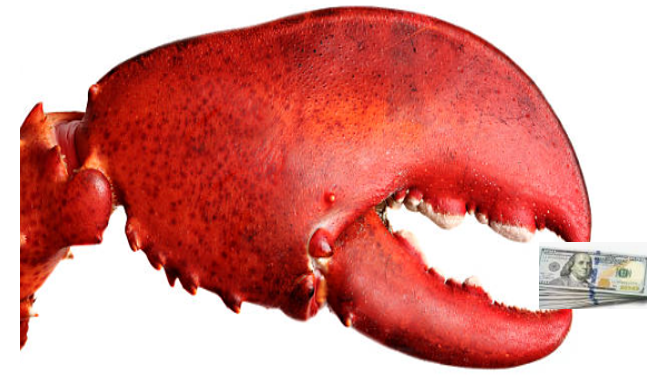
For more than three decades the U.S. Justice Department has sought ways to pressure American corporations to police their executives, employees, and consultants. To see that they take measures to see those they employ don’t pay bribes, rig prices, or commit other crimes. Shown above is pictorial representation of its latest tool.

It shows a crab gripping a stack of hundred dollar bills with its claw. That is precisely what the Justice Department expects a corporation to do if it discovers someone in its employ has paid a bribe, fixed a price, or committed another serious crime to advance the corporation’s interest. The company is to clawback monies paid the miscreant.

Continue reading

Corruption, Extremism, and the Crisis in Israel: Some Tentative Thoughts on Possible Connections

Since the terrorist organization Hamas’s mass murder and kidnapping of Israeli civilians ten days ago, I’ve been finding it difficult to think about anything other than the news from Israel/Palestine. Like many of you, I’ve been spending a lot of time (probably too much) doom-scrolling, worrying about my friends in the region, and anxious about about what will happen next. A lot of people, including university professors and those who have public platforms of some kind, have been weighing in on various aspects of this conflict. I have been hesitant to do so, because I have basically no professional expertise in the most important dimensions of the current crisis (such as the politics and history of the Middle East, military strategy, international humanitarian law and the law of war, etc.). What I write about on this platform is corruption, and the current crisis in Israel has little to do with corruption.

Little, but not nothing. At the risk of engaging in an all-too-common form of academic narcissism (“Look how this biggest important news event relates to the narrow topic I happen to study!”), I did want to offer some brief and tentative thoughts on how corruption, and the response to it, may have played a minor but notable role in precipitating the current crisis.

I’m not going to say much here about corruption on the Palestinian side. In an insightful post from back in June 2021, GAB contributor Magd Lhroob addressed aspects of this issue, noting both how Hamas’s initial electoral success back in 2006 may have had more to do with the perception that the Palestinian Authority (PA) was hopelessly corrupt, and also how the growing frustration of ordinary Gaza residents at Hamas’s corruption strengthens Hamas’s incentives to foment violence with Israel. Here I want to say a few words about corruption issues on the Israeli side, particularly the corruption charges against Prime Minister Netanyahu. Continue reading

The U.S. Approach to Corruption in Ukraine: Change or Continuity?

[A quick note: I drafted the post below last week, before the horrific events in Israel over the weekend. I have nothing useful to say about that tragedy–I have no expertise in military or security policy, Middle Eastern politics, terrorism, or anything along those lines. But I wanted to express my deepest sympathy to those who have been affected by Hamas’s horrific and inexcusable attack on innocent civilians. I will continue to write posts on assorted corruption-related issues, like the one below, because that’s what I know and that’s what I do. But this is one of those moments when other things seem so much more important. Am Yisrael Chai.]

Last week, a piece in Politico discussed the contents of a confidential (but not classified) U.S. State Department’s “integrated country strategy” for Ukraine; a shorter public version of that strategy document was released last August, but the version Politico obtained was longer and more detailed. The big headlines coming out of the Politco story (both literally and figuratively) concern corruption. The U.S. strategy document, Politico notes, “sees corruption as the real threat,” and “warns Western support may hinge on cutting corruption.” The Politco story made a bit of a splash among some of the people who follow these issues closely, but I don’t think it tells us much that we didn’t already know, and the new material from the confidential version of the report, so far as I can tell from Politico’s reporting, mainly concern political calculations that are basically common knowledge, though perhaps a bit sensitive for the U.S. government to declare formally in a public document.

Let me start out by noting one thing that I think the Politico piece gets exactly right, and that poses a general, and by now familiar, challenge to those who both support Ukraine’s resistance to Russian aggression and believe anticorruption reforms are vital for the country’s future success. As the Politico story puts it:

The [Biden] administration wants to press Ukraine to cut graft … [b]ut being too loud about the issue could embolden opponents of U.S. aid to Ukraine, many of them Republican lawmakers who are trying to block such assistance. Any perception of weakened American support for Kyiv also could cause more European countries to think twice about their role.

This is indeed a real issue, and a rhetorical and political challenge. Having said that, I think the Politico story, perhaps inadvertently, may simultaneously (1) understate the extent to which the U.S. government has already been willing to publicly raise the need for serious anticorruption reforms in Ukraine, and (2) overstate the extent to which the U.S. is relying on a coercive approach (mainly express or implied aid conditionality) to press for such reforms. A few thoughts on each: Continue reading

Inside the Corruption Hunters Network

Pursuing powerful officials for corruption is a lonely, often dangerous business. Presidents, ministers, and others at the apex of government don’t take nicely to being investigated, especially when they have come to believe that their office comes with a grant of impunity.  

Thanks to former French magistrate Eva Joly, whose pursuit of corruption among the French elite subjected her to ugly smear campaigns and threats to her safety, and the Norwegian Agency for Development Cooperation, a safe space has been opened for those on the trail of grand corruption. At Eva’s instance, Norad sponsors twice a year conferences where those on the hunt for high-level corruption meet to share stories, trade tips, and, most importantly, remind each other why what they are doing is worth the personal price they are paying.

Just how much the Corruption Hunters Network has contributed to the fight against corruption will never be known. But in a special edition on her podcast series, French lawyer and anticorruption activist Sophie Lemaître gives us a hint. In interviews, members explain how the Network has not only advanced work on individual cases but what being a part of a group with a common cause has meant to them both personally and professionally. (Other material on the Network here, here, and here.)

Mozambique Government Announcement of Settlement of Hidden Debt Claims Against UBS

Mozambique’s citizens are the victim of likely the most egregious corruption scandal of the 21st century. As explained on GAB and numerous media accounts (here, here, here, and here), employees of Swiss banking giant Credit Suisse together with Mozambique government officials, and Middle East ship-building company Privinvest put the country’s government on the hook for $2.2 billion in loans for projects of little or no value. Citizens of one of the word’s poorest nations are now stuck repaying them.

Some of the only good news to come out of this enormous crime was the Mozambique’s government decision to bring suit against Credit Suisse, Privinvest, and some of the other perpetrators in London (complaint here). A favorable judgment could not only result in cancelling the debt but an award of damages. Damages because of the enormous hit the Mozambique economy took when the loans, hidden because they were taken out in violation of an IMF bailout loan, were finally revealed.

Earlier today the Mozambique government announced it had settled with UBS, which assumed Credit Suisse’s liability when it took the bank over. On its face, the settlement appears to be a very good deal for UBS. Whether it is a good one for the citizens of Mozambique remains to be seen.

Mozambique’s Prosecutor General disclosed some of the terms in a press conference earlier today in Maputo. According to an on-scene report,

Continue reading

When Do Partisans Turn on One of Their Own? Reflections on the New Menendez Case

The biggest corruption-related political news in the United States over the past couple of weeks is the decision by the Department of Justice (DOJ) to indict Senator Bob Menendez (Democrat of New Jersey) for allegedly taking bribes (including cash, gold bars, and a luxury car) from several businessmen, in exchange for using his influence to help these businessmen in various ways. If you’re having a sense of déjà vu, it’s because we’ve seen this movie (at least the beginning) before: Back in 2015, the DOJ indicted Senator Menendez for accepting lavish gifts from a wealthy friend and campaign donor, allegedly in exchange for using his influence to help advance that donor’s personal and business interests. That prosecution was unsuccessful: The DOJ pursued the case, but although the prosecutors prevailed on some important issues of law, the trial, which took place in 2017, ended in a hung jury—presumably because some of the jurors did not think that prosecutors had proved, beyond a reasonable doubt, that the luxury trips and gifts bestowed on Senator Menendez were bribes, rather than personal hospitality offered by a close friend.

It remains to be seen whether the legal outcome will be different in this case (and of course, it should go without saying, Senator Menendez is entitled to the presumption of innocence in a court of law, though he is entitled to no such presumption in the court of public opinion). But there is already one notable difference between the current case and the 2015 case: the reaction of Senator Menendez’s colleagues in the Democratic party. As I write this (several days before the post will likely be published, so forgive me if this is a bit out of date), a number of prominent Democrats, including New Jersey Governor Phil Murphy, several Democratic Senators, and numerous Democratic House Members, including former Speaker Nancy Pelosi, have called on Menendez to resign. To be sure, as a critics have noted, several leading Democrats—including President Joe Biden and Senate Majority Leader Chuck Schumer—have not called on Senator Menendez to resign. But this is still a marked contrast from 2015, when to the best of my recollection (and readers should feel free to correct me if I’m wrong) no prominent Democrats called on Senator Menendez to resign. Why the difference? Continue reading

Has Russia’s Invasion Empowered President Zelensky in His Fight Against Corruption?

A national crisis can have a wide range of effects on a country’s commitment to fighting corruption. Sometimes, the sense of crisis leads countries (for better or worse) to de-prioritize corruption, out of a sense that other matters are higher priority, or even out of a sense that tolerance for a certain degree of corruption is a price worth paying to achieve other more pressing objectives. But in other situations, a sense of national crisis can strengthen a government’s resolve to crack down aggressively on corruption. There seem to be at least two closely related reasons why this may sometimes occur. First, corruption might be seen as directly and significantly impeding the country’s ability to tackle the emergency at hand. Second, a time of crisis can strengthen the position of the nation’s chief executive (the president or prime minister)—both in the formal legal sense (in that during times of crisis the chief executive may be able to wield extraordinary emergency powers) and in the softer more political sense (in that the chief executive may enjoy a surge in popularity if the country is under threat, and the public perceives the chief executive as providing strong leadership in the crisis). If that chief executive is genuinely committed to fighting corruption (a big if), then he or she may be able to leverage this unusual power to move aggressively against corruption, in a manner that would be politically difficult or impossible in “normal” times.

My impression, based on news stories and informal conversations with actual experts (which I am not!), is that the latter characterization is more apt for what is happening in Ukraine right now. It was not obvious that things would go this way initially—particularly given that, shortly after Russia’s full-scale invasion, the Ukrainian parliament suspended the asset declaration requirement for public officials, which though justified at the time as a way to keep potentially sensitive information from the Russians, was viewed with understandable concern. But a series of developments since then has demonstrated what looks to an outsider (at least to this outsider) like a consistent and quite aggressive effort to crack down on corruption, even at the risk of some (temporary) disruption to aspects of the war effort.

At least for me, one of the most notable and encouraging signs was the arrest, earlier this month, of Ihor Kolomoisky, one of Ukraine’s most powerful oligarchs, on fraud charges. Continue reading

The Sometimes Grubby World of Political Fundraising

The recent bribery charges levelled against New York City Building Commissioner Eric Ulrich remind of the corruption risk the private financing of political parties and candidates creates.

Ulrich raised money for Eric Adams’ successful campaign for New York City Mayor, and after his election Adams appointed him to a position in the city’s Department of Buildings. As the New York Times explained in its story on the charges, “the department regulates the construction and real estate industries, issuing permits, licensing contractors and policing construction safety and the city’s building code, and thus can have a significant impact on development.”  According to the indictment, Ulrich accepted more than $150,000 in bribes in return for granting licenses and permits.

The corruption risk private campaign financing creates arises from candidates’ search for money to win their election. One needs lots of money to get elected Mayor of New York (Adams’s raised more than $9 million.) That in turn requires people willing to help raise it from friends and associates. Some help knowing that if the candidate they are helping wins, they can use the relationship they have developed with the candidate and senior campaign staff to make money. 

Continue reading

Judicial Integrity and Judicial Independence: A Clash of Values?

This past spring, the investigative journalism site ProPublica broke a major story about ethically questionable—and previously undisclosed—relationships between ultra-wealthy (and politically active) individuals and Supreme Court justices. The reports focused in particular on Justice Thomas and Justice Alito, two of the Court’s most conservative members. According to ProPublica’s reports, in 2008 Justice Alito accepted a luxury fishing trip—which involved flights on a private jet and a stay at a lodge that charges more than $1,000 a day—from billionaire Paul Singer, whose hedge fund often had cases before the Court, including a 2014 case in which Justice Alito did not recuse himself and voted in the hedge fund’s favor. With respect to Justice Thomas, ProPublica revealed that for years—starting shortly after he joined the Court—Justice Thomas has received substantial benefits from billionaire “friends,” including private plane flights, luxury vacations, VIP passes to sporting events, and private school tuition for his nephew (whom Justice Thomas has raised like a son). Most of these gifts came from right-wing billionaire Harlan Crow, who also purchased from Justice Thomas (in a previously undisclosed deal) the house where Justice Thomas’s mother and other members of his family lived, but Justice Thomas received substantial benefits from other billionaires as well.

Many critics denounced these gifts and other transactions as evidence of blatant corruption (see here, here, here, and here). Some even drew a connection  between the Court’s jurisprudence in corruption cases—which has embraced an ever-more-restrictive definition of corruption, often limiting it to quid pro quo deals—and the Justices’ own proclivity for accepting gifts, perks, and other benefits from people with a strong ideological (and sometimes personal) stake in the Court’s decisions (see here and here). Justice Thomas and Justice Alito vigorously defended their conduct (see here and here), though they did ultimately update their financial disclosure forms for 2022 (though not earlier years) to show additional benefits they had received, and to proffer some explanations. And the Justices’ supporters have accused the accusers of using these alleged ethical issues as a pretext for attacking Supreme Court Justices whom they dislike on ideological grounds (and overlooking similar ethical lapses by Justices whose ideology they prefer).

I have my own fairly strong views about this specific controversy, but I don’t want to go into that right now. I’m not sure I have anything to add—and I’m acutely aware that, whether or not one buys the charges of pretext and selective outrage—it is very difficult to talk about this issue without being influenced by (or perceived as influenced by) one’s views on Justice Thomas’s and Justice Alito’s jurisprudence and ideology. But even putting the specifics mostly to one side, I do think the fallout from ProPublica’s reporting implicates a more general issue—one that is very difficult, and that is relevant not only in the United States but in many other countries as well: To what extent can or should the other branches of government (the executive, the legislature, or—in the countries where such entities exist—an independent anticorruption commission) impose and enforce ethical rules on the highest court (the Supreme and/or Constitutional Court)? Continue reading

Would the Foreign Extortion Prevention Act Help the U.S. Counter China?

The U.S. Foreign Corrupt Practices Act (FCPA) makes it a criminal offense for U.S. domestic concerns, firms that issue U.S. and any anyone acting in U.S. territory from offering or paying bribes to foreign government officials. The FCPA does not, however, apply to the foreign officials who receive those bribes. (On occasion some prosecutors have advanced the theory that a foreign government official who takes a bribe can be convicted for aiding and abetting, or conspiring in, an FCPA violation, but courts have generally rejected these theories.) Additionally, while U.S. criminal law prohibits domestic government officials from soliciting or accepting bribes, the relevant statutory provisions do not apply to foreign officials who engage in comparable conduct.

Many U.S. anticorruption activists believe that U.S. law ought to target the demand side of foreign bribery transactions (that is, the bribe-takers), not just the supply side, and have therefore advocated for the adoption of the so-called Foreign Extortion Prevention Act (FEPA). These advocacy efforts appear to be paying off: In late July, the Senate adopted FEPA as an amendment to the Senate’s version of the National Defense Authorization Act. This does not guarantee that FEPA will become law, as the House of Representatives has yet to vote on a comparable bill, and there is no guarantee that the FEPA language will remain in the bill after final negotiations conclude. But the odds have gone up significantly.

Would FEPA be a good idea? I think the answer is probably yes, though the impact is likely to be modest, and probably somewhat less than FEPA’s proponents hope. I may post again later about my own assessment of FEPA’s likely impact, should it pass in something like its current form. But for now, I want to focus on a striking argument in favor of FEPA that appeared in an op-ed a couple of weeks ago. That op-ed, coauthored by Elaine Dezenski (Senior Director at the Foundation for Defense of Democracies) and Scott Greytak,(Director of Advocacy at Transparency International’s US office), argued that FEPA would “blunt China’s malign economic influence” by countering the practice of Chinese government or government-affiliated entities using bribes to secure access to valuable resources and to expand China’s political sway over developing countries.

There are many good arguments in favor of FEPA, but I’m not sure that this is one of them. I don’t want to dismiss it outright, as it’s entirely possible that I’ve missed something. But it seems to me that FEPA would have little to no impact on corrupt overseas bribery by Chinese entities, and at least in the short term might make that problem (slightly) worse. So let me lay out the source of my confusion: Continue reading